
When global buyers are trying to pick a reliable Rmu Breaker manufacturer, it’s more than just about flipping through catalog prices. Medium-voltage networks, in particular, need stable insulation, dependable switching functions, and a clear plan for maintenance. A good supplier should be open and straightforward about their ratings, enclosure materials, how their operating mechanisms work, and any service limits—without hiding the technical stuff. In this article, we’ll introduce some of the top China-based manufacturers that serve international projects. We’re focusing on facts and real-world evidence, not just shiny promises. Because at the end of the day, what really matters is the actual equipment they provide.
When we evaluate these companies, we look at their factory experience, engineering capabilities, quality control processes, and support for export projects. We want to see IEC test reports, traceable components, records of routine inspections, and solid references from past projects. Buyers should also pay attention to specifications like short-circuit ratings, protection coordination, altitude considerations, and installation conditions. Sometimes, a manufacturer might give an attractive quote, but if their documentation is weak, approvals and permits could get delayed. That’s a risk people often overlook. You should also look into site support, spare parts availability, and how quickly they respond—that stuff can really make or break how smoothly everything runs after installation.
The companies we’ve included in this guide have been looked at from a practical buyer’s perspective. We compare what products they offer, their ability to customize solutions, how clear and responsive their communication is, and their after-sales support. Of course, no single ranking will work for every utility, industrial plant, or renewable energy project—everyone’s needs are different. Keep in mind, information about suppliers can change, and published claims sometimes need to be verified independently. It’s a good idea to ask for current certifications, witnessing test results, detailed drawings, and contractual warranties before you place your order. With some careful checking, international buyers can reduce the options and find a Chinese manufacturer who strikes the right balance between safety, performance, on-time delivery, and long-term value.
What Is an RMU Breaker and How Does It Work?
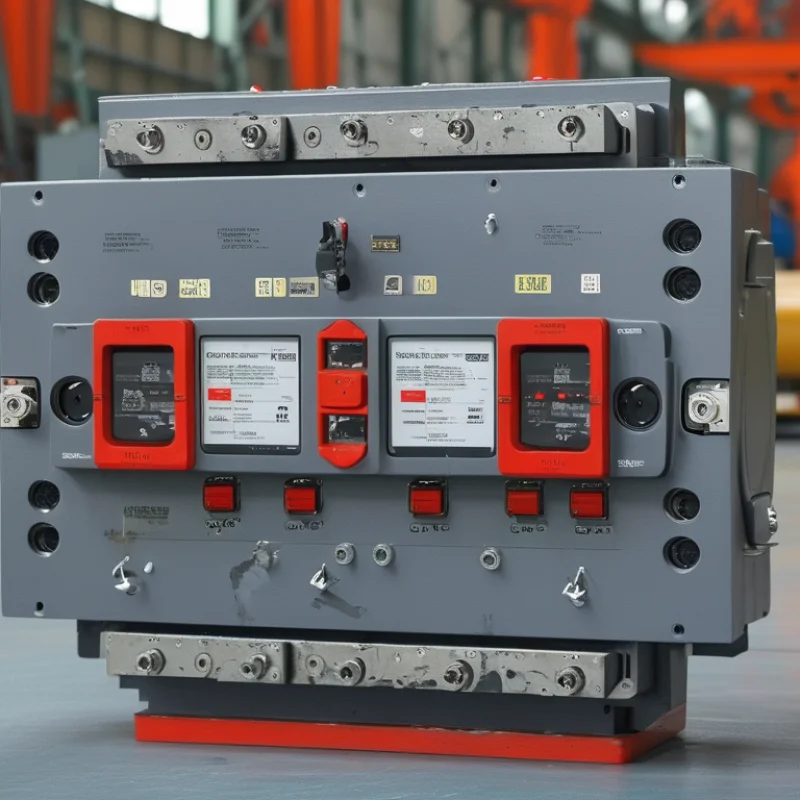
An RMU, or Ring Main Unit, is compact medium-voltage switchgear for distribution networks. It connects feeders in a ring, often at 11–24 kV, while protecting transformers and outgoing circuits. A typical RMU contains load-break switches, an earthing switch, and a circuit breaker or fuse. It fits inside a small metal enclosure.
During normal operation, current flows through the closed ring feeder. If a relay detects overcurrent or a short circuit, it sends a trip signal to the breaker. The breaker opens its vacuum interrupter, stopping the fault current within milliseconds. Operators can then isolate the damaged section and restore supply from another direction. The earthing switch helps discharge trapped energy before maintenance begins. Small detail. Big consequence.
The IEA report Electricity Grids and Secure Energy Transitions states that annual grid investment must rise from about 400 billion dollars to over 600 billion dollars by 2030. RMUs support this expansion by reducing outage areas and simplifying urban substations. IEC 62271 standards guide testing for medium-voltage switchgear, including insulation, temperature rise, and short-circuit performance. Yet installation conditions are rarely perfect. Humidity, cable stress, poor coordination, or aging relays can weaken protection. Engineers should verify ratings, interlocking, fault levels, and maintenance access on site, not rely only on a catalogue.
Key Types of RMU Breakers Available in China
China’s Rmu Breaker manufacturers offer several configurations for different grid conditions. The main choice is between gas-insulated, solid-insulated, and air-insulated designs. Gas-insulated RMUs use compact sealed compartments, making them suitable for urban substations and narrow plant rooms. Solid-insulated units avoid gas handling and often use epoxy insulation around primary parts. Air-insulated models are easier to inspect, but they require more installation space and careful clearance control.
Breaker functions also vary. Vacuum circuit breakers interrupt fault current inside sealed vacuum bottles and support frequent switching. Load break switches handle normal load operations, while separate fuses protect smaller transformers against short circuits. Some Chinese manufacturers combine these functions in compact ring main units. Motorized mechanisms can support remote operation, which helps in unmanned distribution sites. An Outdoor Breaker version may include stainless-steel enclosures, UV-resistant coatings, and improved sealing for rain, dust, and temperature changes.
Field experience shows that ratings alone are not enough.Engineers should check altitude, humidity, cable interfaces, earthing methods, and maintenance access. A neat specification can still hide poor cable bending space. That detail matters during installation. Testing should include insulation checks, mechanical operation, interlocking verification, and pressure or sealing inspection where applicable. IEC-based documentation improves traceability, but documents must match the actual delivered unit. No selection is perfect. A Compact Rmu may save space while making future servicing less convenient.
Core Standards and Technical Specifications to Compare
China Top RMU Breaker Manufacturers for Global Buyers
When comparing a Substation Breakerinside an RMU, start with the applicable standards. IEC 62271-200 covers metal-enclosed switchgear assemblies, while IEC 62271-100 addresses high-voltage AC circuit breakers. Check whether the supplier provides valid type-test and routine-test reports. A sales brochure is not enough.
Match the rated voltage, frequency, normal current, and short-circuit breaking current with the network design. Also review short-time withstand current, peak withstand current, power-frequency withstand, and lightning impulse withstand. These values affect safety during faults. Confirm the rated operating sequence, mechanical endurance, and electrical endurance. Ask for evidence.
Enclosure protection deserves close attention. Compare IP ratings, internal arc classification, cable compartment access, and pressure-relief direction. In a crowded substation room, a clearly marked pressure path can reduce installation risks. Check interlocks, earthing switches, voltage indicators, and remote-control interfaces. Test the operating handle with gloves, not only in a laboratory. Small details matter.
For insulated designs, identify the medium and its maintenance requirements. Gas-insulated units need leakage control and responsible end-of-life procedures. Solid insulation or dry-air solutions may simplify certain environmental assessments, but their temperature behavior still requires verification. Inspect factory records, material traceability, calibration certificates, and after-sales response times. Some comparisons miss spare-part availability. That omission can become expensive.
Leading China RMU Breaker Manufacturers for Global Buyers
Leading China RMU breaker manufacturers for global buyers usually combine factory production with documented engineering control. Their ring main units commonly support 12 kV, 24 kV, or 36 kV distribution networks. Buyers should review rated current, short-time withstand current, insulation level, and enclosure protection before discussing price.
Experienced suppliers provide drawings, wiring diagrams, routine test reports, and material traceability. Independent inspection or witnessed factory acceptance testing can verify mechanical operation and contact resistance. Check the switching mechanism several times. It should operate smoothly, without excessive noise or delayed position indication. For vacuum-insulated models, ask about pressure monitoring and environmental performance. For gas-insulated designs, request clear service and recovery procedures.
A Pole Mounted Breaker serves outdoor overhead networks, while an RMU is better suited to compact underground or commercial substations. The distinction matters. Cable entry space, interlocks, earthing switches, and remote-control options affect installation time. One practical lesson from site work is simple: a neat enclosure does not guarantee easy maintenance. Some specifications also look complete but omit terminal access or spare-part availability. Ask for installation guidance, training, warranty conditions, and response times in writing. That small step can expose weak export support before the equipment reaches the project site.
Manufacturing Quality, Testing, and Certification Requirements
China Top RMU Breaker Manufacturers for Global Buyers
Manufacturing quality begins with a controlled design, not a polished brochure. RMU breakers should comply with IEC 62271-200 and IEC 62271-100 requirements for medium-voltage switchgear. Typical evaluations cover 12 kV, 24 kV, or 36 kV systems. Testing should include power-frequency withstand, lightning impulse, short-circuit interruption, temperature rise, and mechanical endurance. Partial-discharge testing is especially important because small insulation defects can become serious failures in humid substations. The IEA’s Electricity 2024 report expects global electricity demand to rise by more than 2.5% annually through 2026. More networks mean tighter expectations for equipment reliability.
A qualified Chinese manufacturer should provide type-test reports, routine-test records, material traceability, and calibration certificates. Independent laboratory testing adds credibility. ISO 9001 certification supports process control, but it does not replace product testing. A certificate is not proof of every production unit. That distinction is often missed. Buyers should also check enclosure sealing, gas pressure records, interlock performance, and factory acceptance procedures. I have seen technically strong products lose approval because documents were incomplete.
Tips: Request reports with model numbers, test dates, laboratory accreditation, and applied standards. Compare the tested configuration with the offered unit. Ask for recent failure data, even if the answer is imperfect. Honest gaps deserve review, not automatic rejection. Witness a factory acceptance test when project risk is high. Small details matter.
China Top RMU Breaker Manufacturers for Global Buyers – Manufacturing Quality, Testing, and Certification Requirements
| Evaluation Dimension | Typical Requirement or Reference Value | Applicable Standard or Test Reference | Evidence Global Buyers Should Request | Buyer Verification Focus |
|---|---|---|---|---|
| Rated voltage | Common medium-voltage RMU configurations include 12 kV, 17.5 kV, 24 kV and 36 kV classes. The selected rating must be equal to or higher than the network operating voltage. | IEC 62271-1; IEC 62271-200 | Technical datasheet, nameplate drawing, type-test report and approved single-line diagram. | Confirm compatibility with the utility system, insulation level and cable accessories. |
| Rated normal current | Typical feeder and transformer-protection ratings are 200 A, 400 A, 630 A or 1,250 A, depending on the RMU design and load profile. | IEC 62271-1; IEC 62271-200 | Routine-test records, temperature-rise test report and current-rating declaration. | Check continuous current at the specified ambient temperature and enclosure configuration. |
| Short-time withstand current | Common medium-voltage switchgear values include 12.5 kA, 16 kA, 20 kA and 25 kA for 1 second or 3 seconds, subject to the network fault level. | IEC 62271-1; IEC 62271-200 | Certified short-time withstand and peak withstand test report. | Verify that the duration and peak-current values match the purchaser’s protection study. |
| Short-circuit breaking capacity | For vacuum circuit-breaker functions, typical rated short-circuit breaking currents are 16 kA, 20 kA or 25 kA at medium voltage. | IEC 62271-100; IEC 62271-200 | Valid type-test report identifying the exact breaker, voltage, current and operating sequence. | Ensure the report applies to the offered interrupter, mechanism and enclosure design—not only to a similar model. |
| Power-frequency withstand voltage | The required test level depends on rated voltage and insulation category. For 12 kV and 24 kV classes, commonly specified one-minute withstand levels are approximately 28 kV and 50 kV respectively. | IEC 62271-1; IEC 62271-200 | Dielectric type-test and routine-test records for the complete assembly. | Check that the test covers the busbar, cable compartments, switching devices and earth circuit. |
| Lightning impulse withstand level | Typical values include 75 kV for 12 kV-class equipment and 125 kV for 24 kV-class equipment, subject to the selected insulation coordination. | IEC 62271-1; IEC 62271-200 | Impulse-voltage type-test report and insulation-coordination data. | Confirm phase-to-earth, phase-to-phase and across-open-switch requirements. |
| Internal arc classification | Where personnel may be present, buyers often specify IAC classification such as AFL or AFLR, with a declared arc duration and test current. | IEC 62271-200 | Internal-arc test report stating accessibility sides, current, duration and installation conditions. | Do not accept an IAC claim without confirming the exact enclosure layout and pressure-relief arrangement. |
| Sealing and ingress protection | Metal-enclosed RMUs commonly specify IP ratings for the enclosure and separately for operating compartments. The final rating depends on the design and installation arrangement. | IEC 60529; IEC 62271-200 | IP test report, enclosure drawings, gasket specifications and maintenance instructions. | Check protection against dust, water and condensation for the actual indoor or outdoor application. |
| Switching technology | RMUs may use vacuum circuit breakers, load-break switches, disconnectors and earthing switches. Gas-insulated and solid-insulated designs require different service and verification procedures. | IEC 62271-100; IEC 62271-103; IEC 62271-102 | Device-specific type tests, operating diagrams, interlocking scheme and maintenance manual. | Confirm switching duty, mechanical endurance, interlocks and earth-switch fault-making capability. |
| Partial-discharge performance | A low partial-discharge result is important for insulation reliability, but the acceptance limit must be stated at a defined test voltage and measurement method. | IEC 62271-200 and the purchaser’s specified test procedure | Partial-discharge test report showing test voltage, background noise, measured level and acceptance criteria. | Reject reports that provide only a pass statement without numerical results or test conditions. |
| Routine production testing | Each completed RMU should undergo documented routine checks before shipment, including wiring, insulation, mechanical operation, interlocking and functional verification. | IEC 62271-1; IEC 62271-200 | Signed routine-test certificate linked to the serial number and purchase order. | Require traceability for critical components, test instruments and corrective actions. |
| Factory acceptance testing | FAT should verify the approved drawings, protection and control functions, remote signals, interlocks, cable interfaces and, where specified, communications. | Project specification; IEC 62271 series; applicable communication standard | FAT procedure, signed results, punch list, calibration certificates and final inspection photographs. | Invite the purchaser or independent inspection agency before packing and shipment. |
| Quality-management system | A documented quality-management system should control design changes, incoming materials, production inspection, calibration, nonconformities and customer complaints. | ISO 9001 certification is commonly requested by international buyers. | Current certificate issued by an accredited certification body, scope statement and audit validity. | Verify the certificate scope includes electrical switchgear manufacturing and is not expired. |
| Environmental management | Environmental controls should address waste, oils, solvents, packaging and, where applicable, the handling and recovery of insulating gases. | ISO 14001; applicable national environmental regulations | Environmental-management certificate, material declarations and gas-handling procedure where relevant. | Confirm compliance with the destination market’s restrictions on insulating gases and hazardous substances. |
| Product conformity documentation | The conformity route depends on the destination market. A CE declaration may be relevant for applicable European requirements; other markets may require local approvals or utility-specific acceptance. | Applicable destination-market legislation; IEC or national adoption of IEC standards | Declaration of conformity, technical file index, type-test certificates and country-specific approval documents. | Check that documentation identifies the exact model, rated values, applicable directives and responsible legal entity. |
| Traceability and after-sales support | Critical components should be traceable by serial number, batch number or production record. Spare parts and technical support should be available for the planned service life. | Project quality plan; purchaser’s warranty and service requirements | Serial-number register, spare-parts list, warranty terms, service response procedure and maintenance schedule. | Evaluate response time, training, commissioning support and availability of replacement operating mechanisms. |
Note: Values shown are commonly specified reference ranges for medium-voltage RMU applications. Final ratings, test levels, certification routes and acceptance criteria must be confirmed against the project specification, utility requirements and destination-market regulations.
How to Evaluate Suppliers, Pricing, and Export Services
Evaluating an RMU supplier requires more than comparing catalog prices. Check production experience, engineering capacity, and traceable quality records. Ask for routine test reports, type-test evidence, and drawings before requesting a final quotation. A reliable manufacturer should explain insulation levels, enclosure materials, busbar ratings, and switching mechanisms in plain language.
Pricing must be compared line by line. Confirm whether the offer includes protection relays, cable compartments, meters, installation tools, and spare parts. Copper quality and enclosure thickness can change the cost significantly. Request pricing under clear Incoterms, such as FOB or CIF. Also check payment terms, minimum order quantities, warranty coverage, and replacement procedures. The cheapest offer is rarely the clearest one.
Export service often reveals the supplier’s real professionalism. Review packing methods, moisture protection, shipping marks, customs documents, certificates of origin, and electrical test records. For an Outdoor Circuit Breaker, confirm corrosion protection and local climate suitability. A factory audit or video inspection can expose weak cable routing and poor labeling. Sample approval helps, but it is not perfect. One successful sample cannot prove stable mass production. Ask for a factory acceptance test, serial-number tracking, and a realistic delivery schedule. Some suppliers communicate quickly before payment, then respond slowly after it. That risk deserves attention.
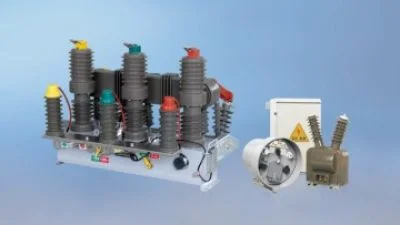
ZW32-12 Smart Distribution Pole-Mounted Circuit Breaker: Integrating Primary and Secondary Systems for Smarter Grids
**ZW32-12 Smart Distribution Pole-Mounted Circuit Breaker: Integrating Primary and Secondary Systems for Smarter Grids**
As electricity demand and distributed energy resources continue to grow, intelligent distribution equipment is becoming essential for grid resilience. The International Energy Agency’s *Electricity 2024* report projects global electricity demand to increase by approximately 4% annually through 2026, placing greater pressure on medium-voltage networks. The ZW32-12/630-20 intelligent pole-mounted circuit breaker responds to this challenge by combining primary switching and secondary protection in one outdoor solution. Rated at 12 kV, 630 A, and 20 kA, it is designed for three-phase AC 50 Hz distribution systems.
Its integrated architecture simplifies the connection between primary power equipment and secondary control, measurement, and communication systems. High-precision voltage and current sensors can provide real-time electrical data, enabling accurate detection of overloads, short circuits, voltage abnormalities, and changing load conditions. With primary fuse protection and coordinated secondary functions, the device supports faster fault isolation while reducing the need for separate field components and complex wiring.
The U.S. Department of Energy has reported that distribution networks account for the vast majority of power interruptions, making automation at the feeder level a practical priority. By supporting remote monitoring, condition-based analysis, and more precise fault management, the ZW32-12/630-20 can help utilities improve service continuity and operational efficiency. Its complete-set integration also makes installation and expansion more straightforward for modern smart-grid projects.
FAQS
Check IEC 62271-200 for metal-enclosed switchgear assemblies.
Compare rated voltage, frequency, normal current, and short-circuit breaking current.
Check IP ratings, internal arc classification, cable access, and pressure-relief direction.
Identify the insulation medium and its maintenance requirements.
Request type-test reports, routine-test records, material traceability, and calibration certificates.
No. It supports process control, but it does not replace product testing.
Compare prices line by line.
Review moisture protection, shipping marks, customs documents, certificates of origin, and electrical records.
Conclusion
This guide explains what an Rmu Breaker is, how it operates within medium-voltage distribution systems, and why it is widely used for safe, reliable power control. It introduces the main types available from China, including air-insulated, gas-insulated, and solid-insulated designs, while outlining important factors such as rated voltage, current, short-circuit capacity, protection functions, enclosure structure, and operational durability.
For global buyers, the guide also describes how to assess manufacturers through production capability, quality management, routine testing, type testing, and relevant international certification requirements. It highlights practical considerations when comparing suppliers, including technical customization, product documentation, lead times, pricing transparency, packaging, logistics, warranty support, and export communication. By evaluating both product performance and supplier reliability, buyers can select an Rmu Breaker solution that matches their electrical network, installation conditions, safety expectations, and long-term maintenance needs.
Related Posts
-
2026 Best RMU Switchgear Type for Global Buyers?
-
2025 Top 5 High Voltage RMU Innovations Driving Energy Efficiency and Reliability
-
What is High Voltage RMU and How Does It Work in Power Distribution Systems
-

Why Choose High Quality Wholesale High Voltage RMU Service for Your Business?
-
2026 How to Choose Power Distribution Equipment for Your Needs?
-
Top Benefits of Rmu Electrical Panel in China for Global Buyers?