
So, why choose a Ring Main Switch for your global sourcing? Honestly, it comes down to reliability. Global electricity demand is climbing fast—the International Energy Agency’s Electricity 2024 report projects around 4% annual growth through 2026. That might not sound like a lot, but think about the pressure it puts on factories, hospitals, data centers, and renewable energy sites. They can’t afford outages. So when you’re procuring equipment for these environments, you need something that won’t let you down. That’s exactly where a Ring Main Switch shines—it’s designed to handle the load and keep things running smoothly, even when the grid is stretched thin.
So, a Ring Main Switch – it’s basically your best friend for keeping the network continuous. It’s all about compact, sectionalized medium-voltage distribution. The whole idea is that you can isolate a faulted cable section and still keep the supply going through an alternate route. And that really matters on a rainy installation day – imagine one damaged feeder and you don’t want the whole facility going dark. That’s a nightmare. Also, there’s IEC 62271-200, which gives you a solid framework for medium-voltage metal-enclosed switchgear – everyone recognizes that. You know, when you have consistent standards, comparing technical specs across different countries becomes a whole lot easier.
Take it from Philippe Metzger, the Secretary-General of the International Electrotechnical Commission – he puts it like this: ‘International standards make the world safer, more efficient, and more sustainable.’ Now, that’s a big claim, but it actually hits the nail on the head, even for something as specific as Ring Main Switch gear. The logic behind procurement is exactly that. When everyone’s singing from the same hymn sheet, you cut down on the misunderstandings between manufacturers, consultants, and inspectors. And let’s not forget the paperwork – having shared standards just makes documentation control a breeze.
So, the latest report from the International Energy Agency on renewables is out, and it’s showing some serious growth in solar and wind capacity. But here’s the thing: when you’ve got more distributed generation, you’re creating a whole new set of challenges for switching and protection. You’re going to need to really think about your Ring Main Unit—things like its fault rating, how well it’s insulated, whether you’ve got automation options, the enclosure protection, and what kind of service support you can expect. Honestly, just going with the cheapest quote? That’s a risky move.
A low price can hide a lot of headaches—like waiting ages for spare parts, dealing with a nightmare of a commissioning process, or finding out the local team barely has any training. Trust me, it happens.
When you’re shopping around, don’t just focus on the sticker price—you’ve got to think about the total cost over its lifespan. And hey, don’t overlook the nitty-gritty details either: how they run tests at the factory, whether they’ve got the right type-test certificates, if it’ll actually hold up in your specific environment, and how quick they are to respond when something goes sideways. Honestly, no config is ever perfect. Even if you’ve picked something that seems rock-solid, it’s still worth giving it a second look before you commit to rolling it out globally.
What Is a Ring Main Switch and How Does It Work?
Why Choose a Ring Main Switch for Global Procurement?
What Is a Ring Main Switch and How Does It Work?
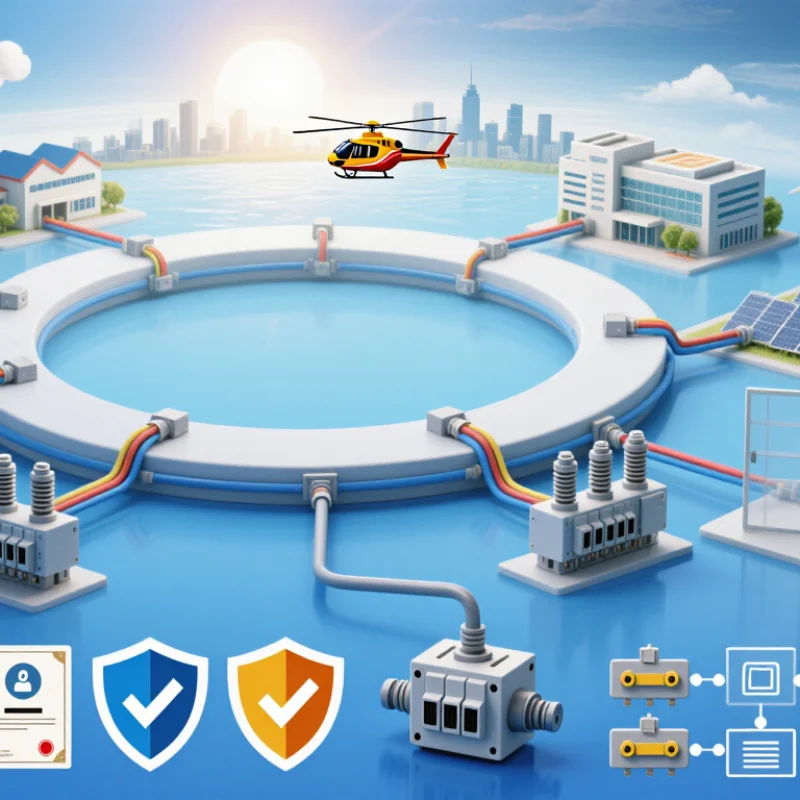
A ring main switch, commonly called an RMU, is a compact medium-voltage distribution assembly. It connects incoming and outgoing feeders around a local power network. In a typical ring, one point remains open during normal operation. This arrangement limits circulating current while preserving an alternative supply path. That detail matters.
During normal operation, electricity enters through one feeder and leaves through another. A load-break switch controls routine switching under defined load conditions. A circuit breaker or fuse interrupts fault current. An earthing switch safely grounds isolated sections before maintenance. If a cable fault occurs, protection equipment disconnects the damaged section. Operators can then restore supply from the opposite direction, often reducing outage time.
The IEC 62271-200 standard addresses metal-enclosed medium-voltage switchgear requirements. IEC 62271-103 covers high-voltage switches, including switching performance considerations. These standards support consistent technical evaluation during global procurement. The IEA Electricity 2024 report forecasts global electricity demand to grow by about 3.4% annually through 2026. More demand places pressure on distribution reliability and switching flexibility. However, an RMU is not automatically the best choice. Installation altitude, fault level, enclosure design, insulation medium, and local grid rules must be checked. Procurement teams sometimes compare only rated voltage and price. That is a weak comparison. Experienced engineers also review maintenance access, test certificates, interlocking logic, and end-of-life handling. One overlooked specification can complicate commissioning.
Core Components and Operating Principles of Ring Main Switches
Why Choose a Ring Main Switch for Global Procurement?
A Ring Main Unit, or Rmu Switch, combines compact switching and protection for medium-voltage distribution. Its enclosure contains busbars, load-break switches, an earthing switch, and a protected feeder outlet. Depending on the design, fuses, vacuum circuit breakers, current transformers, and digital relays may also be installed. IEC 62271-200 defines key requirements for metal-enclosed switchgear, including insulation, internal arc classification, and service conditions. These details matter when equipment crosses climate zones and grid standards.
The operating principle is practical. Two cable paths form a ring around several distribution points. One path can supply the load while the other remains available for transfer. During maintenance, operators isolate the faulty section, apply the earthing switch, and restore power through the opposite direction. Interlocks prevent unsafe switching sequences. Small details matter. A visible position indicator, sealed cable compartment, and clear phase identification can reduce field mistakes. The IEA’s Electricity Grids and Secure Energy Transitions report estimates that over 80 million kilometres of grids must be added or refurbished by 2040. That scale increases the value of standardized, serviceable switchgear.
Procurement should compare rated voltage, short-time withstand current, fault duration, altitude, humidity, cable interfaces, and local testing rules. The same Rmu Switch may not suit every network. A compact enclosure saves space, but it can complicate inspection and heat management. This is easy to underestimate. I would also question any specification that promises universal compatibility without verified site data. The IEA reports that annual grid investment may need to double by 2030, making dependable documentation as important as the hardware itself.
Why Ring Main Switches Suit Global Power Distribution Needs
Ring main switches suit global power distribution because they balance continuity, safety, and installation flexibility. Their compact design fits urban substations, commercial buildings, renewable energy sites, and industrial plants. Operators can isolate one cable section while keeping another supply path energized. That matters when hospitals, data centers, or factories cannot tolerate long outages.
A sf6 gas insulated switch offers strong insulation within a sealed enclosure. It performs reliably in dusty, humid, coastal, and space-limited environments when correctly specified. However, procurement teams must review gas handling rules, leakage controls, and local environmental requirements. Type-test reports, routine-test records, and clear maintenance instructions improve confidence across different markets. Real project experience also shows that cable interfaces and protection settings deserve early attention.
Procurement is not only about the lowest purchase price. Buyers should compare service access, spare-part availability, training, shipping protection, and expected operating life. Voltage class, short-circuit rating, altitude, ambient temperature, and seismic conditions must match the installation site. Small oversights can create expensive delays. A technically suitable switch may still be unsuitable if local technicians cannot maintain it. I would also question whether every project needs the same configuration. Standardized equipment helps global deployment, but regional grid practices can make rigid standardization risky. Good specifications leave room for verified local adaptation.
Key Procurement Factors for International Buyers
Choosing a ring main switch for global procurement requires more than comparing unit prices. Network voltage, frequency, fault level, altitude, humidity, and installation space must match the specification. The enclosure also matters in coastal or dusty locations. An enclosed fusible switch may suit smaller distribution points, but buyers should confirm interruption capacity and fuse coordination.
The International Energy Agency reported in Electricity Grids and Secure Energy Transitions that over 80 million kilometres of grids must be added or refurbished globally by 2040. Annual grid investment may need to exceed 600 billion US dollars by 2030. These figures increase pressure on buyers to select equipment that is available, repairable, and technically consistent across regions. Request IEC 62271-200 compliance evidence, routine-test records, temperature-rise data, and verified short-circuit ratings. Confirm whether testing covers the exact configuration, not only a similar model.
Procurement teams should check material traceability, spare-fuse availability, packing protection, and local service capability. Ask for drawings before purchase. Small dimensional errors can delay installation. A clear factory acceptance plan can expose wiring or interlock problems early. Delivery terms and customs documentation also deserve technical review. The cheapest compliant offer can still be the wrong purchase. Certificates alone are not enough. Buyers should challenge vague test reports, unclear warranty limits, and optimistic lead times. That extra scrutiny feels slow, but one missed detail can cost more than the switch itself.
Why Choose a Ring Main Switch for Global Procurement?
Key Procurement Factors for International Buyers
| Label | IEC Preferred Rated Voltage Class |
|---|---|
| 3.6 kV | 3.6 |
| 7.2 kV | 7.2 |
| 12 kV | 12 |
| 17.5 kV | 17.5 |
| 24 kV | 24 |
| 36 kV | 36 |
| 40.5 kV | 40.5 |
The chart presents commonly specified IEC preferred rated-voltage classes for medium-voltage switchgear: 3.6, 7.2, 12, 17.5, 24, 36 and 40.5 kV. Selecting the correct voltage class helps international buyers align the ring main switch with local distribution-network requirements, utility specifications and applicable IEC 62271 standards.
Standards, Safety Requirements, and Regional Compatibility
Why Choose a Ring Main Switch for Global Procurement?
Global procurement demands more than a familiar product name. A ring main switch must match local voltage, frequency, earthing, and utility rules. IEC 62271-200 addresses metal-enclosed medium-voltage switchgear, including internal arc classification and service conditions. IEC 62271-103 covers high-voltage switches, supporting safer switching applications. The IEA’s Electricity 2024 report projected global electricity demand growth of about 4% in 2024 and 2025. This expansion increases pressure on compact, maintainable distribution equipment.
Regional compatibility still requires careful engineering. European projects commonly follow IEC practices, while some North American projects require ANSI-based ratings and testing. A switch box station may need different cable interfaces, enclosure protection, or fault ratings. Insulation coordination also changes with altitude, humidity, and pollution levels. In practice, a specification can look complete but miss a local utility clause. That uncomfortable gap deserves review.
Tips: Request type-test evidence before ordering. Confirm short-time withstand current, internal arc class, and IP rating. Check interlocks at the installation site, not only on drawings. Ask for material and gas information, especially where environmental reporting applies. Keep approved drawings flexible; regional revisions are normal. Mistakes happen when procurement treats standards as paperwork rather than operating conditions.
Supplier Evaluation, Cost Control, and Lifecycle Support
Why Choose a Ring Main Switch for Global Procurement?
Supplier evaluation should begin with evidence, not attractive pricing. A reliable supplier provides clear drawings, routine test reports, material records, and traceable quality checks. Confirm rated voltage, current, short-circuit performance, insulation levels, and enclosure protection. These details must match the project environment and utility requirements. Factory acceptance testing can reveal loose connections, labeling errors, or incomplete documentation before shipment. Small omissions create expensive delays.
Cost control means measuring the entire ownership cycle. Compare purchase price, transport, installation time, spare parts, training, inspection, and planned maintenance. A compact ring main switch may reduce site work when its design supports simple cable access and modular replacement. However, standardization can become a weakness if local technicians cannot service the equipment. Cheap is not always economical. A low initial quote may conceal limited technical support or uncertain spare-part availability. Procurement teams should require response times, warranty boundaries, storage guidance, and replacement procedures in writing. Some evaluation models still overvalue delivery speed. That deserves reflection.
Tips: Ask for a detailed bill of materials and verified test records. Check two comparable projects, not just one reference. Clarify who supports commissioning, fault diagnosis, and future upgrades. Keep critical spare parts identified before the equipment leaves the factory. Choose suppliers that communicate clearly when specifications, schedules, or risks change.
FAQS
It is compact medium-voltage switchgear for local distribution networks. It connects incoming and outgoing feeders in a ring. One point usually remains open. This limits circulating current and preserves another supply route.
Protection equipment isolates the damaged section. Operators secure and ground the isolated equipment before maintenance. Power can then return through the opposite direction. Outage time may decrease. Not always.
Common components include busbars, load-break switches, earthing switches, and protected feeder outlets. Some designs also include fuses, vacuum circuit breakers, current transformers, and digital relays. Interlocks help prevent unsafe switching sequences.
Its compact design can reduce space requirements and simplify distribution planning. Standardized testing supports technical comparison across regions. However, identical equipment may not suit every site. Local conditions still decide suitability.
Check rated voltage, current, short-circuit withstand, fault duration, insulation level, altitude, humidity, and enclosure protection. Review cable interfaces and local testing rules. A rating-only comparison is too weak.
Request detailed drawings, routine test reports, material records, and traceable quality checks. Factory acceptance testing can expose loose connections and labeling errors. Check at least two comparable projects. One reference is not enough.
Compare purchase price, transport, installation, spare parts, training, inspection, and maintenance. A compact enclosure may reduce site work. It can also complicate inspection and heat management. Cheap is not automatically economical.
Require written warranty boundaries, response times, storage guidance, and replacement procedures. Clarify commissioning and fault-diagnosis responsibilities. Identify critical spare parts before shipment. Documentation deserves equal attention. Hardware alone is insufficient.
Conclusion
A Ring Main Switch is a compact medium-voltage distribution device designed to connect, isolate, and protect sections of an electrical network. By combining switching, load control, and fault isolation functions, it helps maintain power continuity while allowing operators to manage maintenance and emergency conditions safely. Its main components typically include switching units, protective devices, busbars, cable connections, and an insulated enclosure. Together, these elements support reliable current flow and enable flexible ring-network operation.
For global procurement, a Ring Main Switch should be selected according to voltage level, rated current, fault withstand capability, insulation method, installation environment, and automation requirements. International buyers should also confirm compliance with applicable technical standards, safety rules, testing procedures, and regional grid requirements. A capable supplier should provide transparent specifications, quality documentation, stable production, reasonable total cost, spare parts, commissioning assistance, and long-term technical support. Evaluating the full lifecycle rather than only the purchase price can improve reliability, simplify regional deployment, and reduce future maintenance risks.
Related Posts
-
What Is a Ring Main Switch and How Does It Work?
-
Discover the Best Ring Main Gear Suppliers in China?
-
Top Quality Ring Main Gear Solutions for Global Buyers?
-
Top 10 Facts You Need to Know About Ring Main Gear Systems
-
How to Choose the Right Ring Main Gear for Your Needs?
-
Discover the Best Ring Main Switch Options for Global Buyers?