
Picking a Box-Type Switching Station isn’t just about comparing price tags and dimensions. You really need to get a handle on the site itself, the electrical load, what the operating environment is like, and what kind of maintenance resources you’ll have. I mean, a station next to a coastal road has to deal with salt spray, right? And one near a factory? It might run into dust, vibration, or even chemical pollution. You know, these details really matter—they affect the enclosure materials, insulation levels, ventilation, corrosion protection, and even the protection equipment.
Okay, so when you’re doing a practical evaluation, start with the basics: rated voltage, short-circuit capacity, the incoming and outgoing circuits, and don’t forget future expansion. Then make sure it complies with the relevant IEC standards, local electrical codes, and whatever your utility requires. The enclosure? It needs to keep out rain and dust, and also prevent unauthorized access and accidental contact. After that, go through the switching devices, busbar arrangement, grounding system, cable compartments, and relay functions. Honestly, even the small design choices can make a big difference. Keeping your cable route clear? That alone can cut down installation time quite a bit. And a removable panel? That just makes inspection a whole lot simpler.
In practice, though, the cheapest option isn’t always the most economical one—not by a long shot. A lower upfront price can hide things like tricky maintenance, scarce spare parts, or weak thermal performance. No choice is perfect, of course. Space, budget, reliability, and delivery time usually end up pulling against each other. So a manufacturer you can trust should be able to hand over verified test records, detailed drawings, routine inspection data, and traceable component info. References from similar projects? Definitely useful. But don’t just take them at face value—give them a proper look.
And before you order anything, ask for the full technical schedule. Then get practical. How would the technicians isolate a fault? If it’s pouring rain, can the station still operate safely? And what if the load grows later? Those kinds of questions tend to surface weak spots early. A good Box-Type Switching Station should suit the project as it is now—and still be useful for years down the road.
Define the Purpose and Operating Requirements
How to Choose a Box-Type Switching Station?
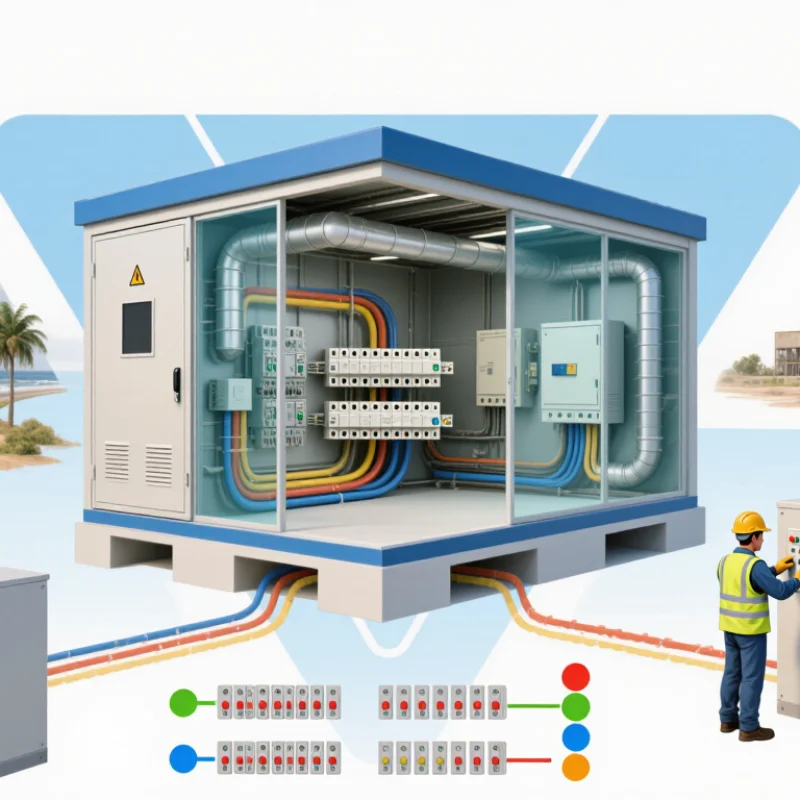
Define the Purpose and Operating Requirements
Start with the station’s actual duty, not its enclosure size. Is it serving a factory, solar plant, data center, or residential feeder? Each application changes the required voltage, fault level, switching frequency, cooling method, and maintenance access. IEA’s Electricity 2024 report expects global electricity demand to grow by about 3.3% annually from 2024 to 2026. Your station may face heavier loading sooner than expected.
Renewable generation adds another concern. IRENA reported 473 GW of renewable capacity additions in 2023, equal to 86% of total global power capacity additions. Solar and wind output can fluctuate quickly. Therefore, specify load changes, reverse power flow, harmonics, and protection coordination before selecting equipment. Ask for verified short-circuit withstand ratings and temperature-rise data. IEC 62271-202 also provides a useful framework for high-voltage prefabricated substations. Site experience matters here. A compact design can look efficient, yet cramped cable bending space may delay maintenance.
Tips: Record peak load, future expansion, ambient temperature, altitude, humidity, and emergency operating modes. Check whether operators need front access only. Leave practical working clearance. Do not rely only on average load; it hides short, damaging peaks. I would also review the specification after one simulated fault scenario. That step is often skipped. Sometimes, the first design is not the best one.
How to Choose a Box-Type Switching Station? – Define the Purpose and Operating Requirements
| Selection Dimension | Operating Requirement | Recommended Configuration | Typical Technical Range | Reason for Selection |
|---|---|---|---|---|
| Primary purpose | Distribution of medium-voltage power to commercial, industrial, residential, or infrastructure loads | Integrated box-type switching station with medium-voltage switchgear, transformer, and low-voltage distribution section | Typical transformer rating: 100–2,500 kVA | Combines switching, voltage transformation, protection, and low-voltage distribution in one compact assembly. |
| Incoming voltage | Connection to a medium-voltage utility or private distribution network | Select switchgear and insulation level according to the network voltage | Common system voltages: 6, 10, 11, 20, and 22 kV; equipment ratings may be 7.2, 12, or 24 kV | The rated voltage must be equal to or higher than the actual system voltage and suitable for insulation coordination. |
| Load capacity | Continuous supply for calculated demand with allowance for future expansion | Choose transformer capacity after calculating diversified maximum demand and load growth | Typical utilization target: approximately 60–80% of transformer rated capacity during normal peak operation | Avoids excessive heating and voltage drop while retaining practical reserve capacity. |
| System arrangement | Radial feeder, ring-main network, or dual-source supply | Use a single incoming unit for radial systems; use two incomers or ring-main switchgear where continuity is important | Manual or motorized load-break switches; automatic transfer where specified | The network arrangement determines switching flexibility, maintenance options, and supply restoration time. |
| Short-circuit level | Equipment must withstand the prospective fault current at the installation point | Select switchgear breaking capacity, short-time withstand, and peak withstand ratings from the fault study | Common medium-voltage ratings: 12.5–25 kA for 1–3 seconds, depending on the network | Adequate fault ratings protect personnel and equipment during abnormal network conditions. |
| Transformer type | Indoor, outdoor, fire-sensitive, or space-restricted installation | Oil-immersed transformer for common outdoor applications; dry-type transformer for indoor or fire-sensitive areas | Low-voltage output commonly 400/230 V or 415/240 V, subject to local standards | Transformer technology should match fire safety, ventilation, maintenance, and environmental requirements. |
| Environmental conditions | Outdoor exposure, dust, humidity, salt mist, rain, snow, or corrosive atmosphere | Weatherproof enclosure with suitable corrosion protection, drainage, ventilation, and internal separation | Typical enclosure protection: IP54–IP65, according to location and design | Proper enclosure protection reduces the risk of moisture ingress, contamination, corrosion, and unplanned outages. |
| Temperature and altitude | Operation in hot, cold, or high-altitude locations | Apply derating, enhanced ventilation, heaters, or altitude correction where required | Standard designs often assume ambient temperatures around −25°C to +40°C and altitude up to 1,000 m | Actual site conditions can reduce insulation performance, cooling capacity, and continuous load capability. |
| Protection functions | Protection against overload, short circuit, earth fault, overtemperature, and transformer faults | Coordinated fuses, circuit breakers, protective relays, temperature monitoring, and surge protection | Protection settings based on transformer rating, cable data, fault current, and selectivity study | Correct coordination isolates faults quickly while minimizing unnecessary interruptions to healthy circuits. |
| Operational continuity | Critical loads such as hospitals, data facilities, transport systems, or continuous-process plants | Dual incomers, sectionalizing, automatic transfer, standby generation, or redundant transformers | Configuration selected according to required restoration time and permissible interruption duration | Higher redundancy improves availability but increases initial cost, footprint, and maintenance requirements. |
| Maintenance access | Routine inspection, cable testing, relay testing, transformer servicing, and safe isolation | Separated compartments, lockable access points, visible earthing facilities, and adequate working clearance | Provide access in accordance with local electrical safety regulations and site procedures | Good maintainability reduces outage duration and supports safe work practices. |
| Monitoring and control | Local operation only or remote supervision through a control or energy-management system | Add metering, communication interfaces, motor operators, remote indication, and event recording as required | Measurements may include voltage, current, power, energy, power factor, and transformer temperature | Monitoring improves fault diagnosis, energy management, preventive maintenance, and operational visibility. |
| Physical constraints | Limited installation area, restricted transport route, or high-density urban site | Compact modular enclosure with clearly defined cable entry, lifting, ventilation, and service zones | Final dimensions depend on transformer rating, switchgear arrangement, cable bending radius, and access requirements | Early space planning prevents installation conflicts and ensures safe operation and maintenance. |
| Applicable standards | Project location, utility requirements, and applicable electrical safety regulations | Specify compliance with the relevant IEC, national, utility, and site standards | Common references include IEC 62271, IEC 60076, IEC 61439, and IEC 60529 where applicable | Standards define performance, testing, enclosure protection, insulation, temperature rise, and verification requirements. |
Selection should be finalized using the site load calculation, single-line diagram, utility specifications, fault-current study, environmental data, and applicable safety regulations.
Compare Box-Type Switching Station Configurations
How to Choose a Box-Type Switching Station?
Choosing a box-type switching station starts with comparing its internal configuration, not its painted enclosure. A compact integrated design places high-voltage switchgear, the transformer, and low-voltage distribution inside one enclosure. It saves space and simplifies transport. However, heat buildup and limited working clearance require careful checking. In field inspections, these details often matter more than rated power.
A split configuration separates the high-voltage, transformer, and low-voltage sections with clearer physical boundaries. Maintenance becomes easier, and a fault in one compartment may be better contained. The tradeoff is a larger footprint, more cable routing, and higher installation effort.
For a 12 kV application, an XGW-12 Switching Station should be checked for rated current, short-circuit withstand, insulation level, and protection coordination. Do not choose from voltage alone.
Compare air cooling with forced ventilation, especially where summer temperatures rise above design assumptions. Check door interlocks, grounding continuity, weather protection, drainage, and space for cable bending. A walk-through with the installer can reveal awkward access that drawings hide. I would also compare ring-main and single-bus arrangements against the site’s outage tolerance. The cheaper configuration is not always the reliable one. That judgment may need revision after a real load survey.
Evaluate Voltage, Capacity, and Protection Specifications
How to Choose a Box-Type Switching Station?
Choosing a Compact Switching Station starts with voltage, not cabinet appearance. Confirm the nominal voltage, highest system voltage, insulation level, and site fault conditions. A mismatch can damage insulation or reduce service life. Check incoming voltage during light and peak loads. Field readings may differ from drawings. They can. Review utility data and applicable electrical codes with a qualified engineer.
Capacity should reflect continuous demand, motor starting current, and planned expansion. Calculate transformer kVA, feeder loading, busbar rating, and allowable temperature rise. Do not size equipment from one peak reading alone. Record actual load patterns for several days when possible. Ambient heat, altitude, and ventilation can require derating. Heat is unforgiving. I have seen tidy calculations fail because a seasonal pump load was ignored.
Protection specifications deserve equal attention. Verify the circuit breaker’s interrupting capacity against the available short-circuit current. Check relay settings, overload protection, earth-fault protection, surge protection, and earthing continuity. Protection must coordinate with upstream and downstream devices, so one fault does not shut down an entire facility. Specify enclosure protection for dust, rain, and maintenance conditions. Ask for routine test records, insulation test results, and commissioning evidence. I would also question unclear assumptions. A polished datasheet is not proof that the station fits the site.
Check Site Conditions, Safety, and Environmental Ratings
Choosing a box-type switching station starts with the site, not the catalog. During a field inspection, record soil conditions, flood levels, cable routes, access width, and available working space. A station beside a dusty road needs different protection from one near the coast. Salt air can attack metal surfaces and terminals quickly. Check the enclosure’s IP rating, temperature range, altitude limit, and resistance to impact or corrosion. Environmental details often decide whether box switching equipment remains dependable after years of service.
Safety must be verified before comparing price or capacity. Confirm rated voltage, short-circuit withstand, insulation clearance, earthing arrangements, and safe operating access. Doors should have practical interlocks, clear labels, and enough room for testing with insulated tools. If maintenance staff must stand in mud or reach across live compartments, the layout is already a concern. It happens more often than drawings suggest. Consider drainage, ventilation, internal lighting, and emergency isolation points. A high rating on paper cannot correct poor installation or neglected inspections.
Ask for test records, installation guidance, and evidence that the equipment meets applicable electrical standards. Review whether local technicians can inspect joints, replace fuses, and identify overheating without dismantling the entire enclosure. Leave space for future cable changes. I have seen compact designs become difficult after one extra feeder was added. That lesson is easy to overlook. The best choice fits actual weather, actual workers, and the site’s long-term maintenance conditions.
How to Choose a Box-Type Switching Station?
Compare enclosure protection levels against actual site conditions. The IP code follows IEC 60529: the first digit indicates protection against solid objects and dust, while the second indicates protection against water. Higher ratings improve protection but should be matched to the installation environment, safety requirements, temperature, corrosion risk, and maintenance conditions.
| Label | Solid-particle protection level | Water-protection level |
|---|---|---|
| IP54 Protected outdoor |
5 | 4 |
| IP55 Rain and water jets |
5 | 5 |
| IP65 Dust-tight outdoor |
6 | 5 |
| IP66 Dust-tight and powerful water jets |
6 | 6 |
IP54 is commonly suitable for protected outdoor locations, while IP65 or IP66 may be more appropriate for exposed, dusty, or water-prone sites. Confirm the complete specification with the applicable electrical and local installation standards.
Assess Equipment Quality, Compliance, and Maintenance Needs
How to Choose a Box-Type Switching Station?
Equipment quality should be judged through evidence, not polished paint or impressive brochures. Ask for routine and type-test records aligned with IEC 62271-202. Check enclosure integrity, temperature-rise results, insulation levels, and short-circuit withstand ratings. Inspect cable compartments carefully. Poorly sealed glands can admit dust and moisture, especially in coastal or industrial sites. A practical factory acceptance test should verify interlocks, protection settings, earthing continuity, and mechanical operation.
Compliance must match the installation environment. Confirm the required ingress protection under IEC 60529 and verify local electrical, fire, and environmental rules. Review the transformer’s insulation system, noise data, and cooling performance. Independent test laboratories add credibility. Still, certificates alone are not enough. Trace each certificate to the exact equipment configuration and serial records. Small differences matter.
Maintenance needs often determine lifetime cost. Select stations with safe access, visible indicators, thermal monitoring, and replaceable protection components. The Uptime Institute’s 2023 Annual Outage Analysis reported that 55% of surveyed organizations experienced an outage during the previous three years, while 60% of reported outages cost at least $100,000. These figures reinforce the value of preventive inspection and tested spares. Keep a maintenance log with torque checks, insulation readings, and alarm history. A perfect checklist does not exist. Field conditions will expose weaknesses that factory documents miss.
Review Installation Support, Costs, and Supplier Reliability
How to Choose a Box-Type Switching Station?
Installation support can determine whether a box-type switching station performs well after delivery. Ask whether the supplier provides approved drawings, foundation dimensions, cable-entry guidance, and commissioning procedures. Clear instructions reduce site delays and prevent expensive rework. Request remote technical support during testing, plus trained engineers when local conditions are difficult. The 10 series american style wind power box type substation box may require careful coordination with wind-farm layouts, grounding systems, and transport limits.
Compare more than the purchase price. Include civil works, lifting equipment, protection testing, maintenance visits, spare parts, and expected energy losses. A low quotation may hide weak documentation or costly replacement components. Supplier reliability is easier to judge through traceable test records, realistic delivery schedules, and responsive communication. Ask for references from projects with similar voltage, climate, and installation access. No supplier is flawless. A transparent response to defects matters more than polished sales language.
Tips: Check the warranty exclusions. Confirm the service response time. Review spare-part availability before signing. Measure the installation route, not only the station footprint. Keep every revision of the drawings. A common mistake is overlooking drainage around the enclosure. Moisture can damage connections and complicate maintenance. Discuss this detail during the site survey, even if the ground appears dry.
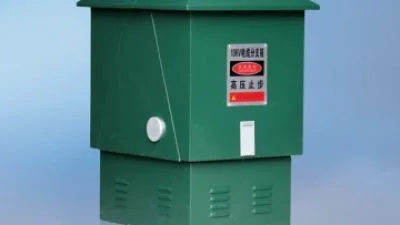
DFW-12 Outdoor High Voltage Cable Distribution Box: Reliable Power Distribution from China’s Trusted Factory Suppliers
The DFW-12 Outdoor High Voltage Cable Distribution Box is designed to provide dependable power distribution for outdoor cable engineering projects. Produced by experienced factory suppliers in China, this compact unit combines practical construction with efficient cable management, making it suitable for distribution networks, industrial facilities, infrastructure projects, and other high-demand applications. Its two-way door opening mechanism improves access during installation, inspection, and maintenance.
A key feature of the DFW-12 is its use of butt sleeves as connecting busbars. This arrangement helps shorten cable runs, improve internal layout, and reduce the need for long, crossed three-core cables. By creating a cleaner connection structure, the box supports more convenient installation and more orderly operation within confined spaces. The design also helps engineers optimize cable routing according to project requirements.
The distribution box is fitted with a cable connector complying with the DIN 47636 standard and is typically rated at 630A, supporting reliable performance in demanding power distribution systems. Manufactured in a controlled factory environment, the DFW-12 is developed with attention to structural quality, connection efficiency, and long-term service requirements. Its compact format and adaptable cable arrangement make it a practical choice for customers seeking stable outdoor high-voltage distribution equipment from dependable Chinese suppliers.
FAQS
Define its duty, location, voltage, fault level, and switching frequency. A factory, solar site, and residential feeder need different designs. Record peak load, future expansion, temperature, altitude, humidity, and access requirements.
Solar and wind output can change quickly. Check load variation, reverse power flow, harmonics, and protection coordination. Simulate an unusual operating condition. The first design may still need revision.
Confirm nominal voltage, highest system voltage, insulation level, and incoming voltage readings. Compare field measurements with drawings. They may differ. Ask a qualified engineer to review local requirements.
Consider continuous demand, motor starting current, transformer rating, feeder loading, and planned expansion. Use several days of load records when possible. One peak reading can mislead. Seasonal equipment may quietly change the result.
Verify interrupting capacity against available short-circuit current. Check overload, earth-fault, surge, relay, and earthing protection. Coordinate upstream and downstream devices. One fault should not disable the whole facility.
Check heat, dust, rain, humidity, altitude, and coastal exposure. Confirm suitable ingress protection and ventilation. Poorly sealed cable glands can admit moisture. Heat is unforgiving.
Request routine tests, type-test records, insulation results, temperature-rise data, and short-circuit withstand ratings. Review interlocks, mechanical operation, and earthing continuity. Certificates alone are not enough. Match them to the exact configuration.
Leave practical cable-bending space and safe working clearance. Check whether operators need front access only. Choose visible indicators, thermal monitoring, and replaceable protection parts. A compact cabinet can become difficult to service.
Demand may grow earlier than expected. Reserve capacity for added feeders, heavier loads, and changing power flows. Review transformer kVA, busbar rating, and cooling margins. I would test one simulated fault before approval.
Conclusion
Choosing the right Box-Type Switching Station requires a clear understanding of the project’s purpose, operating conditions, and long-term expectations. Begin by identifying the required functions, load characteristics, voltage level, capacity, switching method, and protection strategy. Compare suitable configurations according to system layout, space limitations, access requirements, and future expansion plans. It is also important to verify whether the station provides appropriate insulation, short-circuit protection, grounding, monitoring, and control features for reliable operation.
Before making a decision, evaluate the installation site, including climate, temperature, humidity, dust, corrosion, flooding, ventilation, and available working space. Safety provisions, environmental ratings, equipment quality, compliance documentation, and ease of maintenance should also be carefully reviewed. Finally, consider transportation, installation guidance, commissioning support, spare parts, total ownership cost, delivery capability, and the supplier’s technical reliability. A well-selected Box-Type Switching Station should balance performance, safety, durability, maintenance convenience, and overall project value.
Related Posts
-
What is High Voltage RMU and Why is it Essential for Power Distribution
-
Why Choose High Quality Wholesale High Voltage RMU Service for Your Business?
-

2026 Top China Wholesale Rmu Electrical Panel Service Insights?
-
2026 How to Choose the Best Wholesale China Rmu Electrical Panel Service?
-
Top Benefits of Rmu Electrical Panel in China for Global Buyers?
-
7 Tips to Choose a Photovoltaic Grid Connected Box?