
When it comes to sourcing Ring Main Gear in 2026, it’s not just about comparing prices anymore. You really need to look at the whole picture—things like electrical performance, factory capabilities, logistics, and how well the supplier can support you long-term. It’s a lot to consider, but skipping over these details can cause bigger headaches down the road.
Dr. S. S. Rao, who’s well-respected in the switchgear and power systems world, always suggests a good rule of thumb: ‘Switchgear selection should be based on system voltage, fault levels, and operating conditions.’ Honestly, that advice still holds true. Sometimes a compact unit might look perfect in a catalog or brochure, but it might not stand up to your project’s short-circuit or environmental demands when the time comes.
This guide is all about helping you understand how to go about sourcing Ring Main Gear from known manufacturing hubs. We’ll cover important factors like IEC 62271 compliance, insulation tech, enclosure design, protection relays, and routine testing records. Plus, we’ll look at their experience working with utilities, renewable projects, industrial plants, and urban power distribution. Because, let’s face it, details really do matter.
A solid sourcing process should include verifying drawings, material specs, test results, and references from previous projects. Factory visits can uncover practical issues—like unfinished cable compartments, inconsistent labels, or poor document management—that can slip past in polished sales pitches.
Pricing is another tricky area. A lower bid might seem attractive, but it could be hiding extra costs—like expensive freight, long delays in getting spare parts, vague warranty conditions, or limited support during installation. Plus, things can change quickly—fluctuating exchange rates, port congestion, and supply chain disruptions all add a layer of uncertainty.
Instead of just focusing on the initial purchase price, think about the total cost of ownership. Having regional service partners, trained technicians, and easy access to replacement parts can save you a lot of headaches later on. And remember—biggest isn’t always best. The best supplier is the one who can prove they deliver reliable performance, communicate clearly, and support you well after the sale.
This article is meant to give you a practical approach to making smarter choices—so you’re less likely to run into surprises along the way.
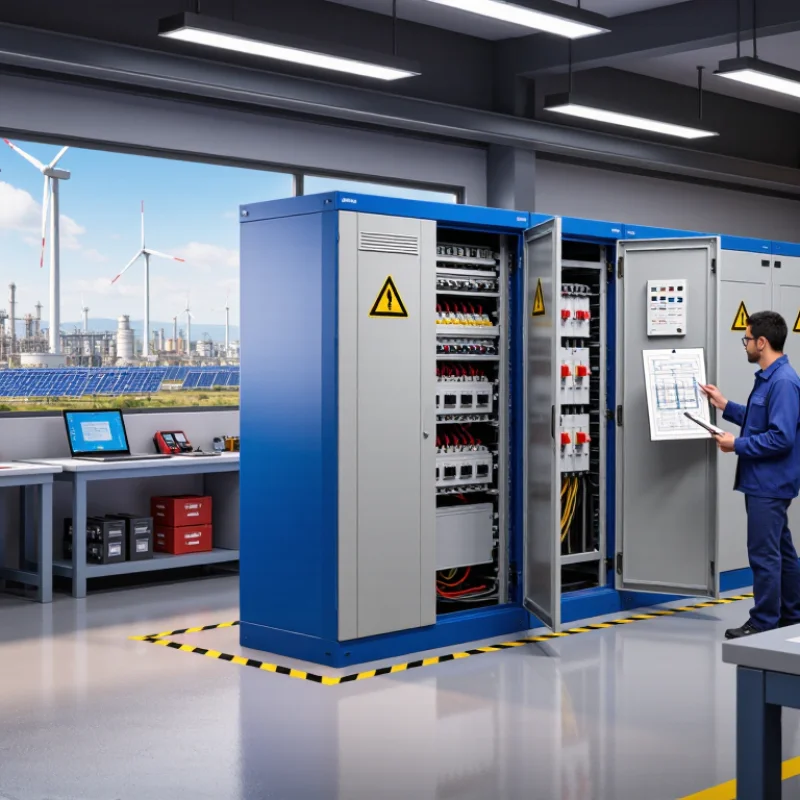
Defining Ring Main Gear and Its Global Applications
How to Source Ring Main Gear Globally in 2026?
Ring main gear is medium-voltage switchgear used to control and protect Electrical Distribution networks. It supports reliable power flow through a ring-shaped circuit, allowing supply from different directions. A typical unit includes load-break switches, circuit breakers, earthing switches, busbars, and protection devices. These components isolate faults and help maintenance teams work safely. Ring main gear is not the same aslow voltage gear, which serves lower electrical levels and different installation conditions. The distinction matters.
Global applications vary by climate, grid design, and project scale. Utilities use it in urban substations and compact roadside enclosures. Commercial buildings may install it near transformers, where space is limited. Industrial plants, renewable-energy sites, transport systems, and data centers also depend on medium-voltage switching. In coastal regions, salt resistance is important. High-altitude projects may need adjusted insulation requirements. Local standards and certification rules must be checked before ordering. A specification can look complete, yet omit humidity, seismic, or service-access details. That is an expensive lesson.
Tips: Request test reports, drawings, protection settings, and maintenance instructions before comparing quotations. Confirm rated voltage, current, short-circuit withstand, enclosure rating, and operating mechanism. Ask how spare parts will be supplied over ten years. Check factory quality procedures and independent inspection options. Do not choose only by purchase price. A cheaper enclosure may create longer outages later. Also, allow time for technical clarification; global sourcing is rarely perfectly linear.
Identifying Technical, Safety, and Compliance Requirements
Sourcing an Hv Ring Main in 2026 requires more than comparing prices and delivery dates. Start with the network profile: rated voltage, continuous current, short-circuit withstand, insulation level, and service altitude. Confirm the cable interface, earthing method, operating sequence, and enclosure rating. A compact unit may fit a substation, yet fail because its termination space is too limited.
Safety evidence must be specific and traceable. Request type-test reports, routine-test records, protection settings, and arc-fault classification where applicable. Verify mechanical and electrical interlocks through witnessed factory acceptance testing. Operators should receive clear procedures for isolation, earthing, lockout, and emergency access. Gas handling also needs attention. If the equipment uses insulating gas, request leakage data, recovery instructions, and environmental declarations. Local rules may differ sharply, so confirm requirements with the utility and an independent inspection body.
Tips: Build a country-by-country compliance matrix before requesting quotations. Check IEC or equivalent standards, import documents, test certificates, service support, and spare-part availability. Ask for serial-number traceability from critical components to final inspection. Keep drawings in the project language. No checklist is perfect. A missed ambient-temperature limit or misunderstood relay interface can delay energization for weeks. I would also challenge unusually fast approvals; speed sometimes hides incomplete testing or unclear responsibility. Require signed technical deviations, not informal promises, before purchase.
How to Source Ring Main Gear Globally in 2026? – Identifying Technical, Safety, and Compliance Requirements
| Requirement Dimension | Typical Global Requirement | Common Ratings or Values | Applicable Standard or Reference | Sourcing and Verification Check |
|---|---|---|---|---|
| Product Definition | Medium-voltage ring main unit or ring main gear for distribution networks, industrial facilities, renewable-energy projects, and infrastructure sites. | Usually compact metal-enclosed switchgear with two ring switches and one tee-off feeder, transformer feeder, or circuit-breaker feeder. | IEC 62271 series; applicable national electrical regulations. | Confirm whether the requested equipment is a switch-fuse RMU, circuit-breaker RMU, load-break switchgear, or a hybrid configuration. |
| Rated Voltage | The rated voltage must match the utility or facility distribution system and the insulation coordination study. | Common systems include 6.6 kV, 10 kV, 11 kV, 12 kV, 13.8 kV, 20 kV, 22 kV, 24 kV, 33 kV, and 36 kV. | IEC 62271-1; IEC 62271-200; local grid-code requirements. | Specify both system voltage and equipment rated voltage. Do not select equipment solely by nominal network voltage. |
| Frequency | The operating frequency must correspond to the receiving network and protection-system settings. | 50 Hz or 60 Hz; some designs support both frequencies subject to manufacturer confirmation. | IEC 62271-1 and project electrical specifications. | Require frequency compatibility for switching devices, protection relays, meters, motors, heaters, and auxiliary supplies. |
| Short-Time Withstand Current | The switchgear must withstand the prospective short-circuit current for the specified duration without unacceptable thermal or mechanical damage. | Common project values include 12.5 kA, 16 kA, 20 kA, 25 kA, and 31.5 kA for 1 or 3 seconds, depending on the network. | IEC 62271-1; IEC 62271-200; network fault-level study. | Obtain certified type-test evidence for the exact enclosure and busbar arrangement, not only for a similar product family. |
| Peak Withstand Current | The peak withstand rating must cover the first asymmetrical short-circuit current peak. | Often approximately 2.5 times the short-time withstand current for 50 Hz systems, subject to the applicable standard and test conditions. | IEC 62271-1 and relevant product standards. | Check the stated peak value and the power-frequency assumptions used in the type-test report. |
| Power-Frequency Withstand Voltage | The insulation system must withstand the specified temporary overvoltage at power frequency. | For many 12 kV-class systems, 28 kV for 1 minute is common; higher voltage classes require higher test values. | IEC 62271-1 insulation requirements. | Verify ratings for phase-to-phase, phase-to-earth, and across the open switching gap where applicable. |
| Lightning Impulse Withstand | The equipment insulation must be coordinated with the network surge environment and installed surge protection. | For many 12 kV-class systems, 75 kV peak is a commonly specified value; project values vary by voltage class and insulation coordination. | IEC 62271-1; IEC 60071 insulation coordination. | Request the impulse test level and confirm whether cable terminations and surge arresters are included in the design scope. |
| Switching Device Type | Selection depends on transformer protection, feeder protection, operational frequency, remote-control requirements, and fault-clearing time. | Load-break switch, switch-fuse combination, vacuum circuit breaker, earthing switch, or a combination of these devices. | IEC 62271-103; IEC 62271-105; IEC 62271-100; IEC 62271-102. | Confirm making, breaking, transfer, earthing, interlocking, and mechanical endurance ratings for each switching function. |
| Internal Arc Classification | Internal-arc protection may be required to protect operators and nearby equipment in the event of an internal fault. | Typical declarations specify accessibility type, test current, and test duration, such as AFL or AFLR arrangements where applicable. | IEC 62271-200. | Verify the tested accessibility sides, arc duration, fault current, installation clearances, pressure-relief path, and cable-compartment configuration. |
| Enclosure and Partition Class | The metal enclosure and internal partitions must limit access to live parts and manage fault propagation. | Metal-enclosed construction with defined partition and service-continuity characteristics, depending on the design. | IEC 62271-200 classification requirements. | Request the classification of compartments, accessibility, continuity of service, and dielectric barriers. |
| Ingress Protection | Protection against solid objects, dust, and water must reflect indoor, outdoor, coastal, or high-dust installation conditions. | Common enclosure targets include IP4X or higher for indoor metal enclosures; outdoor and control-compartment requirements may be higher. | IEC 60529; IEC 62271-1. | Confirm IP rating for each compartment, doors, cable entries, operating mechanisms, and external control cabinets. |
| Insulating Medium | The environmental, safety, maintenance, and end-of-life profile of the insulating medium must be assessed before purchase. | Air-insulated, solid-insulated, vacuum-interrupting, or sealed gas-insulated designs. Gas composition and filling pressure must be documented where relevant. | IEC 62271-1; IEC 62271-200; IEC 62271-4 for gas handling where applicable. | Request environmental declarations, gas-handling instructions, leak-rate information, and end-of-life recovery procedures where applicable. |
| Cable Interface | Cable boxes and interfaces must match cable size, insulation system, screen arrangement, termination technology, and installation access. | Single-core or three-core medium-voltage cables; separable connectors or cable terminations selected according to project voltage and current. | IEC 60502-4; IEC 60840 where applicable; project cable schedule. | Provide cable diameter, conductor size, screen type, bending radius, phase spacing, termination dimensions, and earthing arrangement. |
| Earthing System | The RMU must be compatible with the system neutral arrangement and site protective-earthing design. | Solidly earthed, resistance-earthed, impedance-earthed, or isolated-neutral systems may require different protection and insulation settings. | IEC 62271-102; IEC 61936-1; local installation rules. | Confirm earth-fault current, earthing-switch making capability, touch-voltage limits, and main earth-bar sizing. |
| Protection and Control | Protection functions must coordinate with upstream and downstream devices and meet the required fault-clearing time. | Overcurrent, earth-fault, transformer protection, voltage indication, trip-circuit supervision, and optional automation functions. | IEC 60255 series; IEC 61850 or other approved communication protocols where specified. | Require approved protection settings, wiring diagrams, terminal schedules, logic diagrams, and communication-interface documentation. |
| Auxiliary Supply | Control, indication, motor operation, heaters, relays, and communications must be compatible with the available auxiliary supply. | Common values include 24 V DC, 48 V DC, 110 V DC, 125 V DC, 220 V DC, 110 V AC, and 230 V AC. | Project control-power specification; IEC 62271-1. | Check voltage tolerance, inrush current, polarity, battery autonomy, fuse coordination, and loss-of-supply behavior. |
| Mechanical and Electrical Interlocking | Interlocks must prevent unsafe operating sequences, including closing an earthing switch onto an energized circuit. | Key interlocks, mechanical interlocks, electrical permissives, padlocking provisions, and door-position interlocks. | IEC 62271-200; IEC 62271-102; site safety rules. | Review the operating matrix and require factory demonstration of all critical sequences during inspection. |
| Environmental Conditions | Altitude, ambient temperature, humidity, pollution, solar radiation, corrosion, dust, and seismic conditions affect selection and derating. | Standard indoor designs are commonly rated around -5 °C to +40 °C and up to 1,000 m altitude unless otherwise specified. | IEC 62271-1; IEC 62271-200; project environmental data. | Apply derating above 1,000 m and confirm suitability for coastal salt, desert dust, condensation, tropical humidity, or seismic zones. |
| Regional Compliance Route | The compliance route depends on the destination country, utility approval process, import rules, and whether IEC or North American practices are required. | IEC-based markets generally use the IEC 62271 series; North American projects may require applicable ANSI/IEEE switchgear standards and local certification. | IEC 62271 series; applicable ANSI/IEEE standards; national electrical codes. | Obtain written confirmation from the authority having jurisdiction or end user before freezing the technical specification. |
| Factory and Site Testing | Routine testing must confirm manufacturing quality, dielectric integrity, wiring correctness, mechanical operation, and protection functionality. | Visual inspection, wiring checks, insulation resistance, power-frequency withstand, contact resistance, mechanical operation, interlock tests, and functional tests. | IEC 62271-1 and relevant product-specific standards. | Define inspection and test-plan hold points, witness requirements, calibration records, and acceptance criteria in the purchase contract. |
| Documentation Package | Complete documentation is essential for engineering approval, installation, commissioning, operation, and maintenance. | Datasheets, general-arrangement drawings, single-line diagrams, wiring diagrams, type-test reports, routine-test certificates, manuals, spare-parts lists, and certificates of conformity. | Project document-control requirements; applicable IEC standards. | Make document submission, review status, language, revision control, and final as-built drawings contractual deliverables. |
| Supply-Chain and Logistics | International sourcing must account for export packaging, transport shock, customs classification, delivery terms, spare parts, and local service capability. | Shock-resistant packaging, moisture protection, lifting points, preservation period, shipping dimensions, and agreed Incoterms. | Contract terms; destination import requirements; packaging and transport specifications. | Check production lead time, critical-component availability, warranty response, local commissioning support, and long-term spare-parts access. |
| Sustainability and End-of-Life | Environmental impact, restricted substances, recyclability, and end-of-life handling should be assessed during technical-commercial evaluation. | Material declarations, insulation-medium information, recovery instructions, recycling guidance, and energy-use data for motorized equipment. | Applicable environmental legislation; IEC 62271-4 where gas handling applies; project sustainability requirements. | Require a documented end-of-life procedure and confirmation that the selected design complies with destination-country environmental rules. |
| Commercial Evaluation | The lowest purchase price may not provide the lowest total cost of ownership or the lowest project risk. | Evaluate equipment price, engineering, testing, freight, duties, installation, commissioning, maintenance, outage costs, training, and spares. | Project procurement procedures and lifecycle-cost methodology. | Use a weighted evaluation covering technical compliance, safety evidence, delivery reliability, documentation quality, warranty, and lifecycle cost. |
Evaluating International Suppliers and Manufacturing Capabilities
Global sourcing for Ring Main Gear in 2026 requires more than comparing quotations. International suppliers should show proven experience with medium-voltage distribution equipment. Ask for factory records, test procedures, and recent project references. A capable manufacturer can explain insulation coordination, switchgear ratings, and enclosure protection without relying on vague claims. During a factory visit, inspect busbar finishing, cable-compartment spacing, and torque-control records. Small details matter.
Tips: Request type-test evidence and routine-test reports for every Ring Main Switch configuration. Check partial-discharge results, mechanical endurance, and temperature-rise data. Confirm whether tests use the same materials and design as your order. Review production capacity, not just monthly promises. A supplier may quote twelve weeks, yet critical components can extend delivery by a month. Build a realistic schedule.
Manufacturing capability also includes quality traceability. Each unit should link serial numbers to materials, inspections, and final test results. Ask how the supplier manages design changes after approval. Their answer often reveals operational maturity. Evaluate engineering support across time zones, spare-parts planning, training, and remote troubleshooting. Independent inspections can verify claims before shipment. I have seen attractive proposals fail because documentation was incomplete. That risk deserves attention. A stronger process includes witnessed factory acceptance testing, sealed protection relays, and clear shipping measurements for site access. Yet no audit catches everything. Allow room for doubt.
Comparing Specifications, Pricing, Lead Times, and Support
How to Source Ring Main Gear Globally in 2026?
A reliable comparison starts with specifications, not catalog prices. Confirm rated voltage, continuous current, short-circuit withstand, insulation level, and enclosure protection. Match the gear with local network conditions and applicable IEC requirements. Check whether the unit uses gas, solid insulation, or air insulation. These choices affect maintenance and environmental planning. Request routine test records and independent type-test evidence. Small omissions can create expensive redesigns.
Pricing should show the complete landed cost. Include engineering, protection relays, cable terminations, packing, freight, duties, installation, and spare parts. Ask for prices in one currency and define validity dates. Lead time needs equal attention. A quoted twelve-week build may exclude drawing approval, factory acceptance testing, shipping, and site commissioning. Allow buffer time. Real projects rarely follow perfect schedules.
Tips: Use a comparison sheet with identical technical fields. Ask suppliers to mark deviations clearly. Check references from similar climates and utility systems. Support is often underestimated. Confirm response times, commissioning coverage, training, manuals, warranty terms, and remote troubleshooting options. Request a named technical contact, not only a sales mailbox. I would also inspect sample documents before ordering. Some quotations look professional but remain technically vague. That is a warning, not a minor inconvenience.
Managing Global Shipping, Customs, and Import Regulations
How to Source Ring Main Gear Globally in 2026?
Global sourcing of ring main gear requires more than comparing factory prices. Shipping conditions can alter the landed cost significantly. UNCTAD’s Review of Maritime Transport 2024 reported continued pressure on shipping capacity and route reliability. Therefore, buyers should request protected packaging, moisture indicators, shock sensors, and a realistic delivery buffer.
Customs classification must match the equipment’s actual configuration. An air-insulated unit and a gas-insulated unit may require different tariff treatment. Confirm the applicable HS code with a licensed customs broker before shipment. The commercial invoice should state voltage, current rating, switching function, quantity, origin, and net weight. Small errors multiply. One missing technical description can delay clearance.
Import rules also vary by destination. Check conformity assessment, electrical safety documentation, local labeling, and required inspection certificates before placing the purchase order. For gas-insulated equipment, confirm whether the insulating gas is controlled under environmental regulations and whether transport declarations are required. The OECD Trade Facilitation Indicators report that stronger border procedures can reduce trade costs substantially, yet paperwork remains a practical weakness. I would also compare Incoterms carefully; a low unit price under an unsuitable delivery term can hide port fees, inland handling, insurance, and customs charges. The World Bank’s Logistics Performance Index 2023 emphasizes that shipment reliability and border efficiency differ widely between markets. Build a document checklist, verify it with the importer of record, and allow time for correction. Mistakes happen. Reflect on them before repeating the order.
Inspecting, Testing, and Qualifying Ring Main Gear Before Delivery
When sourcing ring main gear globally in 2026, factory documents are only the starting point. A qualified inspection team should verify the Hv Ring Main Unit against approved drawings, ratings, and local grid requirements. Check enclosure seams, cable compartments, interlocks, earthing points, and nameplates. Look closely. Small paint damage can reveal poor handling or weak corrosion protection. Record serial numbers and photographs before energization. Ask the manufacturer to explain each protection setting in practical terms, not copied technical language.
Testing should follow a signed inspection and test plan, witnessed by an independent engineer when project risk justifies it. Typical checks include insulation resistance, dielectric withstand, contact resistance, mechanical operation, pressure or vacuum integrity, wiring continuity, and protection relay functions. Simulate trip signals and remote commands. A successful factory test does not prove safe installation. Transit vibration, humidity, and incorrect cable preparation can change results. We have seen reports marked “passed” while one auxiliary contact operated inconsistently. That should remain an open issue, not a forgotten note.
Tips: Define acceptance criteria before requesting quotations. Require calibrated instruments and traceable certificates. Match test voltages to the applicable standard and equipment design. Inspect packaging, shock indicators, and moisture barriers at dispatch. Keep sealed spare parts separate from loose accessories. If a supplier resists retesting, pause approval. Cheap speed can become expensive commissioning work. Leave room for engineering judgment.
FAQS
Request factory records, type-test evidence, routine-test reports, and recent project references. Vague claims are not enough. Confirm the tested design matches your ordered equipment.
Inspect busbar finishing, cable-compartment spacing, enclosure seams, and earthing points. Review torque-control records and material traceability. Small details matter.
Require insulation resistance, dielectric withstand, contact resistance, and mechanical operation tests. Check wiring continuity and protection relay functions. Simulate trip signals and remote commands.
These results help confirm insulation performance and thermal behavior under specified conditions. Review the test method, materials, and equipment design. Numbers alone can mislead.
Each unit should connect its serial number with materials, inspections, and final test results. Ask how design changes are controlled after approval. That answer reveals maturity.
Use a signed inspection and test plan with clear acceptance criteria. An independent engineer may witness testing when project risk is high. Record photographs and serial numbers.
No. Transit vibration, humidity, and poor cable preparation can change results. Inspect packaging, shock indicators, moisture barriers, and site connections. A passed report is not the whole story.
Review actual production capacity, component availability, and shipping measurements. A twelve-week promise may extend by a month. Leave some room.
Evaluate engineering support across time zones, spare-parts planning, training, and remote troubleshooting. Require calibrated instruments and traceable certificates. If retesting is resisted, pause approval.
Conclusion
Sourcing Ring Main Gear globally in 2026 requires a structured approach that balances technical performance, safety, compliance, and total cost. Buyers should first define the equipment’s intended applications, voltage levels, fault ratings, environmental conditions, and operational requirements. They should then assess suppliers according to manufacturing capacity, quality systems, engineering expertise, customization options, and experience with international projects. Comparing complete specifications, pricing, production schedules, warranty terms, spare-parts availability, and technical support is essential for making a reliable purchasing decision.
International procurement also involves careful planning for packaging, transportation, customs documentation, import requirements, and delivery risks. Before shipment, each unit should undergo detailed inspections and appropriate testing, including dimensional checks, insulation verification, mechanical operation tests, and review of certification records. A clear inspection and acceptance plan helps confirm that the Ring Main Gear meets the agreed standards and project requirements. By combining supplier qualification, transparent evaluation, logistics coordination, and pre-delivery verification, organizations can reduce procurement risks and secure dependable equipment for long-term operation.
Related Posts
-
What is High Voltage RMU and Why is it Essential for Power Distribution
-
How to Choose the Right Rmu Electrical Panel for Your Needs?
-

How to Choose China High-Quality Low Voltage Switchgear Service?
-

Discover Top Wholesale High-Quality Rmu Electrical Panel Service in China?
-
What is Rmu Switchgear and Why is it Essential in 2026?
-

2026 Top China Wholesale Rmu Electrical Panel Service Insights?