
So, what’s a Ring Main Switch? Basically, it’s a medium-voltage device that controls, protects, and isolates electrical circuits. You’ll often see it in distribution substations, commercial buildings, factories, and renewable energy setups. Unlike the simple switch you’d flip at home, it works as part of a coordinated ring network. Power can come in from different directions, which helps keep supply going when one cable section needs maintenance.
Inside the enclosure, depending on the design and voltage rating, you might find a load-break switch, a circuit breaker, an earthing switch, busbars, and protective relays. If a fault happens, the protection system notices abnormal current and opens the right switching device. The earthing switch then helps make things safer for authorized maintenance workers. That said, it doesn’t replace proper isolation, testing, or site safety procedures.
Terminology changes from region to region, and honestly, that causes a fair bit of confusion.
During practical inspections, engineers look at labels, interlocks, cable terminations, insulation condition, and operating mechanisms. A clear position indicator matters-you really don’t want to rely on guesses. Many modern units use sealed insulation systems, while others go with air, gas, or solid insulation. Each has its own maintenance needs and environmental trade-offs.
No switch is foolproof, of course. Bad protection settings, sloppy installation, or skipped inspections can all hurt reliability. So this guide walks through how a Ring Main Switch works, where the main components fit, and what engineers should think about before operation. Always check the technical details against the manufacturer’s instructions and the relevant electrical standards.
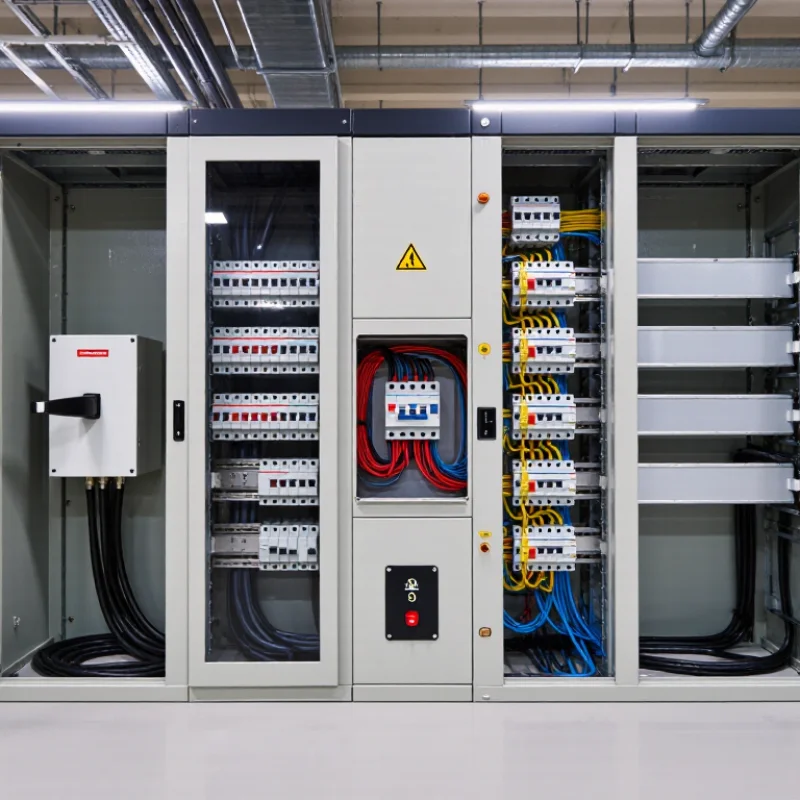
Ring Main Switch: Definition and Core Purpose
A ring main switch is a control device used with a ring final circuit in low-voltage electrical installations. Its core purpose is simple: it connects, disconnects, or isolates the circuit for operation and maintenance. In a ring circuit, cables leave the distribution board, serve several outlets, and return to the same board. The switch manages that complete path, rather than controlling only one socket. This distinction matters.
When switched on, current can travel around both sides of the ring, sharing the circuit load. When switched off, the switch opens the conductors and stops normal current flow. A competent electrician checks polarity, continuity, insulation resistance, and protective conductor integrity before energizing it. These tests reveal loose terminals, damaged insulation, or an incomplete return path. Small errors can create serious heat.
In practical work, the switch should be clearly labelled and accessible during servicing. It should not be treated as a replacement for overcurrent protection or residual-current protection. Those functions require correctly selected protective devices and verified installation design. The term “ring main switch” can also be used loosely. That distinction is easy to miss. Local wiring rules and equipment ratings still govern the installation. A neat enclosure can still hide a poor termination. I would not rely on appearance alone; internal connections must be tested.
What Is a Ring Main Switch and How Does It Work?
| Data Dimension | Description | Typical or Relevant Information |
|---|---|---|
| Definition | A ring main switch is a medium-voltage switching device used to connect, isolate, or interrupt a section of a ring distribution circuit. | Often installed as part of a ring main unit or metal-enclosed distribution switchgear. |
| Core Purpose | To control power flow and maintain service continuity while allowing a faulty or isolated network section to be safely disconnected. | Supports switching, isolation, fault management, and planned maintenance. |
| Typical Network Arrangement | The feeder is arranged as a loop, with switching points allowing the circuit to be supplied from either direction. | The ring may normally operate with one point open while retaining an alternative supply path. |
| Main Switching Function | The switch makes or breaks the circuit under defined operating conditions and separates equipment from the energized network when required. | Load-break switches are designed to interrupt normal load current; fault interruption may require a circuit breaker or fuse. |
| Common Switch Types | Ring main equipment may use a load-break switch, switch-disconnector, circuit breaker, or a combination with fuses. | The selected type depends on the required protection, fault level, automation, and operating duty. |
| Basic Operating Sequence | An operator or motor mechanism moves the contacts between open, closed, and sometimes earthed positions. | Mechanical and electrical interlocks help prevent unsafe switching sequences. |
| Arc Control | When contacts separate, the switching device controls the electrical arc using an approved insulating and arc-extinguishing medium. | Common technologies include vacuum, gas-insulated, and air-insulated designs. |
| Isolation Function | Isolation creates a visible or positively indicated separation between the supply and the equipment being maintained. | Isolation is normally combined with earthing and lockout procedures before maintenance. |
| Earthing Switch | An earthing switch connects an isolated cable or circuit section to earth to discharge induced or trapped energy. | It must only be closed after the relevant circuit has been verified as de-energized. |
| Protection Against Faults | Protection equipment detects abnormal current and disconnects the affected section to limit damage and maintain supply to healthy sections. | Protection may use fuses, overcurrent relays, earth-fault relays, or circuit breakers. |
| Typical Voltage Classes | Ring main switches are commonly used in medium-voltage distribution systems. | Common system classes include 6.6 kV, 11 kV, 22 kV, and 33 kV; the actual rated voltage is specified by the network operator. |
| Typical Continuous Current | Continuous current indicates the current the switchgear can carry without exceeding its permissible temperature rise. | Common ratings include 400 A, 630 A, and 1,250 A, depending on the design and application. |
| Short-Time Withstand | This rating describes the fault current the equipment can withstand for a specified short duration without unacceptable damage. | Values such as 12.5 kA, 16 kA, or 25 kA for 1 or 3 seconds are common, but must be confirmed from the equipment rating plate. |
| Supply Continuity | If one cable section develops a fault, the faulty section can be isolated and supply can often be restored through the opposite side of the ring. | Restoration depends on network configuration, protection coordination, and switching authorization. |
| Remote Operation | Motorized mechanisms and control interfaces can allow switching, status monitoring, and fault indication from a remote location. | Automation is optional and depends on the distribution control system. |
| Safety Interlocks | Interlocks restrict hazardous actions, such as closing an earthing switch onto an energized circuit or opening an access panel while the circuit is live. | Interlocks do not replace approved isolation, testing, grounding, and lockout procedures. |
| Applicable Standards | Design, testing, and operation are normally based on applicable medium-voltage switchgear and switch standards. | IEC 62271-200 covers AC metal-enclosed switchgear; IEC 62271-103 covers high-voltage switches. Local regulations also apply. |
Note: Electrical ratings and operating procedures vary by installation. Always verify the equipment nameplate, approved drawings, protection settings, and local safety requirements before operation.
Main Components and Their Functions
What Is a Ring Main Switch and How Does It Work?
A ring main switch is a medium-voltage device used in Electrical Distribution networks. It connects several feeders in a loop, allowing power to reach a substation from different directions. If one cable develops a fault, operators can isolate that section and maintain supply through the other path. The switch itself does not create electricity. It controls, protects, and separates circuits.
The main enclosure protects live components from dust, moisture, and accidental contact. Inside, copper or aluminium busbars carry power between switching sections. A load-break switch opens or closes a circuit during normal operation. For serious faults, a circuit breaker or fuse interrupts excessive current. An earthing switch connects an isolated cable to ground, making maintenance safer after proper testing.
Cable terminations provide secure connections between incoming cables, outgoing cables, and the switchgear. Protection relays monitor current and other electrical conditions. They can signal a breaker to trip when abnormal values appear. Mechanical interlocks prevent unsafe switching sequences, while position indicators show whether equipment is open, closed, or earthed. Small details matter here. A clear label can prevent a costly mistake.
In practice, technicians inspect insulation, connections, interlocks, and operating mechanisms before energising equipment. Test results should be recorded, not assumed. A neat panel can still hide a loose termination or ageing seal. Procedures also vary with voltage level and installation design, so qualified personnel must follow approved technical standards.
How Power Flows Through a Ring Main System
A ring main system moves medium-voltage electricity through a closed loop. Power normally enters from one feeder and travels through connected substations. A normally open point separates the two supply paths during routine operation. This arrangement keeps current flowing in one direction under normal conditions, while preserving an alternative route after a fault.
An Rmu Switch controls each compact section of the loop. It can open a faulty cable section, ground isolated equipment, and redirect supply from the opposite feeder. Operators confirm voltage absence before maintenance, then close selected switches to restore healthy sections. The loop is not magically self-healing. Protection settings, cable ratings, and switch interlocking must coordinate precisely. One wrong assumption can interrupt several customers.
This design matters as electricity demand changes. The IEA Electricity 2024 report forecasts global demand growth of about 4% annually through 2026. IRENA’s Renewable Capacity Statistics 2024 records 473 gigawatts of renewable capacity added during 2023. More local generation can create two-way power flows, especially near solar installations. Engineers must therefore review fault levels, reverse-current protection, and earthing practices. Field inspections still matter. Dust, moisture, and aging contacts can undermine an otherwise sound ring. In practice, a ring main is resilient, but never maintenance-free.
How the Switch Operates During Normal Conditions
A ring main switch controls power flow in a medium-voltage distribution ring. Under normal conditions, it connects an incoming cable to the busbar and supplies the outgoing feeder. The circuit remains closed while electricity passes through the switch contacts. Operators can open or close the circuit when maintenance or load transfer is required.
Inside the enclosure, moving contacts operate through an insulated mechanism. Many modern units use an sf6 gas insulated switch, although other insulation methods are also available. The gas or solid insulation separates live parts from the enclosure and supports compact construction. During normal switching, the mechanism moves quickly to reduce arcing between contacts. A clear position indicator shows whether the switch is open or closed. The operator may hear a firm click. That sound helps, but it does not prove safe isolation.
Tips: Check the position indicator, cable labels, and operating handle before switching. Follow the approved switching procedure and wear suitable protective equipment. Never rely on memory alone. A second-person check can prevent a simple mistake. Routine inspections should include mechanism movement, enclosure condition, pressure indicators where fitted, and signs of overheating. One point deserves reflection: a ring main switch is not automatically a fault-clearing device. Its exact duty depends on the equipment design and protection settings, so technical documents must guide every operation.
How Faults Are Detected and Isolated
What Is a Ring Main Switch and How Does It Work?
A ring main switch is medium-voltage switchgear used in distribution networks. It connects several feeder sections in a closed loop. Power can travel from either direction when the network is healthy. The enclosure protects conductors and switching parts from dust, moisture, and accidental contact. A load-break switch controls normal current, while an enclosed fusible switch may protect a connected transformer.
Fault detection begins when current or voltage changes beyond an expected range. Protection relays monitor overloads, short circuits, and earth faults. Current transformers provide measured signals to the protection system. If the fault current is high enough, a fuse can melt and interrupt the circuit. Some units also use visible fault indicators, which help technicians identify the affected section. That distinction matters. The switch itself may isolate a circuit without identifying every fault.
When a fault occurs, protection equipment opens the nearest suitable device. Technicians then locate the faulty cable or feeder section using test instruments and network indications. They isolate both sides of the suspected section, confirm it is de-energized, and apply approved earthing procedures. Healthy sections may receive power through the opposite side of the ring. This process reduces the outage area. It is not always perfectly automatic. A misleading indicator, damaged cable, or incorrect setting can delay isolation. Careful inspection remains essential.
Common Applications, Benefits, and Safety Considerations
A ring main switch controls medium-voltage power in a looped distribution network. It can connect, disconnect, or isolate sections of the circuit. Unlike a simple household switch, it is designed for controlled switching under specified electrical loads. Many units include load-break switches, fuses, earthing points, and mechanical interlocks. These features help operators manage faults without shutting down an entire area.
Common applications include utility networks, factories, hospitals, data centres, and renewable energy sites. A ring arrangement can maintain power from another direction when one cable section fails. This improves service continuity and simplifies planned maintenance. Its compact design also suits substations and a switch box station with limited floor space. However, a ring main switch does not remove every outage risk. Poor coordination, ageing insulation, or incorrect settings can still interrupt supply. Field conditions are less tidy than diagrams.
Safety depends on disciplined procedures and competent electrical personnel. Operators should verify the circuit state, follow isolation rules, apply earthing procedures, and use suitable arc-flash protection. Interlocks must never be bypassed. Clear labels and current single-line diagrams matter, especially during emergency work.
Tips: Keep switching records accurate. Inspect cable compartments for moisture, dust, and heat marks. Test protection systems at scheduled intervals. Never rely only on an indicator light; confirm the equipment status through approved testing methods. A rushed operation may save minutes, then create a serious hazard.
Common Medium-Voltage Classes Used with Ring Main Switchgear
| Label | Nominal system voltage (kV) |
|---|---|
| 3.3 kV | 3.3 |
| 6.6 kV | 6.6 |
| 11 kV | 11 |
| 22 kV | 22 |
| 33 kV | 33 |
Ring main switches are commonly used in medium-voltage distribution networks. The chart shows widely used nominal voltage classes from 3.3 kV to 33 kV. An RMU typically connects two feeder paths and supplies transformers or local loads, allowing sections of the network to be isolated during maintenance or faults. Actual voltage selection depends on the utility network, insulation requirements, fault level, and applicable standards.
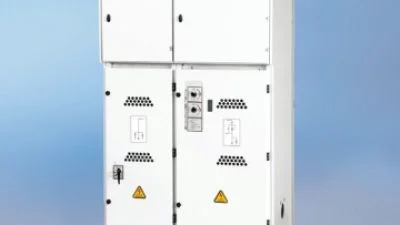
China HXGN17-12 Box-Type Fixed Metal-Enclosed Switchgear: A Guide to Reliable Ring Main Units
The China HXGN17-12 box-type fixed metal-enclosed switchgear is designed as a reliable ring main unit for medium-voltage power distribution. Operating at a rated voltage of 12 kV and a frequency of 50 Hz, it supports stable control and distribution in three-phase AC ring networks, terminal distribution systems, and industrial power facilities. Its compact box-type structure helps optimize installation space while providing organized protection for internal electrical components.
Built with a durable metal enclosure, the HXGN17-12 offers dependable performance in demanding operating environments. The enclosed design helps reduce exposure to dust, moisture, and accidental contact, supporting safer operation and easier maintenance. Suitable for substations, commercial facilities, infrastructure projects, and industrial plants, this fixed switchgear can contribute to efficient load management and continuity of power supply. Its practical configuration and robust construction make it a suitable choice for modern distribution networks that require consistent performance, secure switching, and long-term operational stability.
FAQS
It is a medium-voltage device for controlling electrical distribution in a looped network. It connects, disconnects, and isolates circuit sections. It does not generate electricity.
Power can reach a substation from different directions. If one cable fails, operators isolate that section. Supply may continue through the other path.
Common parts include busbars, load-break switches, circuit breakers, fuses, and earthing switches. Cable terminations connect incoming and outgoing cables. Relays monitor electrical conditions.
It connects an isolated cable to ground. This helps protect technicians during maintenance. Testing must confirm isolation before earthing.
They are used in utility networks, factories, hospitals, data centres, and renewable energy sites. Their compact design suits substations with limited floor space.
Mechanical interlocks prevent unsafe switching sequences. Position indicators show whether equipment is open, closed, or earthed. Interlocks should never be bypassed.
They should inspect insulation, cable connections, seals, interlocks, and operating mechanisms. Moisture, dust, and heat marks need attention. Test results should be recorded.
No. Ageing insulation, poor coordination, incorrect settings, or damaged cables can still interrupt supply. A neat panel can hide a loose termination. That deserves careful checking.
Operators should verify circuit status, follow isolation procedures, and use suitable arc-flash protection. They should check approved diagrams and switching records. Never trust one indicator alone.
Conclusion
A Ring Main Switch is a switching and protection device used in medium-voltage ring main systems to control, connect, and disconnect sections of an electrical distribution network. Its main components typically include load-break switches, circuit breakers or fuse units, busbars, cable terminations, and protective relays. Electricity normally enters through one feeder, passes through the ring, and supplies connected transformers or distribution points before returning through another feeder. This arrangement provides flexibility and helps maintain service if one route requires maintenance.
Under normal conditions, the switch remains closed to allow continuous power flow and can be operated to redirect or isolate circuits. When an overload, short circuit, or cable fault occurs, protective devices detect abnormal current and quickly open the affected section. This limits damage while keeping healthy parts of the network energized. Ring main systems are widely used in commercial buildings, industrial facilities, utilities, and urban distribution networks because they improve reliability, operational flexibility, and maintenance convenience. Proper installation, grounding, insulation checks, safe switching procedures, and regular maintenance are essential for dependable and safe operation.
Related Posts
-
What is Rmu Breaker and How Does it Work?
-
Top Quality Ring Main Gear Solutions for Global Buyers?
-
Top Ring Main Switch Features for 2026 Buyers Guide?
-
How to Source Ring Main Gear Globally in 2026?
-
2026 Best RMU Switchgear Type for Global Buyers?
-
China Top RMU Breaker Manufacturers for Global Buyers