
When it comes to China’s switchgear market, you’ll find a mix of well-known electrical equipment brands and specialized manufacturers. But honestly, choosing the right supplier isn’t just about glancing at their names. You really need to dig a little deeper—look into their product range, check out technical docs, see what kind of manufacturing capabilities they have, and think about their after-sales support too.
This guide is here to help you navigate companies associated with Lv Gis Switchgear. It’ll walk you through how to evaluate what they’re offering. You might come across names like Sieyuan Electric, Henan Pinggao Electric, CHINT Electric, and TBEA when talking about China’s power equipment scene. But just because they’re big players in the sector doesn’t automatically mean they have a specific low-voltage GIS product line you need. Always double-check each model directly with the manufacturer to be sure.
Details really matter in this game. Pay close attention to specs like rated voltage, current, short-circuit withstand strength, enclosure design, and where it’s meant to be installed. Don’t just rely on pretty brochures—ask for up-to-date datasheets, test reports, certifications, and clear warranty info. A glossy brochure can be tempting, but it’s not a guarantee that a product will work for your specific setup.
Take your time and look carefully.
Remember, this overview is just a starting point—not a final ranking. Public info can sometimes be incomplete, and product lines do change over time. Plus, some suppliers might use the term “GIS” a little differently in their catalogs, which can be confusing. So, it’s smart to compare specs side-by-side and get everything in writing before you narrow down your options. Be cautious if you come across claims that lack independent testing or actual project references—they might not tell the full story. Often, the biggest or most famous name isn’t always the best choice. The key is to find a supplier whose documented products fit your needs perfectly and who can provide clear, knowledgeable answers to your detailed questions.
What Is Low-Voltage GIS Switchgear?
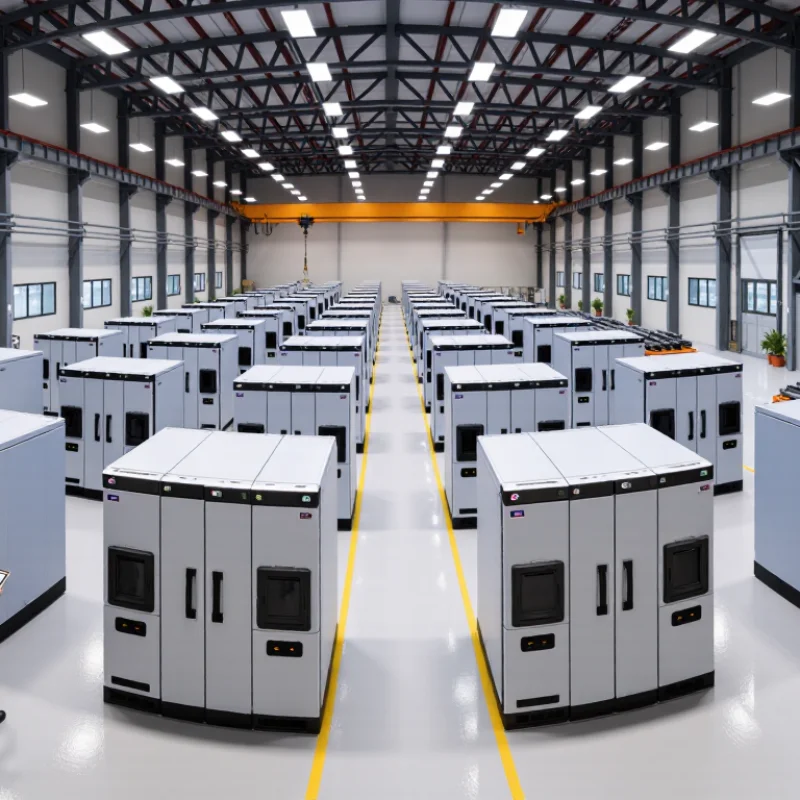
Low-voltage GIS switchgear is a compact electrical assembly with busbars and switching devices inside a sealed metal enclosure. It uses insulating gas or an alternative medium to reduce clearance requirements. This design fits data centers, factories, and urban substations where floor space is limited. The keyword Lv Switchgear often describes these low-voltage distribution systems, but the terminology needs care. IEC 61439 governs low-voltage assemblies, while IEC 62271-200generally covers metal-enclosed switchgear above 1 kV. Therefore, not every product marketed as “LV GIS” follows the same technical definition.
In field inspections, engineers check busbar temperature rise, insulation coordination, ingress protection, and fault withstand strength. A small cabinet can still carry several thousand amperes. The enclosure must also allow safe access for testing and maintenance. The IEA Electricity 2024 report forecasts average global electricity-demand growth of 3.4% annually from 2024 to 2026. That pressure makes reliable low-voltage distribution increasingly important, especially in expanding Chinese industrial facilities. However, compactness alone proves nothing. Buyers should request verified test reports, type-test evidence, short-circuit ratings, and service records. One weakness remains: gas-insulated designs can complicate repair when sealing systems age. Engineers should question lifecycle costs, not only the initial footprint.
How Does LV GIS Switchgear Differ from Other Switchgear?
Low-voltage GIS switchgear differs mainly through insulation, enclosure, and operating environment. Unlike conventional air-insulated switchgear, it places busbars and switching parts inside a sealed compartment. Gas or another insulating medium reduces exposure to dust, humidity, and accidental contact. The footprint can also be smaller, which matters in factories, data centers, and compact utility rooms.
The distinction is not always clean. “LV GIS” usually serves systems below 1,000 volts, while IEC 62271-200 mainly covers metal-enclosed switchgear above 1,000 volts. For low-voltage assemblies, IEC 61439-1:2020 remains the more relevant reference for design verification, temperature rise, short-circuit strength, and routine testing. This difference is often missed in online product comparisons.
Performance gains are practical. A sealed design can reduce cleaning work and limit corrosion caused by airborne contaminants. However, it may require specialized maintenance procedures and tighter manufacturing control. A minor seal defect can become a serious reliability concern. That deserves attention.
The IEA’s Electricity 2024 report estimates that data centers consumed about 460 TWh globally in 2022. Their demand is expected to rise sharply by 2026, increasing interest in compact, dependable distribution equipment. CIGRE technical publications also emphasize lifecycle management, gas handling, and condition monitoring for enclosed switchgear. Buyers should compare verified temperature-rise results, internal arc classification, maintenance access, and end-of-life procedures. A smaller cabinet is useful, but it is not automatically safer or cheaper.
| Label | Voltage boundary (kV AC) |
|---|---|
| Low-voltage boundary | 1 |
| IEC 62271-200 upper scope | 52 |
Who Are the Top Lv Gis Switchgear Manufacturers in China? — How Does LV GIS Switchgear Differ from Other Switchgear?
This chart shows voltage boundaries, not a manufacturer ranking. Low-voltage equipment is generally rated up to 1 kV AC; IEC 62271-200 covers metal-enclosed switchgear above 1 kV and up to 52 kV AC. GIS uses gas insulation in sealed compartments and is more commonly associated with medium- and high-voltage applications, while Low-Voltage Switchgear is commonly air-insulated.
Which Criteria Identify Leading Chinese LV GIS Manufacturers?
Leading Chinese LV GIS manufacturers are identified by evidence, not polished catalogues. The first test is technical compliance. Ask for current IEC and applicable Chinese standard certificates, type-test reports, and routine-test records. These documents should match the exact enclosure, busbar layout, and rated voltage offered. A credible factory explains short-circuit withstand, temperature rise, insulation levels, and ingress protection without vague claims. It should also show serial-number traceability from copper processing to final inspection.
Manufacturing discipline matters on the shop floor. During an audit, inspect conductor torque records, cleanliness inside sealed compartments, and vacuum or gas-handling controls. Small details expose large risks. For Rmu Switchgear, examine interlocks, cable termination space, pressure-relief paths, and access for maintenance. Ask engineers to demonstrate switching sequences, not merely present drawings. Production capacity is useful, but repeatable quality matters more than a large building.
Experience should be proven through comparable installations, especially humid ports, industrial plants, and crowded commercial rooms. Request anonymized operating data, failure analysis, spare-parts lead times, and service response records. Strong suppliers offer commissioning guidance, training, and clear warranty boundaries. They also adapt protection settings and interfaces to the project while preserving tested designs. Price deserves review, yet the lowest quotation can hide testing gaps or weak after-sales support. No factory is perfect. I would still question incomplete reports, rushed answers, and promises that sound unusually clean.
Who Are China’s Major LV GIS Switchgear Manufacturers?
China’s major LV GIS switchgear manufacturers serve factories, commercial buildings, rail systems, and utility facilities. Their products usually combine compact metal enclosures, busbars, circuit breakers, and protective relays. Space saving matters.
Experienced manufacturers often operate testing laboratories and automated assembly lines. They check insulation distance, temperature rise, mechanical endurance, and short-circuit performance.
Some facilities use laser cutting, robotic welding, and sealed pressure testing. These details reveal practical manufacturing capability better than polished brochures.
Buyers should examine factory certifications, test reports, delivery records, and after-sales support. Local manufacturers may customize cabinet dimensions, cable entry positions, protection settings, and communication protocols. This flexibility helps projects with narrow electrical rooms or unusual load layouts.
However, customization can increase testing time and maintenance complexity. A catalog is not proof. The market is not perfectly transparent.
Engineers should verify performance under actual operating conditions, especially in dusty workshops or humid coastal areas. LV GIS switchgear should also be compared carefully with Hvdc Switchgear, because their voltage levels, protection methods, and application requirements differ. Reliable suppliers explain these boundaries clearly and provide drawings, inspection records, and replacement guidance before delivery.
How Do Their Products and Capabilities Compare?
China’s leading LV GIS switchgear manufacturers differ less in appearance than in engineering depth. Buyers should compare design standards, testing records, delivery control, and after-sales support. Experienced suppliers provide tested assemblies, traceable materials, and clear installation documents. Their strongest factories combine automated fabrication with skilled electrical engineers. That balance matters.
Product capabilities vary across voltage ratings, enclosure sizes, busbar layouts, and protection options. Some manufacturers support compact indoor systems for factories and commercial buildings. Others develop customized units for substations, transport facilities, and demanding industrial sites. In broader Hv Lv Switchgear projects, coordination between low-voltage panels and upstream equipment deserves careful review. A neat cabinet is not enough. Thermal performance, cable access, and maintenance space affect daily operation.
Reliable manufacturers usually explain short-circuit ratings, insulation levels, ingress protection, and routine test procedures. Independent certification adds credibility, but buyers should verify its scope and validity. Factory acceptance testing can reveal loose connections, poor labeling, or weak interlocks before shipment. Small details matter. Site engineers should also inspect drawings against actual cable routes and floor conditions. Published specifications may look impressive, yet field performance can expose gaps. I have found that communication delays and unclear responsibility sometimes create more risk than the equipment itself. Manufacturers should admit these limitations and provide practical corrective plans.
How Can Buyers Select an LV GIS Switchgear Manufacturer?
Selecting an LV GIS switchgear manufacturer requires more than comparing catalog prices. Buyers should verify practical experience with similar systems, such as Compact Substations, industrial plants, or data centers. Ask for project references with matching voltage, current, fault level, and enclosure requirements. Real evidence matters.
Request test reports aligned with IEC 61439 and any applicable local standards. Check temperature-rise, short-circuit, dielectric, mechanical-operation, and protection tests. The manufacturer should explain each result clearly, not simply provide a certificate. Review the factory’s quality controls, production traceability, and inspection records. Can technicians identify a component from its batch number?
Look closely at the enclosure rating, busbar material, insulation medium, protection relays, and cable-access design. Confirm whether maintenance can be completed safely in the available working space. Ask about spare parts, response time, remote support, and technician training. A low quotation may look attractive. It may also conceal weak after-sales support or unclear exclusions. Buyers should compare the full lifecycle cost, including testing, installation, energy losses, and disposal requirements. Environmental documentation is important when gas insulation is used. No checklist is perfect. A factory visit can reveal gaps that documents miss, such as poor labeling, crowded assembly areas, or inconsistent workmanship. The strongest supplier is not always the largest one; it is the one that answers difficult questions with measurable evidence.
Who Are the Top LV GIS Switchgear Manufacturers in China? – How Can Buyers Select an LV GIS Switchgear Manufacturer?
Low-voltage switchgear is commonly air-insulated; gas-insulated designs are more common at medium and high voltages. Use the criteria below to verify that a proposed product is genuinely suitable for the required low-voltage application. The table provides selection checks, not a company ranking.
| Evaluation Dimension | What Buyers Should Verify | Relevant Reference or Data | Practical Selection Check |
|---|---|---|---|
| Product classification | Confirm the equipment is a low-voltage assembly and clarify what “GIS” means in the supplier’s design: gas-insulated compartments, a different insulation medium, or a marketing description. | IEC 61439 covers low-voltage switchgear and controlgear assemblies with rated voltage up to 1,000 V AC or 1,500 V DC. | Request a single-line diagram, rated-voltage data, and a written description of the insulation system. |
| Standards and design verification | Check that the complete assembly—not just individual breakers—has appropriate design verification and routine verification records. | IEC 61439-1 provides general rules; IEC 61439-2 applies to power switchgear and controlgear assemblies. | Review test reports for the offered configuration, including enclosure, busbars, protective circuits, and temperature-rise performance. |
| Electrical ratings | Match rated operational voltage, frequency, busbar current, feeder current, and short-circuit withstand ratings to the project design. | These ratings are design- and configuration-dependent; there is no single universal current or fault rating for all LV assemblies. | Compare the nameplate schedule and fault-level calculations with the project specification; do not rely on a catalog headline alone. |
| Switching and protection devices | Verify breaker type, rated current, breaking capacity, trip-unit functions, selectivity, and compatibility with the assembly. | IEC 60947-2 covers circuit-breakers for low-voltage switchgear and controlgear. | Request device data sheets, coordination studies, and confirmation that the specified breaker combinations are supported. |
| Internal arc and personnel safety | Determine whether internal-arc performance is required and identify the tested configuration, access sides, and installation conditions. | IEC TR 61641 provides guidance for testing enclosed low-voltage assemblies under internal arcing conditions; it is a technical report, not a universal mandatory rating. | Ask for the complete test report and confirm that the tested layout and installation clearances match the proposed project. |
| Enclosure and ingress protection | Select an enclosure protection level appropriate to the site, including dust, water, access, ventilation, and indoor or outdoor exposure. | IEC 60529 defines IP-code classification for enclosures. The required IP rating depends on installation conditions. | Verify the IP rating for the assembled product and check whether doors, cable entries, and ventilation openings affect it. |
| Gas and environmental management | If gas insulation is used, identify the gas, filling pressure, leak-monitoring method, service procedure, and end-of-life handling requirements. | Environmental requirements for fluorinated gases vary by jurisdiction and can change over time; confirm the rules applicable at the installation location. | Obtain the gas data sheet, safety documentation, maintenance instructions, and a plan for recovery or disposal where applicable. |
| Factory quality control | Assess traceability of materials, production inspections, calibration of test instruments, and handling of nonconforming products. | A quality-management certificate can support process assessment, but it does not replace product design verification or project-specific checks. | Request sample routine-test records, inspection plans, and permission for a documented factory audit when appropriate. |
| Customization and integration | Confirm busbar arrangement, cable access, metering, control voltage, communications, dimensions, and interfaces with upstream and downstream equipment. | Changes to an assembly may affect its verified design, ratings, thermal performance, or protection coordination. | Require an approved drawing set and a compliance statement for the final, customized configuration before production. |
| Delivery and after-sales support | Evaluate production lead time, spare-parts availability, commissioning support, warranty terms, and response procedures. | Service commitments are contractual and should be checked against the project’s location, schedule, and operational requirements. | Obtain a written delivery schedule, recommended spare-parts list, warranty conditions, and defined support contacts or response times. |
| Total cost of ownership | Compare purchase price with installation, energy losses, maintenance, spare parts, training, and end-of-life costs. | Lifetime cost depends on the duty cycle, site conditions, operating strategy, and service requirements; a low initial price alone is not a complete comparison. | Use the same technical scope and evaluation period when comparing quotations, and document all exclusions. |
KYN28-12 Switchgear: Reliable 3.6–12kV Power Distribution Solutions for Modern Facilities
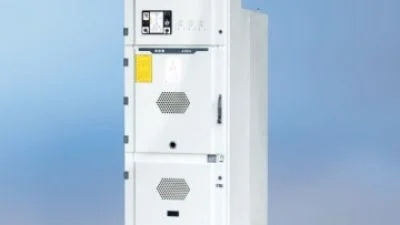
KYN28-12 switchgear provides a reliable power distribution solution for modern facilities operating on 3.6–12kV, 50Hz three-phase AC networks. Designed as high-voltage AC metal-enclosed switchgear, it supports safe and efficient control, protection, and distribution in industrial plants, commercial buildings, infrastructure projects, and utility substations. Its compact structure helps optimize installation space, while the enclosed design enhances operational safety by isolating energized components from operators and the surrounding environment.
Manufactured in China, the KYN28-12 is developed to meet stringent international requirements, including IEC298 and IEC694, supporting dependable performance in demanding high-voltage applications. Compared with older metal-enclosed switchgear designs, it offers improved operational efficiency, more convenient maintenance, and enhanced equipment protection. The withdrawable circuit breaker configuration allows flexible inspection and replacement, helping reduce service downtime and simplify routine management. With robust construction and adaptable performance across a broad voltage range, this switchgear is suitable for facilities seeking stable electricity distribution, controlled operation, and long-term system reliability.
FAQS
It places busbars and switching parts inside a sealed compartment. This limits dust, humidity, and accidental contact. The cabinet may also need less floor space.
It generally serves systems below 1,000 volts. IEC 61439-1:2020 is usually more relevant for low-voltage assemblies. This distinction is often overlooked.
Sealing can reduce cleaning work and airborne contamination. It may also slow corrosion inside the enclosure. However, a small seal defect can create a serious reliability problem.
Request certificates, type-test reports, and routine-test records. The documents must match the offered enclosure and busbar layout. Do not accept vague claims.
Check conductor torque records, internal cleanliness, and insulation-medium controls. Look for clear serial-number traceability. Small details matter.
Review temperature-rise, short-circuit, dielectric, mechanical-operation, and protection tests. Ask engineers to explain each result. A certificate alone is not enough.
Check cable termination space, interlocks, pressure-relief paths, and working clearance. Ask whether technicians can replace parts safely. Crowded access becomes inconvenient quickly.
Not necessarily. A low price may hide testing gaps, weak service, or unclear exclusions. Compare installation, testing, energy losses, spare parts, and disposal costs.
Ask for comparable projects in humid ports, factories, or compact data rooms. Request anonymized operating data and failure analysis. I would still question unusually perfect promises.
Conclusion
This article explains what Lv Gis Switchgear is and why it is increasingly considered for compact, safe, and reliable low-voltage power distribution. It introduces the basic structure and operating principles of low-voltage gas-insulated switchgear, then compares it with conventional air-insulated and other switchgear solutions in terms of space requirements, insulation, maintenance, safety, environmental adaptability, and installation flexibility.
The article also outlines how buyers can evaluate leading Chinese manufacturers without focusing only on price. Key criteria include product quality, technical design, manufacturing capabilities, testing procedures, customization support, delivery reliability, after-sales service, certifications, and experience with different application environments. A practical comparison of manufacturers’ product ranges and capabilities helps readers understand their potential strengths and limitations. Finally, the article provides a clear selection framework to help users identify an Lv Gis Switchgear supplier that matches their voltage requirements, project conditions, budget, service expectations, and long-term operational goals.
Related Posts
-
Understanding the Importance of Low Voltage Panels in Modern Electrical Systems
-
Top 10 Benefits of Using Lv Gis Switchgear in Modern Electrical Systems
-
What is Lv Gis Switchgear? Understanding its Features and Benefits
-
How to Choose Low Voltage Panels for Your Business Needs?
-
Why Choose Lv Gis Switchgear for Your Electrical Needs?
-
2026 Best RMU Switchgear Type for Global Buyers?