
When it comes to choosing the best Rmu Switchgear kind for buyers around the globe in 2026, it’s not just about flipping through a brochure. I mean, you really need to dig deeper—think about voltage ratings, fault levels, how the enclosure is designed, operating frequency, and even what local support is available. A compact unit might be just perfect for a city substation, but it could totally fall flat in a dusty industrial environment if it’s not properly protected.
Experience shows us that small details in the application can totally change what model ends up being the best fit. Engineers should consider things like the length of feeders, transformer capacity, switching speeds, humidity levels, altitude, and how easy it is to access for maintenance. Plus, it’s super important to double-check testing records, documentation, spare parts availability, and training options before settling on a supplier. While standards like IEC 62271 help guide the evaluation, remember—local grid rules really still matter. Just having a certification doesn’t automatically mean it will be reliable in practice.
Honestly, no list of options is perfect. At first, we figured that gas-insulated designs would always come out on top, but turns out, that’s not the full story. Each type—air-insulated, solid-insulated, or gas-insulated—has its own perks. Gas insulation saves space, which is a big plus in tight spots. Solid insulation might help reduce concerns tied to certain gases, and air-insulated systems can make inspections and maintenance much simpler. The right choice really depends on your specific needs—consider the risks, your budget, climate conditions, and your overall network strategy.
This guide is all about comparing the main Rmu Switchgear options for people shopping internationally in 2026. It looks at real-world installation conditions, overall lifecycle costs, operator safety, and how trustworthy the suppliers are. We focus on practical technical info instead of just fancy marketing buzzwords. A good supplier should be upfront about what their equipment can and can’t do—that’s important. Sometimes, honest answers tell you more than all those shiny claims about efficiency. So, don’t forget to ask for routine test reports, reference projects, warranty details, and how quickly they respond when you need support. All these little things can make a huge difference, turning your global purchase into a reliable and smart investment in power distribution.
What Is RMU Switchgear and Why Does Its Type Matter in 2026?
2026 Best RMU Switchgear Type for Global Buyers?
What Is RMU Switchgear and Why Does Its Type Matter in 2026?
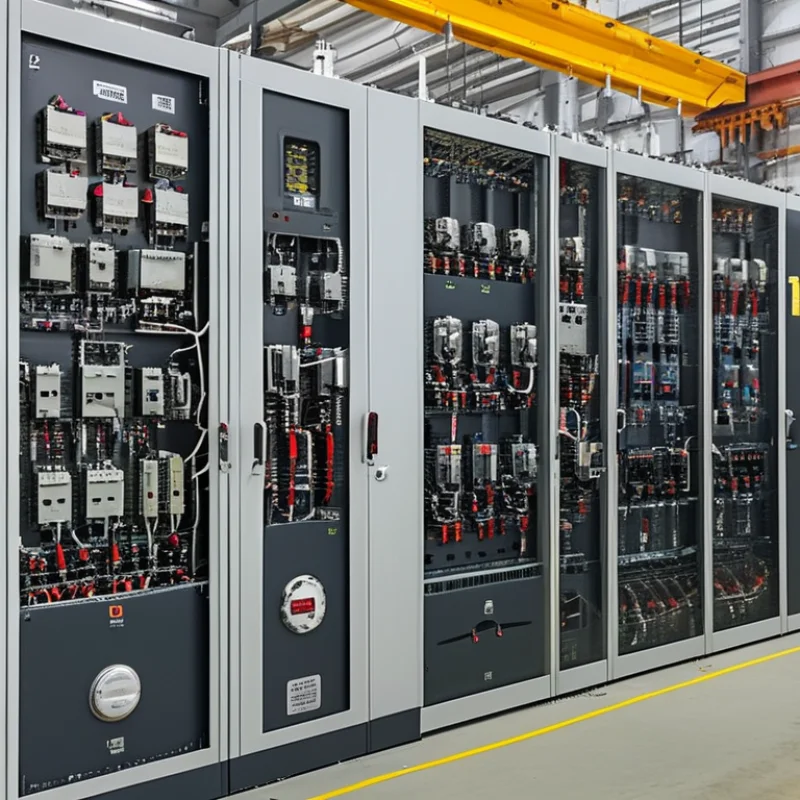
RMU switchgear is a compact, sealed medium-voltage unit for distributing electricity safely. It combines switching, protection, and isolation in one cabinet. The right type affects safety, maintenance, footprint, and lifecycle cost. For dense cities, gas-insulated RMUs save space and resist dust and humidity. Solid-insulated designs can reduce environmental concerns, but field experience still varies.
MarketsandMarkets reported that the global switchgear market could grow from about USD 104.9 billion in 2023 to USD 143.6 billion by 2028. This expansion reflects grid upgrades, renewable connections, and industrial electrification. The IEA’s Electricity 2024 report also expects global electricity demand to grow strongly through 2026. That pressure makes reliable medium-voltage distribution more important. However, choosing only by purchase price is a weak approach. A cheaper unit may need costly testing, specialist parts, or longer outages.
Tips: Match the RMU to voltage, fault level, climate, and expansion plans. Check IEC 62271 compliance, enclosure protection, interlocking, and service access. Ask for verified test reports. Also examine spare-part availability in the destination country. It sounds basic. It is often missed. Rmu And Switchgear specifications should include real installation conditions, not only catalogue values. A thoughtful buyer may also compare gas-free options, although their switching performance and supplier support require careful review. Expect some uncertainty. Local networks are rarely identical.
How to Classify RMU Switchgear by Insulation and Switching Technology
2026 Best RMU Switchgear Type for Global Buyers?
How to Classify RMU Switchgear by Insulation and Switching Technology
Choosing an RMU starts with insulation, not appearance. Air-insulated units use atmospheric air around accessible switching compartments. They are easier to inspect and often suit compact indoor substations. Gas-insulated designs reduce dimensions and resist dust, moisture, and salt exposure. However, buyers must verify gas handling, leakage monitoring, and end-of-life recovery requirements. Solid-insulated RMUs use molded dielectric materials around energized parts. They can support reliable, compact layouts, but serviceability deserves close review.
Switching technology creates another practical classification. Load-break switches control normal load current but may not clear severe faults alone. Circuit-breaker RMUs provide stronger fault interruption and support protection coordination. Switch-fuse combinations can offer economical transformer protection in suitable networks. Vacuum interrupters are common in medium-voltage applications because they avoid combustion inside the interrupter. For Hv Rmu projects, terminology must be checked carefully. Voltage ratings and insulation levels vary by market and standard.
Tips: Match the RMU to climate, fault level, maintenance skills, and future expansion. Check IEC 62271 test evidence, internal arc classification, cable interfaces, and operating cycles. Ask for drawings, not only brochures. A neat classification can still mislead. Site access, spare-part plans, and operator training may decide real performance. No single type wins everywhere.
Which RMU Configuration Fits Different Power Distribution Applications?
2026 Best RMU Switchgear Type for Global Buyers?
How to Compare Safety, Reliability, Maintenance, and Environmental Impact
2026 Best RMU Switchgear Type for Global Buyers?
How to Compare Safety, Reliability, Maintenance, and Environmental Impact
Choosing an RMU requires more than checking voltage and price. Safety begins with proven internal arc performance, clear interlocking, and visible earthing positions. Ask for test evidence against IEC 62271-200 and applicable local grid requirements. Operators should not depend on memory during a fault. Simple controls reduce mistakes.
Reliability depends on the enclosure, cable interfaces, operating mechanism, and protection design. A sealed unit can limit moisture and dust entry, especially in coastal substations. However, “maintenance-free” does not mean inspection-free. Buyers should review switching-cycle data, spare-part availability, and service procedures. Check the real service network. A perfect specification is useless if trained support arrives months later.
Maintenance planning should include thermal inspections, mechanical checks, and protection testing. Environmental impact needs a wider view than gas choice alone. Compare greenhouse-gas content, leakage risk, material recovery, factory energy use, and end-of-life handling. SF6-free designs may reduce climate concerns, but their footprint still depends on materials and manufacturing. Smaller equipment is not automatically greener. Transport distance and replacement frequency matter too. One uncomfortable lesson remains: the cheapest RMU may create higher lifetime costs. A balanced evaluation should score safety, reliability, maintenance, and environmental performance together, with documented evidence rather than sales language.
2026 Best RMU Switchgear Type for Global Buyers
Comparative benchmark for safety, reliability, maintenance simplicity, and environmental impact
| Label | Safety | Reliability | Maintenance Simplicity | Environmental Impact |
|---|---|---|---|---|
| Air-Insulated RMU | 3 | 3 | 3 | 5 |
| SF₆-Insulated RMU | 4 | 5 | 3 | 1 |
| Vacuum-Interruption RMU | 5 | 5 | 4 | 5 |
| Clean-Air Insulated RMU | 5 | 5 | 4 | 5 |
Scores use a 1–5 benchmark scale, where 5 indicates the more favorable result. The environmental score reflects the absence of intentional fluorinated greenhouse gases, while the other scores consider enclosed live parts, switching technology, routine inspection needs, and gas-handling requirements.
Technology categories: air-insulated RMU, SF₆-insulated RMU, vacuum-interruption RMU, and clean-air insulated RMU. The comparison is based on commonly applied principles in IEC 62271 switchgear standards and the climate impact of SF₆ identified by the IPCC.
What Standards and Certifications Should Global Buyers Check?
For 2026 RMU purchasing, standards and certifications deserve more attention than enclosure size. The IEA Electricity 2024 report forecasts global electricity demand to rise by about 4% annually through 2026. Utilities therefore need dependable medium-voltage equipment, not attractive brochures. For a Sf6 Rmu, check compliance with IEC 62271-1 and IEC 62271-200. The latter covers metal-enclosed switchgear from above 1 kV to 52 kV. Request type-test evidence for dielectric strength, temperature rise, short-time withstand, mechanical endurance, and internal arc classification. Do not accept only a declaration of conformity.
Certification quality matters. Ask whether tests were completed by an ISO/IEC 17025-accredited laboratory. Review the exact voltage, fault-current, enclosure, and installation conditions. A certificate alone is not proof of field quality. The IPCC Sixth Assessment Report gives SF6 a 100-year global warming potential of about 25,200. Buyers should therefore verify gas tightness, filling records, recovery procedures, and operator training. IEC 62271-4 provides useful guidance for gas handling. Local fluorinated-gas rules may also restrict future equipment choices.
Tips: Compare the test report with the nameplate. Check the serial number, test date, and rated short-circuit current. Ask for corrosion testing when installing near salt air. Inspect cable compartments physically if possible. I may sound cautious, because no certificate predicts every coastal site. Also review spare-part support and end-of-life gas recovery plans before signing. The weak point is often documentation.
2026 Best RMU Switchgear Type for Global Buyers? — What Standards and Certifications Should Global Buyers Check?
| RMU Switchgear Type | Typical Technical Configuration | Main Advantages | Limitations and Buyer Risks | Suitable Applications | Primary IEC Standards to Check | Important Type-Test Evidence | Global Buyer Assessment |
|---|---|---|---|---|---|---|---|
| SF₆ Gas-Insulated RMU Compact Sealed tank |
Metal-enclosed medium-voltage switchgear using sulfur hexafluoride as the insulating medium. Common distribution ratings include voltage classes up to 24 kV or 36 kV, depending on the network and product design. | Small footprint, high resistance to dust and humidity, low routine maintenance, and reliable insulation in confined substations. A sealed-for-life design can reduce gas-handling requirements during normal service. | SF₆ is a high-global-warming-potential gas. Buyers should verify gas quantity, leakage performance, end-of-life recovery instructions, applicable environmental rules, and whether the design allows safe gas handling. | Urban distribution networks, Compact Substations, indoor substations, industrial facilities, renewable-energy collection systems, and locations with limited installation space. | IEC 62271-1; IEC 62271-200; IEC 62271-103; IEC 62271-102; IEC 62271-105 where switch-fuse combinations are used; IEC 62271-4 for handling procedures involving insulating gases. | Dielectric withstand, temperature-rise, short-time withstand current, peak withstand current, mechanical operation, internal arc classification where specified, enclosure protection, and gas leakage or pressure-related evidence where applicable. | Strong choice for compact conventional networks. Confirm environmental compliance and obtain a documented gas-management plan before purchase. |
| Solid-Insulated RMU SF₆-free Low-emission design |
Medium-voltage switchgear in which primary insulation is provided by solid dielectric materials. Switching may use vacuum interrupters, load-break switches, or other technology appropriate to the circuit function. | Eliminates routine use of SF₆ as the primary insulating medium, supports environmental targets, and can provide a compact sealed primary circuit with reduced gas-related compliance obligations. | Buyers must examine long-term dielectric ageing, moisture resistance, partial-discharge performance, thermal behaviour, field-repair strategy, and the availability of compatible cable accessories. | Green procurement projects, urban substations, data centres, commercial buildings, renewable-energy installations, and distribution networks with restrictions on fluorinated insulating gases. | IEC 62271-1; IEC 62271-200; IEC 62271-201 for solid-insulation enclosed switchgear; IEC 62271-100 for circuit breakers; IEC 62271-102 and IEC 62271-103 for disconnecting and switching functions. | Partial-discharge tests, power-frequency withstand, lightning impulse withstand, temperature-rise, short-circuit withstand, mechanical endurance, internal arc classification where required, and environmental or ageing evidence for the insulation system. | Preferred option where SF₆ reduction is a procurement priority. Compare the complete insulation system, not only the nameplate voltage and current. |
| Vacuum-Switching RMU Vacuum interrupter Frequent switching |
RMU using vacuum interrupters for circuit-breaker or switching functions. The surrounding enclosure may use air, solid insulation, or another insulating medium. | Suitable for repeated switching and fault interruption, no SF₆ required inside the vacuum interrupter, and generally favourable electrical endurance when correctly applied. | Vacuum technology alone does not define the complete RMU insulation system. Buyers should verify the external insulation medium, cable-compartment design, transient behaviour, protection coordination, and motorized-operation reliability. | Industrial feeders, transformer protection, renewable-energy plants, data centres, and networks requiring circuit-breaker protection or remote operation. | IEC 62271-1; IEC 62271-100 for AC circuit breakers; IEC 62271-200 or IEC 62271-201 according to the enclosure and insulation construction; IEC 62271-102 for disconnectors and earthing switches. | Short-circuit interruption, dielectric tests, contact travel and timing, mechanical and electrical endurance, temperature-rise, internal arc classification where required, and protection-control functional tests. | Best suited to feeder protection and automated networks. Confirm that the complete assembly, rather than only the vacuum interrupter, has been type-tested. |
| Air-Insulated RMU Accessible design Serviceable |
Metal-enclosed switchgear whose primary insulation is atmospheric air. The arrangement may include load-break switches, circuit breakers, disconnectors, earthing switches, and fuse combinations. | No insulating-gas inventory, straightforward visual access, familiar maintenance procedures, and potentially easier inspection or replacement of selected components. | Usually requires more space than gas-insulated designs and can be more sensitive to dust, condensation, altitude, pollution, and installation conditions. Internal segregation and cable-access safety must be checked carefully. | Indoor substations, industrial plants, utility rooms, agricultural facilities, and projects where space is available and visual access is desirable. | IEC 62271-1; IEC 62271-200; IEC 62271-100 where circuit breakers are included; IEC 62271-102; IEC 62271-103; IEC 62271-105 where fuse combinations are included. | Dielectric withstand at the declared altitude, temperature-rise, short-circuit withstand, internal arc classification where required, enclosure protection, mechanical endurance, and pollution or condensation suitability for the installation environment. | Practical choice for accessible indoor substations. Check clearance, altitude correction, condensation control, and enclosure protection before approval. |
| Hybrid RMU Mixed technology Flexible layout |
A coordinated assembly combining different insulation or switching technologies, such as gas-insulated load-break ways with a vacuum circuit-breaker feeder or solid-insulated sections. | Can balance compact dimensions, fault-interruption performance, automation capability, environmental objectives, and project-specific feeder requirements. | More complex interfaces can increase engineering, spare-parts, testing, and service requirements. Buyers should avoid relying on separate component certificates when the complete assembly has not been assessed. | Utility automation, mixed industrial feeders, renewable-energy substations, critical infrastructure, and retrofit projects with different feeder requirements. | IEC 62271-1; IEC 62271-200 or IEC 62271-201 according to construction; IEC 62271-100, IEC 62271-102, IEC 62271-103, and IEC 62271-105 according to the installed functions. | Complete-assembly dielectric and temperature-rise tests, short-circuit tests, interlocking verification, mechanical endurance, internal arc classification where required, control and communication tests, and compatibility checks between primary modules. | Best when the project needs a tailored combination of functions. Require a clear responsibility matrix for the complete type-tested assembly. |
| RMU with Fuse Protection Transformer feeder Cost-effective |
Load-break switch and high-voltage current-limiting fuse combination, commonly used for transformer protection in medium-voltage distribution systems. | Simple protection concept, fast current limitation for certain faults, compact construction, and no auxiliary protection power supply required for the fuse element. | Fuse ratings and time-current characteristics must coordinate with the transformer, upstream protection, inrush current, and low-voltage protection. Fuse replacement requires a controlled isolation and safety procedure. | Distribution transformers, compact substations, commercial buildings, small industrial loads, and networks where circuit-breaker protection is not required. | IEC 62271-105 for AC switch-fuse combinations; IEC 62271-103 for switches; IEC 62271-200 for the metal-enclosed assembly; applicable fuse standards such as IEC 60282-1 for high-voltage current-limiting fuses. | Switch-fuse combination tests, transformer inrush coordination, fuse-interrupting capability, temperature-rise, dielectric withstand, mechanical endurance, and interlocking or striker-operation verification. | Good option for transformer feeders with predictable load profiles. Confirm local fuse dimensions, ratings, replacement availability, and protection coordination. |
How to Select the Best RMU Switchgear Supplier for International Projects
Choosing the Best RMU Switchgear Supplier for International Projects
Selecting an RMU switchgear supplier in 2026 requires more than comparing prices. Global buyers should examine the complete supply chain, from engineering drawings to commissioning support. Ask whether the supplier understands IEC requirements and the electrical codes used in your destination market. Relevant type-test reports, routine-test records, and traceable factory procedures matter.
Technology must match the project. Vacuum-insulated, air-insulated, and gas-insulated RMUs offer different benefits. Consider climate, altitude, humidity, space limits, maintenance access, and environmental requirements. A reliable supplier should explain these trade-offs clearly, without pushing one solution. Request a sample single-line diagram and inspect protection settings before approval.
Small details reveal practical experience. Check delivery history for similar voltage levels and network configurations. Review the factory acceptance test plan, inspection points, packing method, and spare-parts list. Confirm who will answer technical questions after shipment. Local service partners can reduce delays, but their qualifications need verification. Ask for training records and a realistic response time.
Do not trust perfect promises.
A low quotation may exclude relay testing, installation tools, or replacement components. That mistake becomes expensive at site. One weakness remains common: buyers sometimes approve documents quickly and discover interface problems later. Require controlled document revisions, clear warranty terms, and written responsibility for failures. A supplier that welcomes technical questions is usually safer than one that only offers a polished brochure.
FAQS
RMUs are commonly classified as air-insulated, gas-insulated, or solid-insulated. Air-insulated units are easier to inspect. Gas-insulated designs save space and resist dust, moisture, and salt. Solid-insulated units offer compact layouts, but maintenance access needs careful review.
Air-insulated equipment can suit compact indoor substations with accessible switching compartments. Operators can inspect key parts more easily. It may require more space than sealed alternatives. That trade-off matters.
Gas insulation can reduce equipment dimensions and protect internal parts from harsh environments. Buyers must check leakage monitoring, filling records, and recovery procedures. Local environmental rules may affect future servicing. Small equipment does not mean simple management.
Check the molded insulation system, service access, cable connections, and replacement procedures. Compact construction may simplify installation. It can also make internal repair more difficult. Ask for maintenance drawings, not only photographs.
A load-break switch controls normal load current. It may not interrupt severe faults alone. A circuit breaker provides stronger fault interruption and supports protection coordination. The network fault level should guide the decision.
They can provide economical transformer protection in suitable medium-voltage networks. Their suitability depends on transformer rating, fault current, and coordination requirements. The lowest purchase price may not be the lowest lifecycle cost.
Request drawings, nameplate data, test reports, cable-interface details, and operating-cycle information. Check dielectric strength, temperature rise, short-time withstand, and internal arc performance. Compare every report with the offered configuration. Brochures are not enough.
Climate, salt air, dust, moisture, and site access can change the correct choice. Coastal installations may require corrosion testing. Operators also need suitable training and spare parts. I would not assume one type works everywhere.
Confirm that tests match the voltage, fault current, enclosure, and installation conditions. Check the laboratory’s accreditation and the report’s test date. Match the serial information with the nameplate. A certificate can still leave questions.
Buyers should plan leakage checks, trained handling, recovery equipment, and compliant disposal procedures. Filling records should remain available throughout the equipment’s service life. End-of-life planning is easy to postpone. That can become the weak point.
Conclusion
Choosing the best Rmu Switchgear in 2026 requires more than comparing price and basic electrical ratings. Global buyers should first understand how RMU systems are classified by insulation medium, switching technology, load-break capacity, and fault protection. Different configurations may suit urban distribution networks, renewable energy projects, industrial facilities, commercial buildings, or compact substations. The right choice should balance operational safety, reliability, maintenance access, service life, installation conditions, and environmental impact, including the use of sustainable insulation technologies where appropriate.
International procurement also requires careful verification of applicable standards, type-test reports, factory quality controls, certification, and local grid requirements. Buyers should evaluate a supplier’s engineering capability, customization support, documentation, delivery performance, after-sales service, spare-parts availability, and experience with cross-border projects. By comparing technical performance, lifecycle cost, compliance, and supplier reliability together, organizations can select an RMU solution that supports secure, efficient, and future-ready power distribution.
Related Posts
-

Top 10 Rmu Breaker Solutions for Reliable Power Distribution
-
Discover Top Wholesale High-Quality Rmu Electrical Panel Service in China?
-

2026 Top China Wholesale Rmu Electrical Panel Service Insights?
-
Top 10 Reasons to Choose RMU Switchgear for Your Electrical Infrastructure Needs
-
Understanding the Evolution and Importance of Rmu Breakers in Modern Power Systems
-
Top 10 Facts You Need to Know About Ring Main Gear Systems