
Picking out a Pole Mounted Breaker in 2026 isn’t just about comparing prices or specs like interrupt ratings. You really need to match the breaker with your feeder’s voltage, expected fault current, how it’s used day-to-day, and the specific conditions of your location. For example, if the breaker is installed in a salty coastal area, it might need different insulation or corrosion protection compared to one set up inland on a dry line. Little details like that can make a big difference.
Now, for this guide, Alex Morgan—who specializes in distribution systems—puts it quite simply: “Choose based on the fault duty and what the maintenance crew can handle, not just the flashy headline on the brochure.” Just a heads-up, that’s more of his personal advice than a formal quote. Basically, when shopping around, you should check out the rated voltage, short-circuit capacity, insulation levels, control power, how the mechanism works, and whether it plays nicely with your existing protection settings. Don’t forget to ask suppliers for test reports and clear installation instructions—it’s worth verifying all those specs before pulling the trigger.
And honestly, the right type depends on what your specific job needs. Vacuum interrupters, for instance, are pretty common in modern medium-voltage setups, but other styles might be better suited for older systems or unique conditions. It’s a good idea to compare not just the upfront cost but also how easy it will be to get spare parts, the manufacturer’s support track record, and who’ll be troubleshooting if something goes wrong, especially during a storm.
This intro runs through the main types of breakers and what you should consider with each. The thing is, no single option works perfectly in every situation. Your site conditions, the system data, and a good review from a qualified power systems pro are the way to go. Even if specs look solid, it’s worth double-checking all those details before you order anything—better safe than sorry!
What Pole-Mounted Breakers Do: Switching, Fault Clearing, and Reclosing
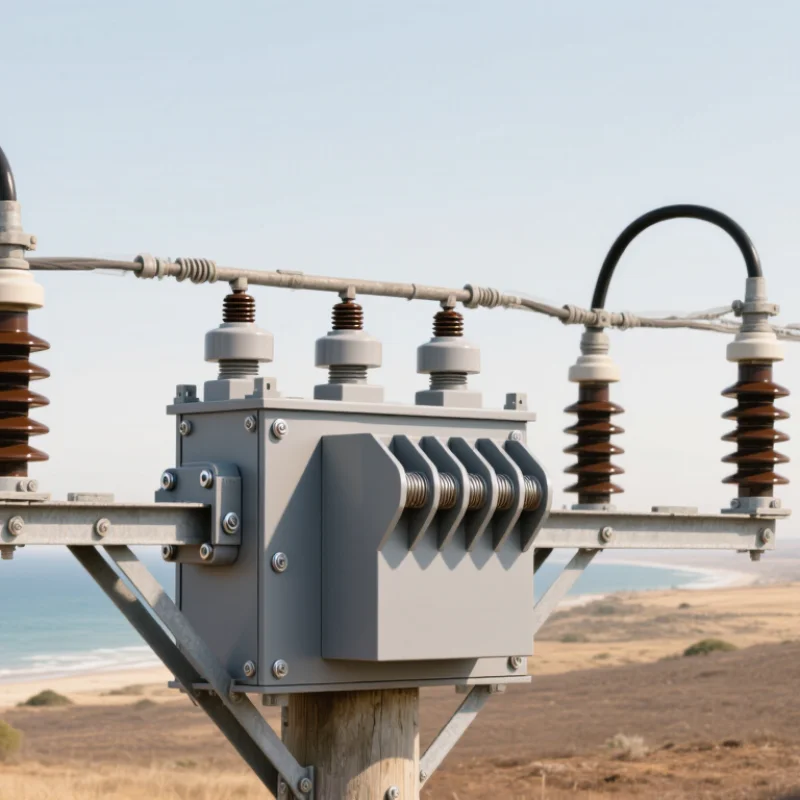
A Pole Mounted Circuit Breaker does three practical jobs: switching, fault clearing, and, where configured, automatic reclosing. During routine work, crews use it to isolate a feeder section or change the network’s operating arrangement. It can also switch normal load current, not just respond to emergencies. Small distinction, big operational consequence.
When a fault occurs, protective relays or an integrated controller detect abnormal current and signal the breaker to open. The interrupter extinguishes the resulting arc, limiting damage and separating the affected section. The controller may then wait briefly and reclose. This sequence can restore service after a temporary fault, such as a branch brushing a line. Persistent faults require the breaker to open again and remain open. IEEE C37.104, its guide to automatic reclosing, emphasizes coordinating reclosing sequences with protection and system conditions. Reclosing is useful, but not magic.
The scale of interruptions matters. The U.S. Energy Information Administration’s Electric Power Annual reported about 5.6 customer-outage hours in 2022, including major event days. That national figure does not measure breaker performance alone; storms, vegetation, and other equipment also shape results. Buyers should check interruption ratings, fault duty, control settings, and compatibility with feeder protection. A detail worth revisiting: faster reclosing is not always better if coordination is poor.
Breaker Families: Vacuum, SF₆, Oil, and Electronic Fault Interrupters
Pole-mounted breakers are chosen by more than voltage rating. Buyers should compare fault-interruption performance, operating conditions, maintenance needs, and protection settings. Fit matters. A unit exposed to coastal salt, dust, or repeated temperature swings may need different inspection planning than one in a mild inland location.
Vacuum breakers interrupt arcs inside sealed vacuum bottles and are widely used on medium-voltage distribution systems. They generally need less routine contact maintenance than oil designs, but mechanism condition and switching duty still matter.
SF₆ breakers use gas for insulation and arc interruption. Their compact design can be useful, though gas condition, leak checks, and careful end-of-life handling require attention.
Oil breakers are a mature technology, but oil condition, seals, and fire exposure deserve close review. Older equipment may also need more frequent inspection.
Electronic fault interrupters use sensors and control electronics to detect abnormal current and trigger interruption, often as part of a broader switching arrangement. Response settings must coordinate with upstream and downstream protection. Not always simple. A clean data sheet cannot show every field condition, and electronic controls may introduce power or configuration dependencies. Buyers should verify system voltage, fault current, environmental limits, operating frequency, and maintenance access with a qualified engineer. One easy mistake is choosing by purchase price alone; the inspection plan can change the real cost.
Common Voltage Ratings: 15.5, 27, and 38 kV Distribution Equipment
For a Pole-Mounted Circuit Breaker, the voltage class is a starting point, not a complete selection rule. Common ratings include 15.5, 27, and 38 kV. These classes often correspond to distribution systems around 13.8, 24.9, and 34.5 kV, respectively. Confirm the actual system voltage and equipment nameplate before comparing models. Details matter.
A 15.5 kV unit may suit a lower-voltage feeder, while 27 kV and 38 kV equipment can serve higher-voltage networks. But voltage alone does not confirm suitability. Check insulation level, basic impulse insulation level, continuous current, and short-circuit interrupting capacity against the site’s requirements. Also consider altitude, pollution, temperature, and expected switching duty. These conditions affect real-world performance.
Look closely at the utility specification and the installation drawings. A tidy voltage chart can still mislead. The available fault current may rule out a breaker that otherwise appears suitable, and operating mechanisms differ in maintenance needs. I would verify the rating with a qualified distribution engineer before ordering; catalog descriptions can leave important details unclear. A careful review prevents a costly mismatch.
IEEE C37.60: Recloser Requirements for Systems Up to 38 kV
IEEE C37.60-2018 sets requirements for alternating-current reclosers and fault interrupters on systems up to 38 kV. For buyers comparing pole-mounted breaker types, check rated voltage, continuous current, interrupting capability, insulation levels, and operating sequence. These figures matter. A 15 kV network and a 38 kV network need different equipment ratings; the label “pole-mounted” alone says little about suitability. Request type-test documentation and confirm that the tested configuration matches the proposed unit.
Tips: Compare the recloser’s duty cycle and fault-clearing ratings with your system study, not just its headline voltage. Check control compatibility, environmental limits, and maintenance access at the pole. A Wall Mounted Meter Box may serve nearby metering needs, but it does not replace protection-device specifications. One detail is easy to overlook: correct settings and installation still affect real-world performance.
Reliability data helps explain why coordination matters. The U.S. Energy Information Administration’s 2022 electric reliability data reports average customer interruption duration of 5.6 hours when major events are included, compared with 2.6 hours when they are excluded. Those figures describe customer experience, not the performance of any single recloser. IEEE C37.60 provides a test and rating framework, but buyers should also review protection coordination, site conditions, and maintenance plans. The standard is a useful baseline, not a substitute for engineering judgment.
Key Ratings to Compare: Continuous Current, Interrupting kA, and BIL
For pole-mounted breakers, compare ratings against the actual feeder conditions, not just the catalog headline. Continuous current is the load the breaker can carry without exceeding its thermal limits. Check expected peak demand, ambient temperature, and any site-specific derating. A breaker rated for the normal load may have little margin on a hot afternoon. That detail matters.
Interrupting capacity, shown in kA, describes the fault current the breaker can safely interrupt at a specified voltage. Ask for the available fault-current study at the installation point, then compare it with the breaker’s rating. Don’t assume a larger kA number solves every coordination issue. BIL, or basic insulation level, indicates withstand capability against fast voltage surges, such as lightning impulses. The required level depends on the system voltage and insulation coordination. I’ve seen buyers focus on current ratings and leave this check until late; it deserves equal attention.
Tips: Verify all three ratings on the same equipment schedule. Confirm the stated voltage and test conditions, and check manufacturer documentation rather than relying on a short product summary. A nearby Surface Mounted Meter Box is an enclosure, not a substitute for breaker insulation or interrupting ratings. Keep the specifications separate. It sounds obvious, but mixed schedules can make that easy to miss.
2026 Best Pole-Mounted Breaker Types for Buyers?
Compare representative medium-voltage rating points. The three ratings use separate charts because they have different units.
Continuous Current (A)
| Label | A |
|---|---|
| 15 kV class | 600 |
| 27 kV class | 1200 |
| 38 kV class | 2000 |
Interrupting Rating (kA)
| Label | kA |
|---|---|
| 15 kV class | 12.5 |
| 27 kV class | 20 |
| 38 kV class | 25 |
Basic Insulation Level (BIL, kV)
| Label | kV |
|---|---|
| 15 kV class | 95 |
| 27 kV class | 125 |
| 38 kV class | 150 |
Illustrative comparison points for 15, 27, and 38 kV classes: 600/1,200/2,000 A continuous current, 12.5/20/25 kA interrupting rating, and 95/125/150 kV BIL, respectively. These values are not a guaranteed matched product lineup; available combinations vary. Confirm the required voltage class, fault duty, insulation level, and continuous current against the equipment nameplate and applicable standards.
Reclosing Duty: Shot Sequences, Protection Coordination, and Lockout
2026 Best Pole Mounted Breaker Types for Buyers?
Reclosing Duty: Shot Sequences, Protection Coordination, and Lockout
A pole-mounted breaker’s recloser duty is defined by its operating sequence, not just its interruption rating. A typical sequence may allow several trips and reclosures before lockout, with short pauses between attempts. Each operation adds mechanical and electrical stress, so compare the specified sequence with the feeder’s expected fault conditions.
Coordination matters. A downstream device should usually clear temporary faults before an upstream recloser operates, while permanent faults must not trigger repeated interruptions across a wider area. Engineers check time-current curves, fuse-saving or fuse-blowing strategy, and the actual interval between shots. Timing matters. A curve that looks coordinated on paper may behave differently when load growth or cold-load pickup changes the current seen by the device.
Lockout is the point where automatic reclosing stops and inspection or manual intervention is needed. Buyers should confirm the available shot settings, reset behavior, lockout indication, and compatibility with the protection scheme. Review these details against a documented coordination study and the unit’s tested duty ratings. The awkward part: settings often need revision after commissioning data arrives. Plan for that, rather than treating factory defaults as final.
2026 Best Pole Mounted Breaker Types for Buyers? – Reclosing Duty: Shot Sequences, Protection Coordination, and Lockout
| Pole-Mounted Breaker Type | Interruption Medium and Typical Application | Reclosing Duty and Shot-Sequence Considerations | Protection Coordination Considerations | Lockout Behavior and Buyer Checks |
|---|---|---|---|---|
| Vacuum recloser | Vacuum interrupters are commonly used on overhead distribution systems. A controller typically provides protection, reclosing, event recording, and communications functions. | Often configured for multiple trip-and-reclose operations. A sequence may use fast operations followed by delayed operations, or delayed operations only. Available shots, dead times, and operating sequence depend on the specific equipment and settings. | Coordinate fast and delayed protection curves with downstream fuses, sectionalizing devices, and upstream feeder protection. Check phase and ground-fault elements, curve tolerances, and minimum fault-current levels. | Confirm the number of permitted operations, reset behavior, lockout indication, local and remote reset permissions, and how the controller responds to loss of control power or communications. |
| SF6 recloser | Uses sulfur hexafluoride gas as the insulation and interruption medium in designs that employ gas insulation. Application and maintenance requirements depend on the equipment design and local rules for handling the gas. | Reclosing capability is determined by the switching mechanism, controller, and rated operating sequence. Verify the specified sequence and cumulative switching duty rather than assuming a particular number of shots. | Apply the same system-coordination review used for other reclosers. Confirm that relay curves, ground-fault sensitivity, and upstream/downstream selectivity match the network study. | Check how lockout is latched and indicated, what actions are required for reset, and whether gas-density or equipment-condition alarms affect operation or reclosing availability. |
| Oil-interrupting recloser | Uses insulating oil for interruption and/or insulation, depending on design. Many installations are legacy equipment, so condition, supportability, and applicable maintenance practices need careful review. | Some designs provide automatic multi-shot reclosing, but permitted sequences and interruption duty are model-specific. Inspect the nameplate and documentation for the rated operating sequence and maintenance limits. | Verify actual trip characteristics and settings against the coordination study; aged equipment or changed mechanisms can affect dependable operation. Review coordination after any replacement or setting change. | Confirm the operation counter, lockout mechanism, reset procedure, and inspection requirements. Assess oil condition, leakage risks, and whether a replacement strategy is needed. |
| Vacuum breaker with separate protection relay and control scheme | A pole-mounted vacuum breaker is paired with external relaying and control equipment. This arrangement can suit applications where protection logic or integration requirements are project-specific. | Reclosing is available only if the relay and control scheme are configured to issue reclosing commands and the breaker is rated for the required operating sequence. Confirm breaker close-coil duty and operating limits. | Review the complete scheme, including relay curves, reclosing logic, interlocks, communications, and coordination with upstream and downstream devices. Test the end-to-end trip and close logic. | Define which device initiates lockout, how lockout is annunciated, and what conditions permit reset. Test local/remote control, interlocks, and failure-to-close or failure-to-trip responses. |
Selection note: Shot counts, time intervals, operating sequences, ratings, and available protection functions vary by equipment design and system requirements. Confirm the applicable ratings and sequence in the manufacturer’s technical documentation, then validate settings through a protection-coordination study and commissioning tests.
2026 Buyer Fit: Match Fault Levels, Climate, and Pole Loading
For a 2026 purchase, start with the network fault study, not the catalogue. A vacuum-interruption breaker is a common choice for distribution lines because its sealed interrupter needs little routine attention. Gas-insulated designs may suit compact installations, but buyers should weigh gas handling, service access, and operating temperature. Match the rated voltage and interrupting capacity to the actual system conditions, including expected fault current and protection settings. Close coordination matters.
Then look at the site. Salt spray, dust, humidity, and sharp temperature swings can affect insulation, seals, and control cabinets. Check the specified pollution class, creepage distance, enclosure rating, and operating-temperature range against local exposure. At high elevations, confirm that insulation performance remains suitable. A sheltered test yard is not the same as a windy ridge.
The pole has limits. Include the breaker, brackets, Control Box, conductors, and any added equipment when checking mechanical loading. Wind, ice, conductor tension, and vibration all matter; a light unit can still create awkward leverage. Ask for pole-load calculations and mounting details, not just equipment weight. Small detail, big consequence. I would also verify maintenance access and manual operation from the ground. Specifications sometimes hide assumptions. Review them with the utility engineer and protection specialist before ordering.
How the ZW32-12 Smart Distribution Pole Circuit Breaker Supports Reliable 12kV Networks
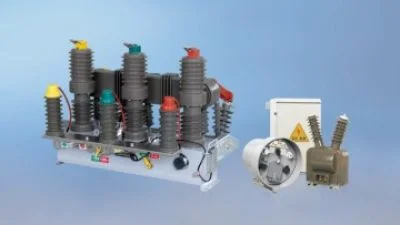
The ZW32-12/630-20 intelligent distribution pole circuit breaker is designed for outdoor use in 12kV, three-phase AC 50Hz power distribution networks. Its pole-mounted configuration supports practical installation in distribution systems, while its integrated design brings key switching components together in one unit. This helps simplify connections with compatible monitoring equipment and supports dependable operation in changing outdoor conditions.
For reliable network management, the breaker can be connected to high-precision voltage and current sensors. These sensors provide electrical measurements that help operators monitor system conditions and make informed decisions about switching and maintenance. By combining circuit interruption with real-time parameter monitoring, the device can support faster responses to changing network demands and help improve the continuity and efficiency of power distribution. It is suitable for modern distribution projects seeking an integrated solution for 12kV networks in China and other markets.
FAQS
They often correspond to systems around 13.8, 24.9, and 34.5 kV. Check the nameplate.
No. Compare insulation levels, continuous current, interrupting capacity, and site conditions. Voltage alone can mislead.
Altitude, pollution, temperature, and switching duty all matter. A dusty, high-altitude site may need closer review.
It may exceed the breaker’s interrupting capacity, even when its voltage rating seems suitable. Review the system study.
Request test documentation and confirm it covers the exact proposed configuration. Details matter.
Check operating sequence, control compatibility, maintenance access, and protection coordination. I’d double-check the installation drawings, too.
No. In 2022, average interruption duration was 5.6 hours including major events, and 2.6 hours excluding them. Those figures describe customer experience, not one device.
No. A standard provides a useful testing and rating framework, but engineering review and correct settings remain essential.
Conclusion
A Pole Mounted Breaker is designed to switch distribution circuits, interrupt fault currents, and, in some configurations, automatically reclose after a temporary fault. Buyers can compare vacuum, SF₆, oil, and electronic fault-interrupter designs by considering operating needs, maintenance, environmental conditions, and equipment requirements. Common distribution voltage classes include 15.5, 27, and 38 kV. For recloser applications up to 38 kV, IEEE C37.60 provides relevant performance requirements.
Selection should begin with the system’s voltage and fault level, then compare continuous-current capacity, interrupting rating in kA, and basic insulation level (BIL). Reclosing sequences also matter: shot settings, coordination with other protective devices, and the conditions that trigger lockout all affect service continuity. For a 2026 purchase, evaluate expected climate, contamination exposure, available pole loading capacity, installation constraints, and maintenance resources. Matching these factors to the network helps buyers choose equipment that can perform reliably without exceeding the system’s electrical or structural limits.
Related Posts
-
Best Pole Mounted Breaker Solutions for Global Buyers?
-
Understanding the Importance of Pole Mounted Breakers in Modern Electrical Systems
-
How to Choose High-Quality Wholesale Pole Mounted Breaker Service?
-
What is a Pole Mounted Breaker and How Does It Work?
-
Understanding the Importance of Pole Mounted Breakers in Modern Electrical Systems
-

Why Choose an Outdoor RMU for Your Power Distribution Needs?