
Picking out a Waterproof Electric Meter Box in 2026 isn’t just about looking at a product photo and calling it a day. You really need to consider the proof, the standards, and whether it’s suitable for the site in question. The International Energy Agency’s Electricity 2024 report predicts that global electricity demand will keep climbing at an average of around 3.4% every year through 2026. With more meters connected, that puts more stress on outdoor enclosures—especially in busy residential or commercial setups.
And let’s be honest—weather exposure is becoming tougher to ignore. Deloitte’s 2025 Power and Utilities Industry Outlook emphasizes that grid resilience and modernization are still top priorities. So, when choosing a enclosure, it’s not enough for it to just claim ‘waterproof.’ It needs to match the actual environment where it’ll be installed. Always check the IP rating according to IEC 60529. For example, IP65 can handle dust and water jets, while IP66 steps it up with even stronger water resistance. But, keep in mind, neither of these ratings automatically cover things like UV rays, impact, corrosion, or condensation—that’s an important detail.
Sometimes it’s the little things that count the most. Take a good look at the door seal, the transparent window, hinges, lock, cable glands, and drainage setup. The material should be tough enough to handle heat, cold, sunlight, and frequent opening without falling apart. If you’re installing somewhere near the coast, make sure the hardware is corrosion-resistant. In colder climates, trapped moisture inside can quietly cause issues. A box might pass standard lab tests but still fail if someone drills into it improperly or if it’s mounted unevenly. That’s where experience helps, but don’t rely on it blindly—it can also create bias. Always compare test certifications, installation instructions, warranty details, and traceability of the supplier. Remember, the priciest or thickest enclosure isn’t always the best pick. The right waterproof meter box for you is the one that matches your actual needs in terms of protection level, size, materials, and ease of access for maintenance—that’s what really matters.
Hope that makes things clearer when shopping for your meter box!
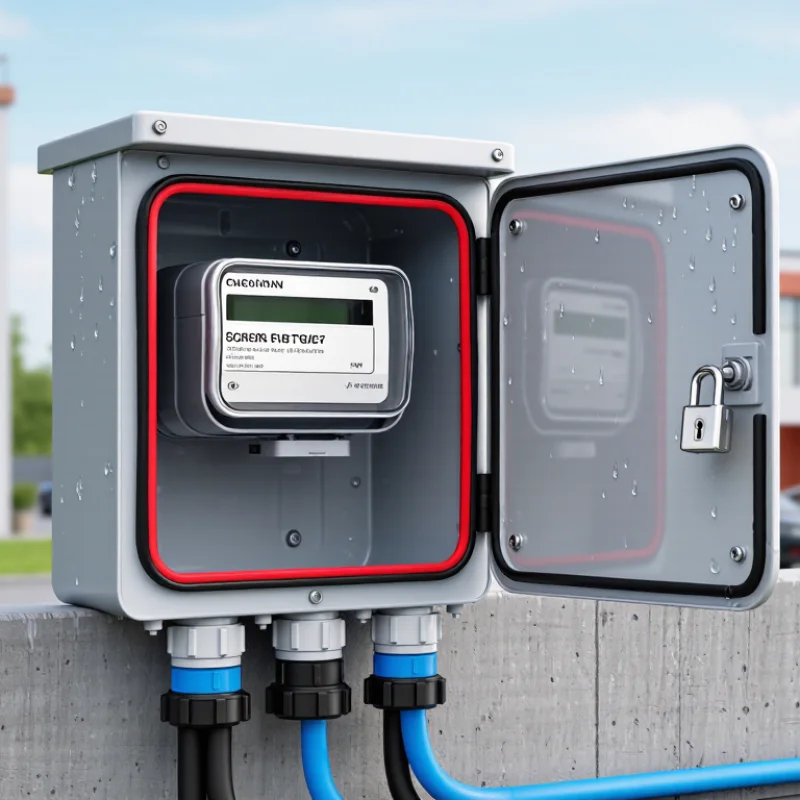
What Is a Waterproof Electric Meter Box?
A waterproof electric meter box is a protective enclosure for an electricity meter, cables, and connection points. It blocks rain, dust, insects, and accidental contact with live components. The Electric Box Meter usually includes a rigid body, sealed door, transparent viewing window, and cable entry points. Its purpose is practical: keep electrical readings accessible while reducing moisture-related damage.
Waterproof does not mean indestructible. Look for a verified protection rating, strong door hinges, and rubber gaskets that remain flexible in cold weather. A box installed beside a garden may face sprinklers, mud, and direct sunlight. Therefore, its material should resist corrosion and ultraviolet exposure. Small details matter. A loose cable gland can let water enter slowly.
During site inspections, installers often check the seal before checking appearance. That habit is useful, although it is easy to overlook drainage and wall alignment. The box should sit firmly, with the door opening fully and the meter remaining readable. Follow local electrical requirements, and have a qualified electrician handle wiring or replacement work. Never assume a new enclosure is safe because it looks sealed. Condensation can still form inside after temperature changes. A simple inspection after heavy rain may reveal problems early.
How to Determine the Required Waterproof Rating
Choosing the waterproof rating is the most important step when buying a Home Electric Meter Box. Start with the installation environment, not the product label. IEC 60529 defines IP ratings using two digits. The first covers solids, while the second measures water protection. IP65 withstands water jets. IP66 handles more powerful jets. IP67 allows temporary immersion up to one metre for 30 minutes under controlled testing. Check the seal.
Outdoor exposure needs more than occasional rain protection. A box under a roof may face condensation, wind-driven rain, dust, and ultraviolet light. NEMA 250-2020 classifies Type 3R enclosures for rain, sleet, and snow. Type 4 offers protection against hose-directed water, while Type 4X also addresses corrosion resistance. Numbers need context. IP67 is not automatically better for every installation, because cable glands, hinges, and drainage can become weak points. Ask for test documentation based on IEC 60529 or NEMA 250, and verify the rating includes the complete assembled enclosure. A practical inspection should check compressed gaskets, sealed cable entries, and a door that closes evenly. Even a certified box can fail when installers drill unsealed holes or trap the gasket. Temperature, coastal salt, and repeated maintenance may justify a higher specification. The final choice should match the site assessment and local electrical requirements, rather than the highest number on a catalogue.
How to Choose Suitable Materials and Construction
When choosing a waterproof electric meter box, start with the installation environment. A coastal wall needs stronger corrosion resistance than a dry indoor utility room. Galvanized steel offers strength and reasonable protection when its coating remains intact. Stainless steel performs better in salty or humid conditions, but costs more. Aluminum is lighter and resists rust, though it may dent under heavy impact. Non-metallic options can resist corrosion, but their impact performance varies.
A Metal Electric Meter Box should have carefully formed seams, a continuous gasket, and a door that closes evenly. Check the enclosure’s verified ingress-protection rating, rather than trusting the word “waterproof” alone. The gasket should remain flexible after repeated opening. Hinges need protection from rain, while cable entries should use correctly sized glands. Small gaps around the door can admit wind-driven water. That detail is easy to miss.
Construction thickness matters, but thicker material is not automatically better. Look for reinforced mounting points, smooth internal edges, and a secure lockable cover. Coated steel can fail when drilling exposes bare edges, so those areas need suitable corrosion protection. Field inspections often find poorly sealed cable openings, not weak panels. Measure the meter, wiring space, and bending radius before ordering. Local electrical requirements should guide grounding, ventilation, clearance, and access decisions. I would also question unclear test documents; attractive specifications are not proof of dependable performance.
How to Check Size, Compatibility, and Meter Access
How to Choose a Waterproof Electric Meter Box in 2026?
Size and compatibility deserve more attention than the word “waterproof.” The U.S. Energy Information Administration’s 2023 Form EIA-861 data recorded more than 128 million advanced meters in service. Many installations now combine older sockets with newer digital meters. Measure the meter body, socket opening, cable entry, and internal depth. Leave room for the terminal cover and the cable’s bend radius. A box that closes tightly but crushes wiring is not a safe fit. Check the meter form, voltage, current rating, and utility-approved socket type. Do not rely on appearance alone.
Access matters in daily maintenance. The door should open fully without striking nearby pipes or walls. A clear viewing window helps technicians read the display without opening the enclosure. Look for a sealable latch, removable mounting plate, and enough hand clearance around terminals. IEC 60529 defines IP protection levels, while NEMA 250 covers enclosure performance categories. An IP66 rating may indicate strong dust and water-jet protection, but it does not automatically prove UV resistance, impact strength, or corrosion protection. Salt air changes the decision.
Small details fail first. Check the gasket for even compression. Inspect drainage and condensation control. A common mistake is choosing the largest box, then discovering poor cable support. Another is treating “waterproof” as permanent protection. Recheck the measurements on site; walls are rarely perfectly square. Industry standards guide selection, but local utility requirements still control acceptance.
How to Evaluate Safety Features and Electrical Protection
How to Choose a Waterproof Electric Meter Box in 2026?
When evaluating a Large Electric Meter Box, start with electrical protection, not appearance. Check the enclosure’s IP rating, gasket quality, and drainage design. A tight seal should resist rain, dust, and insects without trapping condensation inside. The door should close evenly, even when cables enter through fitted glands.
Look for flame-retardant materials, insulated barriers, and covered live terminals. These details reduce contact risks during inspection or maintenance. A clear viewing window helps workers read the meter without opening the enclosure. Strong hinges and a secure lock also discourage accidental access. Do not assume a higher IP rating solves everything. Poor cable glands can still allow water inside.
The box must match the meter, service cables, breaker arrangement, and earthing system. Ask a qualified electrician to verify terminal spacing, conductor capacity, and compatibility with local electrical requirements. Surge protection may be useful where storms or unstable supply are common, but it needs correct installation and coordination. In practical inspections, small cracks around screw holes often reveal weak protection. Easy to miss. I would also inspect the underside after heavy rain. Some designs look waterproof but collect water near cable entries. That weakness deserves a second review.
How to Choose a Waterproof Electric Meter Box in 2026? – How to Evaluate Safety Features and Electrical Protection
| Evaluation Dimension | What to Look For | Recommended Selection Guide | How to Verify It | Safety Importance |
|---|---|---|---|---|
| Ingress Protection Rating | A tested IP rating under IEC 60529, covering protection against solids and water. | For exposed outdoor locations, consider at least IP65. Use IP66 where powerful water jets may occur. IP67 is for temporary immersion and does not automatically replace the need for a suitable installation method. | Check the enclosure marking, test report, and whether the rating applies with the door, gland plates, hinges, and locks fully installed. | Reduces the risk of water, dust, corrosion, tracking, short circuits, and electric shock. |
| Water-Shedding Design | Sloped top, rain hood, raised door lip, continuous gasket, and drainage provisions where appropriate. | Choose a design that prevents water from collecting above the door, cable entries, meter window, and seams. | Inspect the closed enclosure and confirm that cable glands, conduit fittings, and unused openings can be sealed without damaging the gasket. | Good drainage and sealing help preserve the stated water-resistance level during rain and maintenance. |
| Dust Protection | A sealed construction and an IP code whose first digit indicates dust protection. | For dusty outdoor or utility areas, prefer a dust-tight enclosure when the installation rules and equipment arrangement permit it. | Confirm the first IP digit and inspect gasket compression, cable-entry seals, and ventilation accessories. | Dust can reduce insulation performance, obstruct moving parts, and increase heat accumulation. |
| Material and Corrosion Resistance | UV-stabilized polymer, coated metal, stainless steel, or another material suitable for the site. | For coastal, industrial, or chemically aggressive environments, select a corrosion-resistant construction and compatible fasteners. | Request material specifications, UV exposure information, corrosion test evidence, and compatibility details for glands and mounting hardware. | Material degradation can weaken the enclosure, compromise the seal, and expose energized components. |
| Impact Resistance | A documented impact classification, such as an IK rating under IEC 62262, where applicable. | Use a higher impact rating for public areas, exposed walls, plant rooms, workshops, and locations subject to tools or vehicles. | Check the IK marking and verify that the rating applies to the complete enclosure, including the door and viewing window. | A stronger enclosure helps prevent cracked covers, broken seals, and accidental contact with live parts. |
| Electrical Insulation | Insulating barriers, adequate clearances, secure terminal supports, and materials suitable for the system voltage. | Select an enclosure compatible with the meter, service equipment, conductor size, voltage, current, and local utility requirements. | Review the installation instructions, dimensional drawings, rated voltage, rated current, and required conductor bending space. | Prevents arcing, overheating, insulation damage, and accidental contact between conductors. |
| Earthing and Bonding | A clearly defined protective-earth connection for conductive parts, where required by the installation design. | Metal enclosures normally require bonding in accordance with the applicable wiring rules. Do not rely on the door hinge as the only bonding path. | Check for a dedicated earth stud, bonding strap, labeled terminal, and suitable hardware. Confirm requirements with a licensed electrician. | Provides a low-impedance fault path so protective devices can disconnect the supply quickly. |
| Overcurrent Protection | Correctly rated fuses or circuit breakers located according to the electrical design. | Do not assume that a meter box includes overcurrent protection. Verify whether the enclosure is for metering only or also houses service protection. | Confirm available space, interrupting capacity, conductor ratings, utility approval, and coordination with upstream and downstream devices. | Protects conductors and equipment from overloads and short-circuit currents. |
| Residual-Current Protection | Compatibility with an RCD, GFCI, or equivalent residual-current device when required. | Use the device type and trip sensitivity required by local electrical rules and the connected loads. A typical additional-personal-protection threshold in many systems is 30 mA, but requirements vary. | Check device compatibility, test-button access, neutral arrangement, and the manufacturer’s wiring diagram. Installation and testing should be performed by a qualified person. | Helps reduce shock risk from leakage current; it is not a substitute for earthing or overcurrent protection. |
| Temperature and Condensation Control | A declared operating-temperature range and measures to manage internal heat and condensation. | Allow ventilation or thermal accessories only when they preserve the required enclosure protection. Avoid unsealed holes drilled on site. | Compare the site temperature, solar exposure, meter heat output, and enclosure volume with the product documentation. | Excess heat shortens component life, while condensation can lower insulation resistance and cause corrosion. |
| Meter Visibility and Tamper Resistance | A sealed, UV-resistant viewing window, controlled access, and a lock or utility-approved seal point. | Choose a layout that allows meter reading without exposing live parts and meets the local utility’s access and sealing requirements. | Inspect optical clarity, hinge security, lock position, seal points, and compatibility with the approved meter dimensions. | Maintains safe access control and helps prevent unauthorized interference with metering equipment. |
| Cable Entries and Glands | Correctly sized glands, conduit hubs, strain relief, sealing washers, and blanking plugs. | Select entries that match the cable diameter, conduit type, thread standard, and required IP rating. | Verify that every unused opening is sealed and that cable bending does not pull against terminals or reduce gasket compression. | Poor entries are a common route for water, dust, insects, and mechanical strain. |
| Standards and Local Approval | Applicable enclosure, wiring, utility, and metering requirements for the installation location. | Prioritize products with traceable test documentation and approval accepted by the local authority or electricity distributor. | Request the declaration of conformity, test reports, installation instructions, and approval references before purchase. | A technically suitable enclosure may still be unusable if it does not satisfy local installation or utility rules. |
| Maintenance and Gasket Serviceability | Replaceable seals, accessible fasteners, corrosion-resistant hinges, and clear maintenance instructions. | Choose an enclosure that can be inspected without disturbing energized equipment and whose gasket can be replaced when compressed or damaged. | Check spare-part availability, inspection intervals, torque requirements, and door-alignment adjustment options. | Routine inspection preserves waterproofing and reduces the chance of progressive electrical deterioration. |
How to Compare Installation Methods and Maintenance Needs
Choosing a waterproof electric meter box in 2026 means comparing installation, not just an IP rating. On-site experience shows that location changes everything. A surface-mounted box suits existing concrete or brick walls and usually shortens installation time. It leaves visible conduit, however, and needs solid anchors against wind and vibration. A recessed box looks cleaner, but cutting the wall creates dust, structural risks, and harder future access. For exposed sites, a freestanding enclosure may simplify cable routing, though its base needs drainage and careful leveling.
Compare electrician access, cable bend space, and sealing points before choosing. A qualified installer should check local electrical rules, clearance requirements, earthing, and utility access conditions. Do not assume a factory seal replaces correct cable glands. Compression matters. After installation, inspect the door gasket, hinges, lock, and gland seals every six months. Look for cracked rubber, loose screws, condensation, insect entry, or water marks around the meter. A small flashlight helps. Clean the drain path without drilling extra holes. Never open energized equipment without proper authorization and training.
Maintenance differs by installation method. Surface boxes are easier to inspect and replace, while recessed units can hide dampness behind the frame. Pedestal boxes need foundation checks after frost, heavy rain, or landscaping work. Keep plants and stored items away from access areas. I would also photograph cable entries after installation for later comparison. One weakness is often overlooked: the box can stay dry while cables below collect water. That detail deserves inspection. Choose replaceable seals and accessible fasteners where possible, even if the initial price is slightly higher.
How to Choose a Waterproof Electric Meter Box in 2026?
Comparison of installation methods, waterproof protection, and routine maintenance requirements.
| Label | Typical Installation Time (hours) | Routine Inspections per Year | Recommended Outdoor IP Rating |
|---|---|---|---|
| Surface-Mounted | 2.5 | 1 | 65 |
| Recessed | 4.5 | 1 | 65 |
| Pole-Mounted | 3.5 | 2 | 66 |
Surface-mounted boxes generally require the least installation time, while recessed boxes need more wall preparation and sealing. Pole-mounted boxes typically need additional checks because of exposed supports, cable entries, and weather movement. IP ratings are based on IEC 60529: IP65 provides dust-tight protection and protection against water jets, while IP66 provides protection against more powerful water jets. Final selection should consider local exposure, cable-entry design, drainage, gasket condition, and electrical regulations.
Planning benchmarks: installation time and annual inspection figures are typical field estimates for low-voltage meter-box projects; actual values vary with wall construction, cable routing, accessibility, and site conditions.
JXF Control Box Series: Industrial Enclosure Trends from MarketsandMarkets and Grand View Research Reports
Industrial enclosure trends are increasingly shaped by the demand for compact layouts, dependable protection, flexible installation, and easier maintenance. Across manufacturing facilities, commercial buildings, infrastructure projects, and energy-related applications, wall-mounted control enclosures are becoming a practical choice for organizing low-voltage equipment while conserving valuable floor space. Industry research also highlights the growing importance of modular design, scalable power distribution, operational safety, and enclosure durability as businesses modernize electrical systems and pursue more efficient facility management.
The JXF control box series responds to these requirements with an advanced wall-mounted low-voltage power control solution for a wide range of industrial and commercial environments. Designed for Three-phase systems, it supports three-phase three-wire, three-phase four-wire, and three-phase five-wire configurations, allowing users to select a suitable wiring arrangement for different distribution architectures. This flexibility can simplify project planning and support consistent installation practices across varied applications.
With a load current capacity of up to 250A and a frequency of 50Hz, the series is designed to provide stable and efficient power distribution. Its enclosure-based structure helps organize control components, improve accessibility, and support a neat electrical installation. By combining configuration flexibility with dependable operating performance, the JXF series is suitable for equipment control, workshop distribution, building services, and other settings where safe, space-efficient low-voltage power management is required.
FAQS
It protects the meter, cables, and connection points from rain, dust, insects, and accidental contact. A typical box has a rigid body, sealed door, viewing window, and cable openings. It keeps readings visible while reducing moisture-related damage.
No. “Waterproof” does not mean indestructible. Water can enter through a loose cable gland, damaged gasket, or poorly aligned door. Small gaps matter.
Check the enclosure’s verified ingress-protection rating, hinges, gasket, cable glands, and mounting points. Measure the meter and available wiring space first. The door should open fully, and the display should remain readable.
Stainless steel usually performs well in salty, humid conditions, but it costs more. Coated steel provides strength when its coating remains intact. Aluminum resists rust and is lighter, though heavy impact may dent it.
They can resist corrosion, especially in damp environments. Their impact resistance varies by construction and material. Check the tested performance instead of trusting appearance alone.
A continuous, flexible gasket helps seal the door after repeated opening. Correctly sized cable glands reduce water entry around cables. I might overlook these small parts, although they often cause real problems.
Yes. Temperature changes can create condensation, even when the enclosure looks tightly sealed. Inspect the box after heavy rain and check for moisture, drainage problems, or fogged surfaces.
Inspect the door seal, cable entries, hinges, mounting alignment, and visible corrosion. Look for damaged coatings around drilled holes. A loose box beside sprinklers or muddy ground deserves closer attention.
Conclusion
Choosing the right Waterproof Electric Meter Box in 2026 requires more than selecting a sealed enclosure. First, understand the protection it provides against rain, dust, moisture, and accidental contact, then determine the waterproof rating needed for the installation environment. Consider durable materials, corrosion resistance, sturdy construction, and adequate ventilation to help prevent condensation and overheating. The box should also offer enough interior space for the meter, cables, terminals, and any required accessories without creating pressure or clutter.
Before purchasing, confirm the box’s dimensions, mounting style, cable-entry design, and compatibility with the intended meter. Easy meter access is important for reading, inspection, and servicing, while secure covers, insulation, grounding provisions, and suitable circuit protection improve electrical safety. Finally, compare wall-mounted, recessed, or outdoor installation methods according to the site conditions. A practical design should be simple to install, resistant to weather exposure, and easy to clean and inspect over time.
Related Posts
-
2026 Best Waterproof Electric Meter Box Reviews and Buying Guide?
-
Discover the Best Ring Main Switch Options for Global Buyers?
-
Top 5 Tips for Choosing the Best Photovoltaic Grid Connected Box?
-

How to Choose High-Quality China Smart RMU Service for Your Business Needs?
-
China Best Outdoor Distribution Box Supplier?
-

Why is Power Distribution Equipment Essential for Modern Energy Systems?