
Choosing the right Main Lv Switchboard isn’t just a box-ticking exercise. For factories, commercial buildings, data centers, and infrastructure projects, it’s a very practical call. And if you’re buying globally, you’ll want to compare safety, current capacity, protection design, maintenance access, and what the local installation actually looks like. A board that works beautifully in a dry European plant might need a rethink in a humid coastal facility. Yep, details matter.
This guide walks through the common types: fixed, withdrawable, compartmentalized, and intelligent low-voltage switchboards. We’ll look at busbar arrangements, incomer options, outgoing feeders, short-circuit ratings, and monitoring functions too. Experienced engineering teams usually start with the load schedule, future expansion plans, and a fault-level study. They don’t just pick gear because it looks good. A clean enclosure is nice, sure, but it doesn’t prove much.
Reliable manufacturers should give you tested assemblies, clear drawings, routine inspection records, and traceable component data. Buyers should also double-check compliance with standards like IEC 61439, plus any national certification rules. Supplier support really matters during commissioning and after installation—spare parts can become surprisingly important.
No single type fits every project. That’s the uncomfortable truth. A withdrawable design can make maintenance easier, but it may add cost and cabinet depth. A fixed design can be economical, though isolation procedures need closer attention. Digital monitoring can improve visibility, but poor network planning might create new weak spots. This overview is meant to help purchasing teams ask sharper questions, compare realistic options, and steer clear of decisions based only on price. In the end, the right choice should follow verified technical data, site conditions, and advice from qualified electrical professionals.
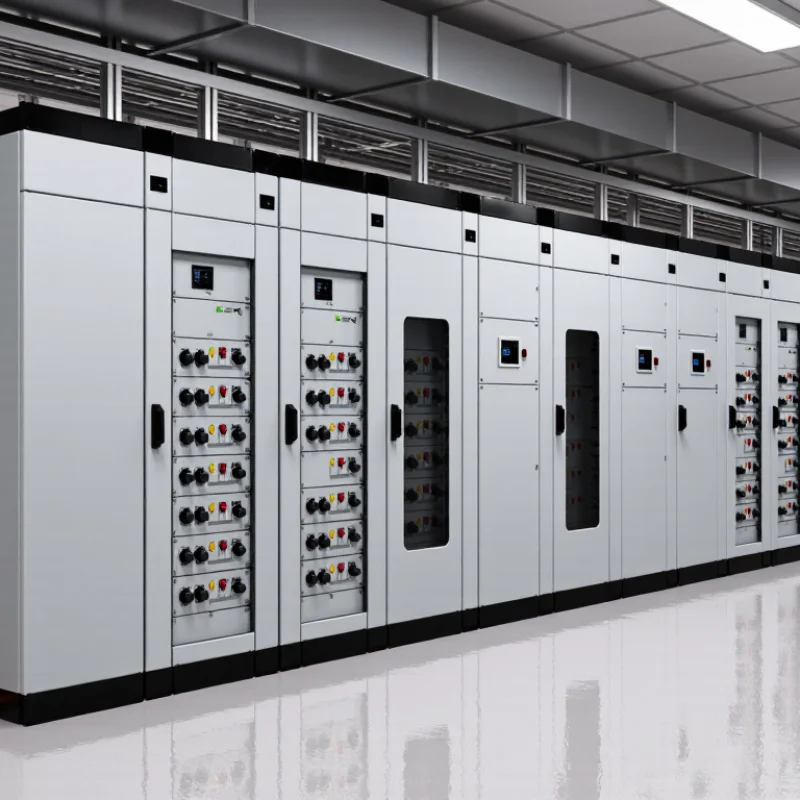
Main LV Switchboard Fundamentals and Global Selection Criteria
Main Lv Switchboards distribute low-voltage power from transformers or generators to essential building loads. A typical board includes an incomer, copper or aluminium busbars, protective devices, metering, and outgoing feeders. Its enclosure must control heat, dust, moisture, and accidental contact.
Global selection begins with system data, not appearance. Confirm the rated voltage, frequency, earthing arrangement, and prospective short-circuit current. The board’s withstand rating should exceed the available fault level at its installation point. IEC 61439 verification provides a useful technical reference, while local electrical rules may add stricter requirements. Internal separation, IP rating, arc-risk reduction, and cable-entry direction also affect safety.
Climate needs practical attention. A coastal plant may require corrosion-resistant finishes, while a hot room needs temperature-rise calculations and ventilation planning. Check whether breakers can be isolated without shutting down critical feeders. Leave physical space for future circuits, but do not oversize every component without evidence. That wastes money and can complicate protection coordination.
Field reviews often find a neat single-line diagram hiding poor access for cable bending or testing. Small details matter. Ask for routine test records, fault calculations, material certificates, and clear maintenance instructions before approval. Selection should reflect the actual load profile, utility conditions, installation environment, and qualified local service capacity.
Core Types of Main LV Switchboards Explained
A Main Low Voltage Switchboard distributes power from the transformer to major building circuits. Its design affects safety, maintenance time, and future expansion. The core types differ mainly in accessibility and operating flexibility.
Fixed switchboards use permanently mounted breakers and busbars. They suit factories, offices, and utility rooms with stable loads. Their structure is simple, compact, and often economical. However, technicians must isolate the section before replacing a device. That limitation matters in hospitals and continuous-process plants.
Withdrawable switchboards place circuit breakers on removable chassis. Operators can test, isolate, or replace units more efficiently. This arrangement usually requires more floor space and disciplined operating procedures. It also increases mechanical complexity.
Compartmentalized designs separate busbars, devices, and cable terminals with metal barriers. They reduce accidental contact risks and support clearer maintenance boundaries. Modular switchboards allow spare compartments for pumps, chargers, or future production lines.
Intelligent versions add meters, communication gateways, and temperature monitoring. Useful data can reveal an overloaded feeder before insulation smells hot. It is not magic. Sensors still need calibration and sensible alarm settings.
For global projects, buyers should verify short-circuit withstand ratings, temperature-rise performance, ingress protection, and enclosure materials. IEC 61439 verification provides a valuable technical reference, while local installation rules still apply.
In my experience, drawings often look complete until cable bending space is checked on site. A cabinet may fit the room but leave no hand clearance. That mistake is avoidable, yet common. Selection is rarely perfect; it should be reviewed against real loads, operators, and maintenance habits.
How Fixed and Withdrawable Switchboards Compare
For global buyers, the choice between fixed and withdrawable Lv Switchboard depends on access, downtime, and operating discipline. The International Energy Agency’s Renewables 2024 report expects nearly 5,500 GW of renewable capacity additions from 2024 to 2030. More generation will place greater pressure on low-voltage distribution systems, especially in factories, data centers, and commercial buildings.
Fixed switchboards usually offer a simpler layout, lower purchase cost, and fewer moving parts. They suit stable loads where maintenance can occur during planned shutdowns. A technician may need to isolate the entire section, however. That can interrupt production.
Withdrawable designs allow circuit breakers or functional units to move into isolated, test, or service positions. This supports faster replacement and safer maintenance when procedures are followed. The trade-off is clear: larger panels, higher costs, and more mechanical components. A poorly maintained mechanism can reduce the expected advantage.
IEC 61439 verification requirements remain essential for either design. Buyers should check temperature-rise performance, short-circuit withstand ratings, internal separation, and documented routine testing. The IEA’s Electricity 2024 report forecasts average global electricity-demand growth of about 3.4% annually through 2026. That growth makes future expansion worth considering. Still, I may overvalue flexibility when a small facility has little outage risk. Site measurements, maintenance skills, and local service access should decide the final arrangement.
Choosing Busbar Systems, Enclosures, and Protection Features
For global buyers, a Low Voltage Switchboard should be selected as a coordinated system, not merely a cabinet with breakers. The IEA’s Electricity 2024 report expects global electricity demand to rise by about 4% annually through 2026. That growth increases pressure on distribution reliability. Start with the busbar system. Copper provides compact current paths and strong conductivity; aluminum can reduce weight and material cost, but its joints require disciplined preparation. Specify continuous current, short-circuit withstand, temperature-rise limits, and future feeder capacity. Leave room for expansion. It is often forgotten.
Enclosure choice follows the installation, not aesthetics. IEC 60529 ingress ratings help match IP protection to dust and water exposure. An indoor electrical room may need less sealing than a coastal plant or washdown area. Use segregated compartments when maintenance access and fault containment matter. IEC 61439 requires design verification for low-voltage assemblies, including temperature rise, dielectric properties, and short-circuit withstand. Ask for test evidence, not only a brochure. Not aesthetics.
Protection features should reflect the load profile and risk assessment. Adjustable electronic trip units can coordinate upstream and downstream devices, reducing unnecessary outages. Residual-current protection supports personnel safety where required by design and local rules. Arc-flash mitigation may reduce incident energy when properly engineered. The ILO’s 2023 safety report estimated 2.93 million work-related deaths worldwide in 2019. Verify discrimination with actual fault calculations. This step is easy to underfund. I would not skip it.
Matching LV Switchboard Types to Building and Industrial Loads
2026 Best Main LV Switchboard Types for Global Buyers
Matching an LV switchboard to the load starts with the building’s daily rhythm. Offices usually need main switchboards with metering, surge protection, and flexible outgoing feeders. Hospitals require higher continuity, dual incomers, automatic transfer, and clear maintenance access. The International Energy Agency reports that buildings consume about 30% of global final energy. Small efficiency losses can therefore become expensive across large properties. Compact floor-standing assemblies suit commercial sites, but crowded cable chambers remain a practical weakness.
Industrial loads behave differently. Motor control centers, high-capacity busbar systems, and segregated sections support pumps, compressors, and production lines. IEC 61439 verification should cover temperature rise, short-circuit withstand, insulation, and mechanical strength. For data-heavy facilities, capacity planning needs more caution. The IEA Electricity 2024 report estimates that data centers, artificial intelligence, and cryptocurrency operations used about 460 TWh globally in 2022. Demand could exceed 1,000 TWh by 2026. That growth favors modular switchboards, redundant bus sections, and harmonic monitoring.
Renewable integration adds another layer. A commercial switchboard connected to solar storage may need bidirectional protection, power-quality measurement, and coordinated protection settings. Industrial sites may need an automatic transfer arrangement, while a small apartment block may not justify the cost. Engineers should check ambient temperature, altitude, fault level, future feeders, and local installation rules. A higher-rated board is not automatically better. Oversizing can increase cost, footprint, and commissioning complexity. Real projects still reveal gaps. Load schedules are often optimistic, and spare capacity is sometimes placed in the wrong section.
Global Standards, Safety Requirements, and Market Adaptations
2026 Best Main LV Switchboard Types for Global Buyers
Global buyers should separate standards from local habits. Low-voltage switchboards normally operate below 1,000 volts AC, while a High Voltage Switchboard serves a different protection class. IEC 61439 requires design verification, routine verification, temperature-rise checks, and short-circuit withstand testing. These are not paperwork details. A loose cable termination can create heat behind a closed steel door. NFPA 70 and UL 891 may guide projects in North America, while EN 61439 is widely used across European supply chains. Requirements still vary by country.
Market adaptation now matters more. IRENA’s Renewable Capacity Statistics 2025 recorded 585 GW of renewable capacity added in 2024. Renewables represented 92.5% of total new power capacity. That growth brings more converters, battery systems, and unstable load profiles into LV distribution rooms. Buyers should check harmonic performance, neutral sizing, backup coordination, and remote monitoring interfaces. Small details matter. A 50 Hz design cannot be copied blindly into a 60 Hz network. Coastal sites may need stronger corrosion protection, while high-altitude projects require derating. I have seen technically compliant panels struggle because ventilation assumptions were too optimistic. That deserves reflection. Compliance proves a baseline, not perfect field performance. Short-circuit ratings, ingress protection, arc-flash controls, and service access should match the actual installation, not merely the tender document.
FAQS
It distributes low-voltage power from a transformer or generator to essential building loads.
Confirm rated voltage, frequency, earthing arrangement, load profile, and prospective short-circuit current.
The board must withstand the fault current available at its installation point.
Check internal separation, ingress protection, cable-entry direction, heat control, and accidental-contact protection.
Coastal sites may need corrosion-resistant finishes and stronger sealing.
Check harmonics, neutral sizing, backup coordination, converter behavior, and remote-monitoring interfaces.
Do not copy the design blindly.
Request fault calculations, design and routine test records, material certificates, and clear maintenance instructions.
Reserve physical space for future circuits and practical cable routes.
Poor ventilation, restricted service access, weak cable termination, or incorrect local assumptions can reduce performance.
Conclusion
Choosing the right Main Lv Switchboard is essential for safe, reliable, and efficient low-voltage power distribution in commercial buildings, infrastructure projects, and industrial facilities. This guide explains the fundamentals of main LV switchboards, including their operating roles, internal arrangements, and key selection criteria. It compares fixed and withdrawable designs, helping global buyers evaluate accessibility, maintenance needs, expansion flexibility, and overall lifecycle value.
The article also reviews busbar configurations, enclosure materials, protection functions, metering options, and environmental considerations. Different building and industrial loads require different combinations of capacity, fault protection, compartmentalization, and control features. Finally, it highlights the importance of complying with applicable international and local standards, safety requirements, installation practices, and market-specific adaptations. By considering electrical demand, site conditions, future growth, service access, and regulatory expectations together, buyers can select a switchboard solution that supports dependable operation and long-term system performance.
Related Posts
-
High Voltage Switchgear Buying Tips for Global Purchasers
-
What is an Electricity Controller and How Does it Work?
-
How to Choose the Right Rmu Electrical Panel for Your Needs?
-
How to Choose the Right China Wholesale High Voltage Switchgear Service?
-

How to Choose a China High-Quality Rmu Transformer Manufacturer?
-
The Future of Renewable Energy How Energy Storage Boxes are Revolutionizing Power Management