
So, choosing the right Photovoltaic Grid-Connected Box? Yeah, it matters more than it might seem. It affects safety, efficiency, and how much maintenance you’ll be dealing with down the road. The box is what links your solar arrays to grid-tied equipment, and even a small design slip-up can turn into a serious operational headache. From the outside, it can look pretty simple. Inside, though, cable routing, protection devices, terminals, and monitoring parts all have to play nicely together.
This guide gives you seven practical tips, based on common PV installation requirements and what field inspections tend to reveal. You’ll want to check the rated voltage, current capacity, enclosure protection, surge protection, isolation method, and grounding arrangement. And before you start comparing prices, review the system design first. A cheap box might come with weak terminals or not enough heat dissipation. That kind of issue often shows up later—say, when summer heat hits and connections are carrying current nonstop.
Look closely.
A solid selection process also means having clear documentation. Confirm product test reports, installation instructions, component ratings, and compatibility with the inverter. If the grid conditions are unfamiliar or the protection settings get complex, talk to a qualified electrical professional. Local rules can affect installation and inspection too, so don’t assume one setup works for every project.
Those seven tips should help readers compare products with more confidence. They’ll also point out details that online photos just can’t show—terminal spacing, cable bending room, label durability, access for maintenance, stuff like that. It’s a practical approach, but not a perfect one. Product quality can vary from batch to batch, and even a well-designed box can fail if it’s installed carelessly. So careful verification still matters.
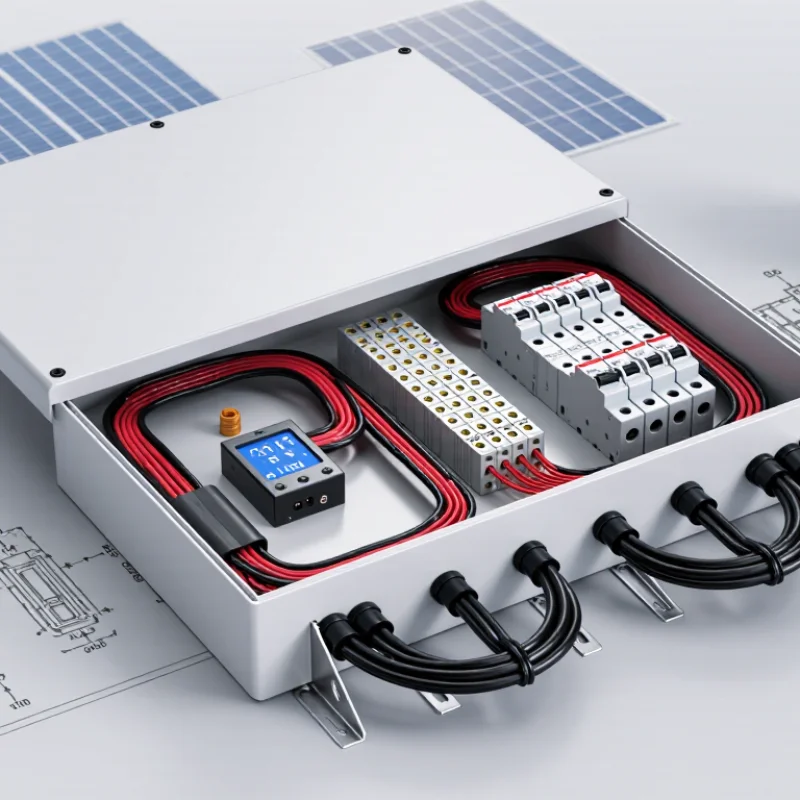
Understand the Role of a Photovoltaic Grid-Connected Box
A photovoltaic grid connected cabinet is the control point between solar arrays and the public grid. It combines isolation, overcurrent protection, surge protection, metering, and monitoring. Its role becomes more important as installations grow. IRENA’s Renewable Capacity Statistics 2024 recorded about 345 GW of new solar capacity in 2023. More equipment means more potential fault paths.
Choose the cabinet by checking seven practical details: rated voltage, current capacity, short-circuit strength, enclosure protection, thermal performance, surge protection, and monitoring functions.
Confirm compatibility with the inverter and local grid rules. IEC 61439 supports low-voltage assembly verification, while IEC 61643-11 addresses surge protective devices. Do not treat certification as decoration. Ask for test records.
Look closely at the installation environment. A cabinet facing afternoon sun may exceed its expected temperature. Dust can settle around cable glands, and poor ventilation can heat terminals. An IP rating helps, but sealing alone is not enough. Leave maintenance space. Check whether breakers remain accessible after wiring.
I have seen neat cabinets with undersized terminals; appearance can mislead. A useful cabinet should isolate a fault quickly, protect sensitive electronics, and provide clear status information. Small details matter.
Geological conditions, humidity, and future capacity should also influence selection. A cheaper enclosure may create expensive downtime later.
Match the Box with System Voltage and Current Requirements
Choosing a Photovoltaic Grid-Connected Box starts with matching its electrical limits to the system. Check the array’s maximum DC voltage, operating current, and short-circuit current. These values change with temperature and panel configuration. A cold morning can push voltage above the normal operating level. Leave a practical safety margin, not just the minimum rating.
Tip: Count every string carefully. Compare the combined current with the box’s rated input current. If several strings share one input, their currents add together. The BWG Grid-Connected Cabinet should also match the inverter’s DC voltage range and maximum input current. In field inspections, wiring errors often come from assuming identical strings behave perfectly. They do not always. Uneven shading, cable length, and panel tolerance can affect the result.
Tip: Verify the grid-side requirements separately. Confirm the AC voltage, frequency, phase arrangement, and output current before selecting protection devices. Check fuse ratings, disconnect capacity, surge protection, and conductor size together. One oversized component cannot correct a poorly matched system. Installation records should include measured voltage and current values, not only catalogue data. A qualified electrician should review final connections and tightening torque. Small omissions can become serious heat problems. Recheck the design when the array expands.
Check Protection Devices and Electrical Safety Features
7 Tips to Choose a Photovoltaic Grid Connected Box
Check the protection devices before comparing appearance or price.
Tip: Confirm that the DC isolator matches the system voltage and current. It should switch smoothly and show a clear ON/OFF position.
Tip: Inspect the DC fuse holders for correct ratings. Undersized protection may overheat, while oversized fuses may not respond quickly.
Tip: Select suitable surge protection devices for both DC and AC sides. A visible status indicator makes later inspections easier. Field checks often find missing or exhausted surge protection.
Tip: Choose an AC circuit breaker with suitable breaking capacity and coordination. It must protect the cable, inverter, and connected grid circuit.
Tip: Examine the grounding bar and terminal layout. Tight, labeled connections reduce wiring mistakes during maintenance.
Tip: Check the enclosure’s IP rating, sealing quality, and cable glands. Dust and water can enter through one poorly fitted gland. Do not rely only on printed specifications.
Tip: Verify insulation clearance, touch protection, and internal heat control. A crowded box may pass a visual check but still create hot spots.
Ask for test records, wiring diagrams, and applicable electrical certificates. Reliable suppliers should explain protection settings clearly.
I would also open the maintenance cover before purchase, when permitted. That small step can reveal weak terminals, sharp edges, or confusing labels. Mistakes happen, even in professional installations. Clear design makes them easier to detect.
Evaluate Enclosure Materials and Environmental Resistance
Choosing a pv grid connected cabinet starts with its enclosure, not its appearance. The material must withstand heat, moisture, dust, and sunlight. Powder-coated steel offers strength and impact resistance. Aluminum is lighter and naturally resists corrosion. Polycarbonate can insulate well, but it may age under intense ultraviolet exposure. Check the manufacturer’s test data, not only the product label.
Tip 1: Match the enclosure material to the site. A coastal installation needs stronger corrosion protection than a dry inland site. Look for suitable IP protection against dust and water. However, an IP rating does not guarantee resistance to chemicals or salt mist. That detail is often overlooked.
Tip 2: Examine temperature performance. A dark cabinet can become extremely hot in direct sunlight. High temperatures may shorten the life of seals, terminals, and protective devices. Check ventilation design, gasket quality, and temperature cycling results. Tip 3: Inspect every entry point. Cable glands should remain tight after repeated movement. Door hinges should not distort the seal. Small gaps become serious problems during wind-driven rain. A perfect enclosure does not exist; field conditions are less predictable than laboratory tests. Recheck the cabinet after one wet season, because early assumptions can be wrong.
7 Tips to Choose a Photovoltaic Grid Connected Box: Enclosure Materials and Environmental Resistance
The chart compares commonly used enclosure materials using an indicative 1–5 engineering selection index. Higher scores indicate better typical performance in the listed environmental conditions. Final selection should also verify the complete assembly’s certified IP rating, UV exposure, temperature range, impact rating, and local installation requirements.
| Label | UV-Stabilized Polycarbonate | ABS | Aluminum | Stainless Steel |
|---|---|---|---|---|
| UV Resistance | 5 | 2 | 4 | 4 |
| Corrosion Resistance | 4 | 3 | 4 | 5 |
| Impact Resistance | 5 | 4 | 3 | 4 |
| Thermal Stability | 4 | 3 | 5 | 5 |
| Electrical Insulation | 5 | 5 | 2 | 2 |
UV-stabilized polycarbonate provides a balanced combination of impact resistance, electrical insulation, and outdoor durability. Stainless steel generally offers the strongest corrosion resistance, especially in aggressive environments, while aluminum is lightweight and thermally conductive. ABS is economical but is usually less suitable for prolonged outdoor UV exposure unless specifically UV-rated. For ingress protection, IEC 60529 defines IP65 as dust-tight with protection against water jets, IP66 as dust-tight with protection against powerful water jets, and IP67 as dust-tight with temporary immersion protection up to 1 metre for up to 30 minutes.
Confirm Compatibility with Inverters and Grid Standards
7 Tips to Choose a Photovoltaic Grid Connected Box?
With global solar capacity reaching about 1,419 GW by 2023, grid compatibility is no longer a minor specification. IRENA’s Renewable Capacity Statistics 2024 confirms this rapid expansion. A Photovoltaic Grid-Connection Box must match the inverter’s rated voltage, current, frequency, and connection phase. Check the inverter datasheet beside the box label. Confirm maximum DC current, MPPT voltage range, short-circuit current, and the number of string inputs. A small mismatch can cause nuisance tripping or unsafe heating.
Local grid rules matter equally. The box should support the inverter’s anti-islanding function and required voltage, frequency, and reconnection limits. Relevant references may include IEC 61727, IEC 62109, IEC 61439, IEEE 1547, or local utility codes. Do not assume one certificate works everywhere. Some regions require neutral switching, specific earthing arrangements, surge protection, or visible isolation. The installation drawing should clearly show polarity, cable size, terminal ratings, and protective-device coordination.
Look closely at operating conditions. A box installed on a hot metal wall may experience much higher internal temperatures than laboratory tests suggest. Verify enclosure protection, derating curves, altitude limits, and ambient temperature. IRENA’s data shows why standardization is increasingly important, but project conditions still vary. A neat enclosure can remain electrically unsuitable. Recheck every value. That step is often skipped.
Review Installation, Wiring, and Maintenance Requirements
7 Tips to Choose a Photovoltaic Grid Connected Box
Review Installation, Wiring, and Maintenance Requirements
Tip 1: Check the box’s rated voltage and current against the actual array design. A small margin prevents nuisance trips.
Tip 2: Confirm compliance with IEC 61439 and IEC 62548 requirements. These standards address assembly safety, wiring, and photovoltaic installation practices.
Tip 3: Select suitable ingress protection for the site. Dusty farms and coastal areas require stronger enclosure protection.
Tip 4: Inspect cable entry points carefully. Poor glands can admit water behind the terminals.
Tip 5 Review the wiring layout before purchase. DC isolators, surge protection, fuses, and earthing terminals should remain accessible. Keep cable paths short and clearly labeled.
The IEA PVPS Trends 2024 report recorded about 456 GW of new photovoltaic capacity in 2023. Larger systems increase the importance of disciplined connection design. I have seen neat cabinets fail because conductors were bent too tightly. Appearance is not proof of quality.
Tip 6: Plan maintenance access. Technicians need space to test insulation, tighten terminals, and replace protective devices safely.
The IEA PVPS Task 13 research commonly reports around 0.5% yearly module degradation, but poor connections can create faster losses locally.
Tip 7 Verify testing documents, temperature ratings, and spare-part availability. Maintenance records should include torque values and inspection dates.
Keep it practical. An installation drawing may still miss one field condition, so review it onsite before energizing.
Compare Quality, Certification, and Long-Term Support
7 Tips to Choose a Photovoltaic Grid Connected Box
A photovoltaic grid-connected box should be judged beyond its enclosure and price. In field inspections, loose terminals, weak sealing, and unclear protection settings often create avoidable maintenance risks. Check the rated voltage, current, short-circuit withstand, cooling method, and enclosure rating.IEC 61439 supports verification for Low-Voltage Switchgear assemblies, while IEC 61643 covers surge protective devices. Ask for complete test reports, not only certificate numbers. Certification must match the actual model, configuration, and production site.
Quality also appears in small details. Look for copper busbars with documented conductivity, labeled terminals, accessible test points, and wiring that remains orderly after service. A box exposed to dust, rain, and heat needs a suitable IP rating under IEC 60529. The International Renewable Energy Agency reported 345 GW of new solar capacity in 2023, bringing global solar capacity to about 1,419 GW in its Renewable Capacity Statistics 2024. More installations mean more replacement pressure. Cheap components may become expensive after five summers.
Long-term support deserves equal attention. Request a spare-parts list, response times, technical drawings, and a clear warranty process. Confirm whether surge modules, breakers, fans, and monitoring devices remain available for ten years. The IEA PVPS Trends 2024 report recorded more than 400 GW of new photovoltaic capacity in 2023, depending on reporting scope. Figures vary. That is worth checking. A supplier should explain the difference, not hide it. Before approval, simulate cable heating, overload trips, communication loss, and emergency shutdowns under realistic site conditions.
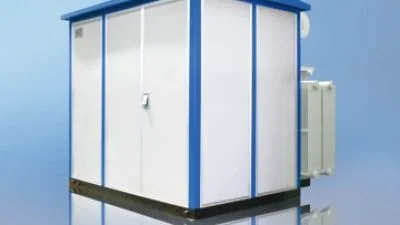
YBFD40.5 0.69-kV Compact Wind Power Box-Type Substation: Features, Benefits, and Applications
The YBFD40.5/0.69 kV compact wind power box-type substation is designed to connect wind turbines with medium-voltage collection networks. It raises the turbine’s low-voltage output, typically up to 0.69 kV, to a 40.5 kV class level for efficient transmission and grid connection. Its integrated structure combines the transformer, high- and low-voltage switchgear, protection devices, and monitoring components within a compact outdoor enclosure. This arrangement reduces the amount of site wiring and supports faster installation in areas where space and construction resources are limited.
Built for wind farm operating conditions, the substation can be configured with safety protection, overload and short-circuit control, temperature monitoring, and reliable insulation systems. Its enclosed design helps shield internal equipment from dust, moisture, wind, and changing weather, while efficient transformer performance helps reduce energy losses during collection and transmission. The compact layout also simplifies inspection and routine maintenance, helping operators manage multiple turbine units more effectively.
This equipment is suitable for onshore wind farms, distributed wind power projects, renewable energy parks, and remote generation sites requiring step-up voltage conversion. By placing the substation near the turbine, the system can shorten low-voltage cable runs, improve power collection efficiency, and provide a practical interface between individual wind turbines and the broader medium-voltage network.
FAQS
It connects solar arrays with the public power grid. It provides isolation, overcurrent protection, surge protection, metering, and monitoring. Think of it as a control point. Without clear control, faults may spread quickly.
Check rated voltage, current capacity, short-circuit strength, enclosure protection, thermal performance, surge protection, and monitoring functions. Confirm compatibility with the inverter and local grid requirements. A low price cannot replace correct ratings.
The enclosure must resist heat, moisture, dust, impact, and sunlight. Coated steel is strong. Aluminum is lighter and resists corrosion. Insulating plastic can work well, but intense ultraviolet exposure may age it.
Coastal sites need stronger corrosion protection than dry inland locations. Direct afternoon sunlight can make a dark cabinet extremely hot. Dust may collect around cable glands. Humidity and future capacity also deserve attention.
No. An IP rating mainly indicates resistance to dust and water. It does not automatically prove protection against chemicals or salt mist. Wind-driven rain can expose weak seals. Recheck the cabinet after one wet season.
Inspect busbar conductivity records, labeled terminals, accessible test points, and orderly wiring. Check whether terminals are correctly sized. A neat cabinet can still hide weak connections. Appearance sometimes misleads.
Request complete test reports, technical drawings, protection settings, spare-parts lists, response times, and warranty details. Confirm that documents match the actual model and configuration. Certificate numbers alone are not enough.
Confirm future availability of breakers, surge modules, fans, and monitoring devices. Leave enough space for maintenance. Ensure breakers remain accessible after wiring. Simulate overload trips, communication loss, cable heating, and emergency shutdowns.
Heat can shorten the life of seals, terminals, and protective devices. Check ventilation, gasket quality, and temperature cycling results. Cable heating should be simulated under realistic conditions. Laboratory assumptions may fail outdoors.
Choosing a cheaper enclosure without considering downtime, corrosion, or future expansion. Small savings may create expensive repairs later. I would not trust appearance alone. Field conditions are messier than brochures.
Conclusion
Choosing the right Photovoltaic Grid-Connected Box is essential for building a safe, stable, and efficient solar power system. Start by understanding its role in combining, controlling, and protecting the connection between photovoltaic equipment, inverters, and the public grid. Select a box that matches the system’s voltage, current, and capacity requirements, while checking for reliable protection devices such as circuit breakers, surge protection, isolation components, and grounding features. These elements help reduce electrical risks and support safe operation.
The enclosure should be made from durable materials that resist water, dust, corrosion, heat, and sunlight, especially in outdoor environments. Confirm compatibility with the inverter and applicable grid standards before purchase. Also review installation space, wiring access, maintenance convenience, and labeling requirements. Finally, compare product quality, testing records, safety certifications, technical documentation, warranty coverage, and long-term support. A careful evaluation of these factors will help ensure dependable performance, easier maintenance, and improved system safety throughout the service life of the photovoltaic installation.
Related Posts
-

2026 Best Electricity Controller Solutions for Global Buyers?
-
Why Low Voltage Switchgear is Essential for Modern Electrical Systems
-
Discover the Best Ring Main Gear Suppliers in China?
-

The Best Ring Main Gear Options for Global Buyers?
-
Top 5 Tips for Choosing the Best Photovoltaic Grid Connected Box?
-
Why Choose Outdoor Rmu for Your Next Project?