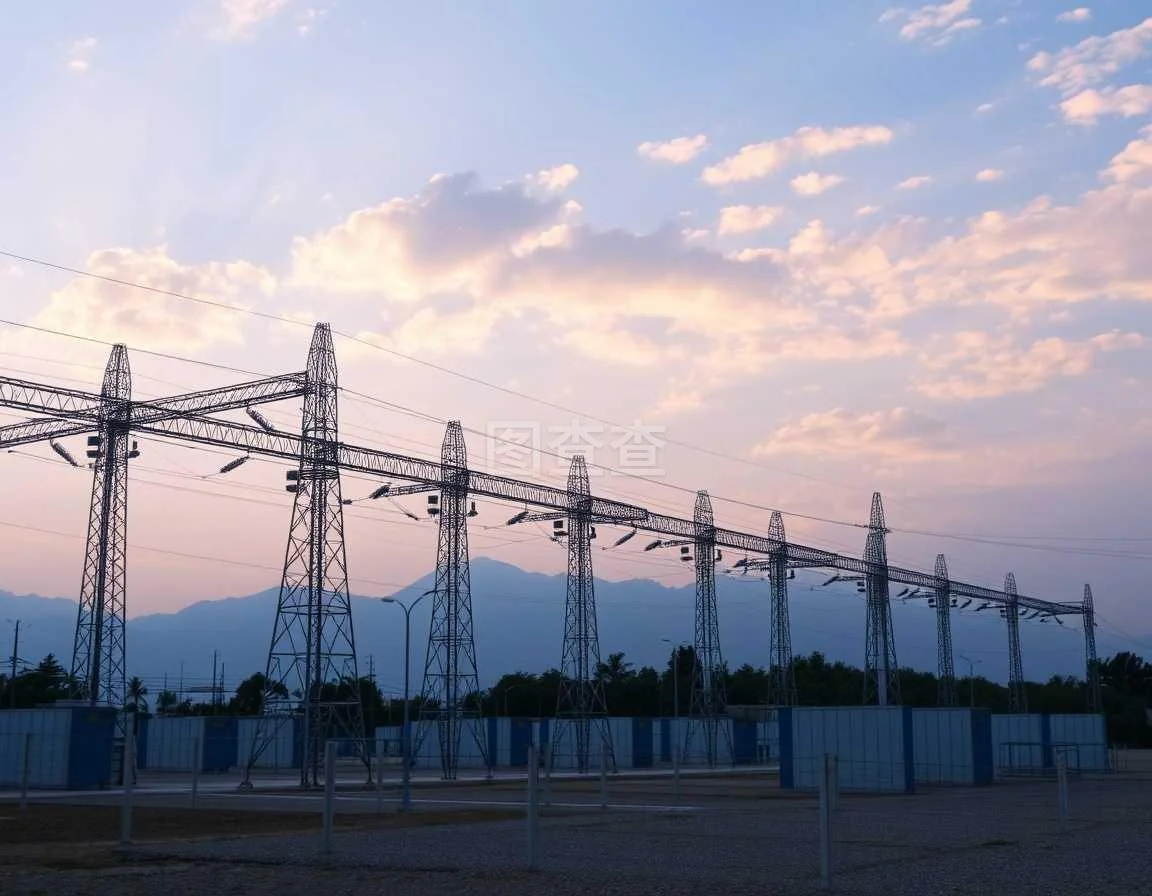
Since 2026, the power industry has been experiencing dual drivers from both the demand side and policy side. The surge in electricity consumption for AI computing power has forced the upgrading of power grids and the transformation of energy structure, with multiple national-level plans being implemented intensively.
1.Electricity demand: repeatedly hitting new highs, with computing power and high-end manufacturing as the core growth drivers
In August, the total electricity consumption reached 1,033.2 billion kWh, marking a year-on-year increase of 1.7%, with the highest electricity load reaching a record high of 1.56 billion kW. In the tertiary industry, the electricity consumption in the charging and swapping service sector increased by 51.2%, while that in the Internet data service sector grew by 37.9%. The electricity consumption related to computing power experienced explosive growth. The electricity trading volume in the electricity market for the first eight months increased by 19.2% year-on-year. The China Electricity Council (CEC) released the national computing power center electricity consumption index for the first time, with the index standing at 300.9 in August, specifically quantifying the growth trend of electricity consumption for computing power infrastructure.
2.Grid investment: Over 5 trillion yuan in the 14th Five-Year Plan, setting a new record high
The National Development and Reform Commission (NDRC) revealed that the investment in new power grids during the “15th Five-Year Plan” period is expected to exceed RMB 5 trillion, representing a growth of over 30% compared to the “14th Five-Year Plan” period. The investment will primarily be directed towards ultra-high voltage (UHV), distribution network transformation, and smart grids. It is planned that by 2030, a new power grid will be initially established, capable of supporting the consumption of over 2.8 billion kilowatts of new energy.In the first half of 2026, the State Grid Corporation of China invested over 310 billion yuan (up 12.6% year-on-year), while China Southern Power Grid completed an investment of 89.262 billion yuan (up 14.79% year-on-year). At the policy level, the National Energy Administration issued the “15th Five-Year Plan” action plan for safe production of electricity, set up special projects to break through bottlenecks in power chips, ultra-high voltage components, and other key areas, and promoted the integration of AI large models into power grid operation and maintenance.
3.New power system: energy storage emerges as the primary regulating resource
New energy storage has become the primary regulating resource in the power system, with policies continuously increasing its emphasis. By 2030, it is planned to install 300 million kilowatts of energy storage capacity and 50 million kilowatts of virtual power plants, with the goal of achieving a 50% share of non-fossil energy in electricity generation. China’s first international standard in the field of computing and power coordination has been approved for establishment, promoting the coordinated development of computing power and electricity.
4.Industry chain pattern: Computing power drives five core directions
Focusing on the electricity demand for computing power, the power equipment industry chain has formed five core directions: ultra-high voltage equipment (main transmission network), power cables (essential supporting equipment for computing power centers), transformers (core power supply for data centers), grid digitization (intelligent dispatching), and energy storage and supporting products. The transformer export boom continues, with cumulative exports reaching $7.95 billion from January to August, a year-on-year increase of 28.5%. Overseas orders have been booked until 2027.
5.Risks and Challenges
The profits of the power industry are under pressure. In June, the profits of the power industry amounted to 51.8 billion yuan, down about 8% year on year. In July, the profits reached 64.6 billion yuan, down about 5-6 billion yuan year on year. As the marketization reform of the power industry progresses, nine electricity selling companies in Guangxi have experienced a situation where the proportion of spot purchases is too high, leading to a reversal in wholesale and retail prices. They jointly requested a temporary suspension of settlement and mandatory price transmission, sparking discussions on the bottom line of marketization and the spirit of contract. Furthermore, on October 20th, the power equipment industry fell by 0.74%, with a net outflow of 3.556 billion yuan from major funds. CATL and EVE Energy led the net outflow.