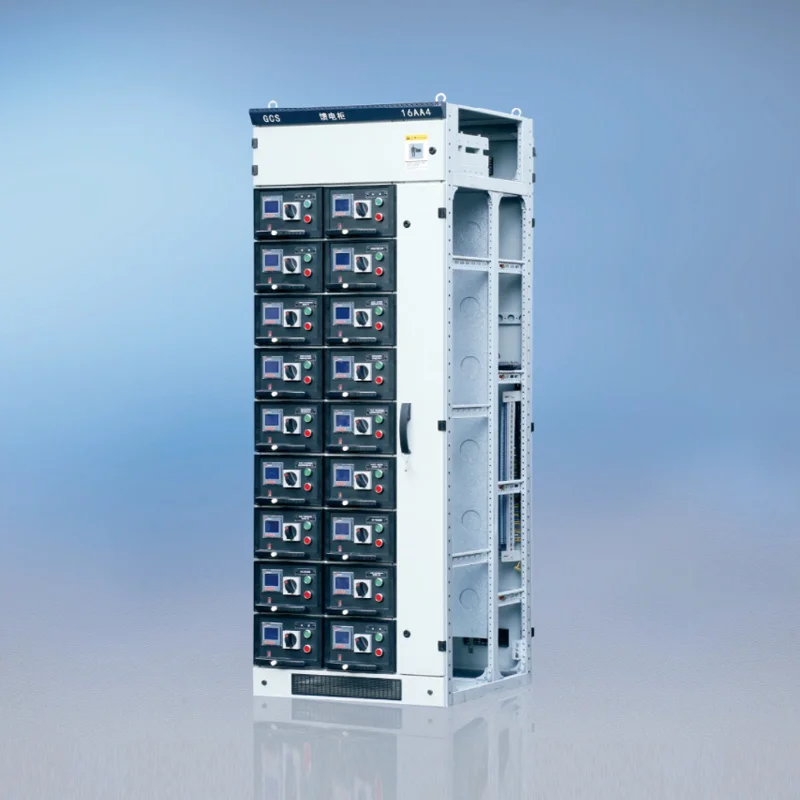
Introduction: Understanding Low Voltage Withdrawable Switchgear
Today, the industry has a great reliance on high tech electrical systems that help in power distribution, safety and enhancing productivity. One crucial aspect of these systems is switching apparatus which is used in many sub-stations, factories, commercial buildings and other infrastructure projects to ensure the needed reliability and flexibility of operation. More specifically, GCS type of switching apparatus is characterized by many benefits that make it a popular choice among many users of means of electric supply. In this article we will discuss the main distinctive properties of this type of switching apparatus and its significance and ability to satisfy the needs of buyers, designers and managers. Moreover, we will cover the more general aspects that are related to the topic of low voltage switchgears and their characteristics and probabilities of use.
What Is Low Voltage Switchgear?
Low voltage switchgear is defined as a group of electrical devices that effectively distribute electricity at voltages of less than 1000V AC. Low voltage switchgear plays an important role in controlling electricity passing through the circuits and keeping equipment safe from failure. The low voltage switchgear may consist of several different devices, including circuit breakers, disconnects, bus, protection relays, meters, and communication devices. The feature of withdrawable switchgear units is their ease of use and flexibility, as individual components may be replaced with no changes in wiring. This feature allows for hassle-free maintenance and upgrading of the system that is why it may be successfully applied in critical operations.
Design and Functional Features of GCS Type Low Voltage Withdrawable Switchgear
The GCS type switchgear is a modular, withdrawable system designed to fulfill numerous industrial requirements. Its design focuses on safety, reliability, flexibility, and scalability. The main features related to GCS type withdrawable switchgear systems are given below:
Modular Construction: GCS switchgear uses a modular format in which every compartment holds one or more functional components—be it a distribution module, circuit breaker, or any auxiliary devices. This allows clients to customize the equipment according to its operational needs. Moreover, this equipment installation is very easy and enables the equipment to be expanded and upgraded in the future.
Withdrawable Units: The main benefit of GCS switchgear is its capability of withdrawal of important units from the control cubicle (feeders, circuit breakers, measurement modules, etc.). Such a ‘plug and play’ feature facilitates taking care of maintenance, inspections, fault isolations, and replacements of elements without disturbances of the power supply system as a whole.
Enhanced Safety: GCS switchgear is designed in accordance with high standard electrical safety requirements. This type of equipment features a well-built enclosure, a variety of interlocking mechanisms, and arc-resistant compartments that help to avoid cases of accidental touching and arc blindness. Moreover, it also consists of earth bar systems, current transformers, and other devices ensuring reliability of operation with this switchgear.
Reliable Operation: The high reliability of the system is inevitable due to the harsh conditions of the environment, high-quality copper busbars, precision-constructed contact points and strong insulation materials, which diminish the risk of malfunctions as much as possible. The withdrawing mechanism itself is designed for 1000 uses at least, ensuring proper functioning for many more times to come.
Customizable Configuration: Different devices can be placed in each compartment starting from MCCBs (Molded Case Circuit Breakers) to ACBs (Air Circuit Breakers), as well as contactors, protection relays, and control buttons. Switchgear can be configured for lighting, motor control, power distribution, and loads of different nature by engineers.
Compliance and Standards: The GCS type of low-voltage withdrawable switchgear meets national and international standards such as IEC 60439, GB7251, and other regional norms, thus simplifying worldwide procurement and application in international projects.
Applications and Benefits in Power Systems
The low voltage withdrawable switchgear of type GCS is meant to meet the high standards demanded by applications like
Industrial Plants: GCS switchgear can be utilized for wide range of operations including power distribution centers, industrial electrical vehicle control, and machine safeguarding in numerous types of manufacturing centers.
Commercial Complexes: The flexibility and reliability of withdrawable switchgear brings advantages to large office buildings, shopping centers, hospitals, and hotels for controlling lighting, elevators, HVAC, and backup power systems.
Infrastructure Projects: Switchgear plays an essential role in ensuring operations are carried out smoothly in airports, railways, and also water treatment plants.
Renewable Energy Facilities: Switchgearwith GCS technology has found its way into wind farms and solar power facilities where it combines the functionalities of control and protection in connection with power conversion and entry into the grid.
Key benefits driving customer adoption include:
– Lowered maintenance duration: There is a possibility for operators to remove and maintain the units without needing a total shutdown of the entire system.
– Enhanced reliability of the system: The modular design allows introducing redundancy and easy scalability.
– Safety at work: The arc-proof compartments along with interlocks guarantee safety.
– Least financial costs: Every cycle of operations incurs small expenses, owing to ease of maintenance and scalability.
Low Voltage Switchgear Specification: What Do Buyers Need to Know?
In the process of defining a low voltage switchgear system, there are some important matters that both vendors and engineers should pay attention to, especially when it comes to GCS – type devices, such as:
Rated Voltage and Current: Generally, GCS switchgear has been designed for 3-phase voltage, specifically AC from the range: 400V to 690V and current capacity ranges from 630A to 4000A or more depending on the settings.
Breaking Capacity: Switchgear needs to be specified to withstand the expected fault currents, commonly rated between 50kA to 85kA high current short circuit for a few seconds of operation.
Compartment Types: Incoming feeders, outgoing feeders, motor control centers (MCC), and metering compartments can be set up in GCS switchgear. They each have different orientation and configuration.
Protection Functions: Advanced relays are capable of sensing problems like overloads, short circuits, ground faults, and temperature variations, activating alarms or automatic disconnection.
Communication and Integration: Numerous kinds of GCS switchgear equipment are able to monitor remotely, make SCADA integrations, and communicate through Modbus, Profibus and different other industrial protocols.
Installation Environment: The specific panel material, ingress protection rating, and cooling arrangements must meet the conditions existing at the site, including humidity, dust, vibration, and ambient temperature.
Buyers need to ensure the switchgear supplier provides clear documentation, after-sales support, and parts delivery, especially in critical services that should not be disrupted.
Technical Advantages of GCS Type Withdrawable Switchgear in Modern Power Systems
The GCS switchgear is meant for high density and scalable electrical networks where swift maintenance and customization matter most. Below are some of its major benefits:
Scalability: The use of modular compartments allows firms to begin at a low level of development and then expand their switchgear as demand for electricity increases instead of having to invest in the entire system.
Segregation of Functional Units: Separation between power and control sections makes interference impossible and reduces the complexity of troubleshooting.
Ease of Testing and Maintenance: It is possible to conduct tests of withdrawable units from outside the cubicle, allowing for reduction of danger and acceleration of regular inspections. Defective feeders or breakers can be changed in just minutes.
Automation and Smart Functions: It is possible to install modern GCS switchgear with intelligent meters, PLCs, and energy management systems, which allows for real-time monitoring, fault detection, and automated control.
High Mechanical Strength: Usually the steel frame and enclosure are created for seismic zones, having reinforcements and vibration-resistant fastenings in them.
The functions provided by the technology allow the organizations to implement a solution that both shrinks and expands according to changing circumstances while staying secure against malfunctions and guaranteeing maximum safety for employees and machines.
Comparison with Other Types of Low Voltage Switchgear
Though GCS type low voltage withdrawable switchgear is chosen because it is flexible and modular, it is also necessary to compare it with other kinds of switchgear commonly used in the business.
Fixed Type Switchgear: Fixed switchgear makes use of fixed connections for major appliances. This leads to full power interruption for maintenance. Although less complicated and expensive, fixed switchgear does not present fault isolation and short replacement features typical of withdrawing switchgear. It is more often employed in small plants or small-scale operations.
Other Withdrawable Types: GCK, MNS, and ABB:The GCK and mns switchgear types are popular all over the world due to their comparable modularity. Meanwhile,GCS switchgear is recognized for having better arc-resistance, more thorough compartmentalization, and ease of integration into modern MCC (motor control center) systems. High-tech versions of the withdrawable switchgear have been developed by ABB and Siemens; however, GCS switchgear has proven to be more cost-efficient and versatile.
Custom Solutions: Certain projects require custom switchgear setups, drawing upon different switchgear designs. The GCS switchgear is noted for its versatility and reliability, which allow for easier modifications and additions.
Understanding the trade-offs between fixed and withdrawable switchgear empowers buyers to make an informed decision that best suits their premises’ operational needs, whether they prioritize minimal downtime, ease of upkeep or the most economical solution.
Critical Considerations for Installation, Operation, and Maintenance
In order for GCS type low voltage withdrawable switch gear to be successfully implemented, good planning and the following best practices are necessary:
Site Preparation: The structure and securing locations have to be reliable to carry the weight and vibration. Wiring paths need to be optimized to minimize interference and allow easy access.
Electrical Integration: The dimensions of busbars, the earthing setup, and the safety specifications must strictly comply with safety regulations and site requirements.
Safety Procedures: Training on lock-out/tag-out procedures, safe withdrawal and insertion procedures, and emergency response in the event of malfunctions is essential.
Periodic Maintenance: Conducting regular inspections of terminal points, insulation, mechanical locks, and relay settings provides certainty. The withdrawable design of GCS switchgear makes it easier to perform these tasks, though the need for regular maintenance is still important.
Spare Parts and Upgrades: It is necessary to have spare feeders, breakers and other protective devices readily available in stock. Because of the modular design upgrades in the system such as new digital meters or communication modules can usually be done quite quickly.
Effective training and proactive maintenance guarantee that GCS switchgear provides expected performance for the length of its life.
Frequently Asked Questions: Insights for Buyers and Users
What is low voltage switchgear?The term Low Voltage Switchgear is used for the equipment used in the control, distribution, and protection of electrical circuits operating below 1000V AC. It is essential in ensuring safe electrical operations in commercial, industrial, and infrastructure environments.
Why choose withdrawable switchgear over fixed types?
Withdrawable switchgear, such as GCS type, allows for rapid maintenance, easier upgrades, and better fault isolation, minimizing downtime and operational disruptions.
How can I customize GCS switchgear for my facility?
GCS switchgear supports a wide array of compartment types, devices, and protection settings. Buyers can specify compartment sizes, incoming/outgoing feeders, metering equipment, communication protocols, and enclosure ratings to match their needs.
Is GCS switchgear safe for high fault environments?
Yes. GCS switchgear is engineered for high short circuit withstand, with features like arc-resistant enclosures, reinforced compartments, and mechanical interlocks mitigating risks for personnel.
What standards does GCS switchgear comply with?
GCS low voltage withdrawable switchgear complies with IEC 60439, IEC 61439, GB7251, and often regional standards. Buyers should verify certifications and panel testing results before purchase.
Can GCS switchgear be integrated with smart monitoring systems?
Absolutely. Modern GCS products offer communication interfaces for SCADA, PLCs, and remote monitoring, enabling predictive maintenance and real-time diagnostics.
The Role of GCS Low Voltage Withdrawable Switchgear in Sustainable Power Management
As industries embrace energy efficiency and sustainability, the role of advanced switchgear systems like GCS becomes even more pronounced. These systems can be deployed alongside real-time energy management platforms to monitor load profiles, optimize power consumption, and reduce waste. Withdrawable switchgear also supports integration with backup generators, renewable sources, and advanced automation for responsive power distribution. This flexibility promotes not just operational efficiency, but contributes to the broader goals of green engineering and environmental responsibility without sacrificing safety or reliability.
Choosing the Right Vendor and After-Sales Support
Selection of a trusted vendor is foundational to the long-term reliability of low voltage withdrawable switchgear. Buyers are advised to investigate manufacturer track records, certifications, reference projects, and warranty offers. Opting for vendors that provide comprehensive documentation, training, and spare parts can save significant time and resources throughout the system’s lifecycle. Many reputable brands offer digital support platforms, ensuring immediate access to troubleshooting guides and system data. As these systems become more integrated and complex, responsive after-sales service is essential for maintaining uptime and compliance.
In summary, GCS type low voltage withdrawable switchgear has become a cornerstone in modern power distribution due to its flexibility, modularity, and safety. Its withdrawable design simplifies maintenance, supports fast system upgrades, and minimizes downtime—making it ideal for mission-critical applications in industry, commerce, and infrastructure. Buyers can customize GCS switchgear configurations to meet exact specifications, ensuring optimal reliability and expansion capability. When combined with proactive maintenance and smart monitoring, GCS switchgear delivers long-term value, robust safety, and operational excellence. Selecting the right vendor and planning for future upgrades guarantees your switchgear investment will meet evolving power needs, both now and in the years ahead.