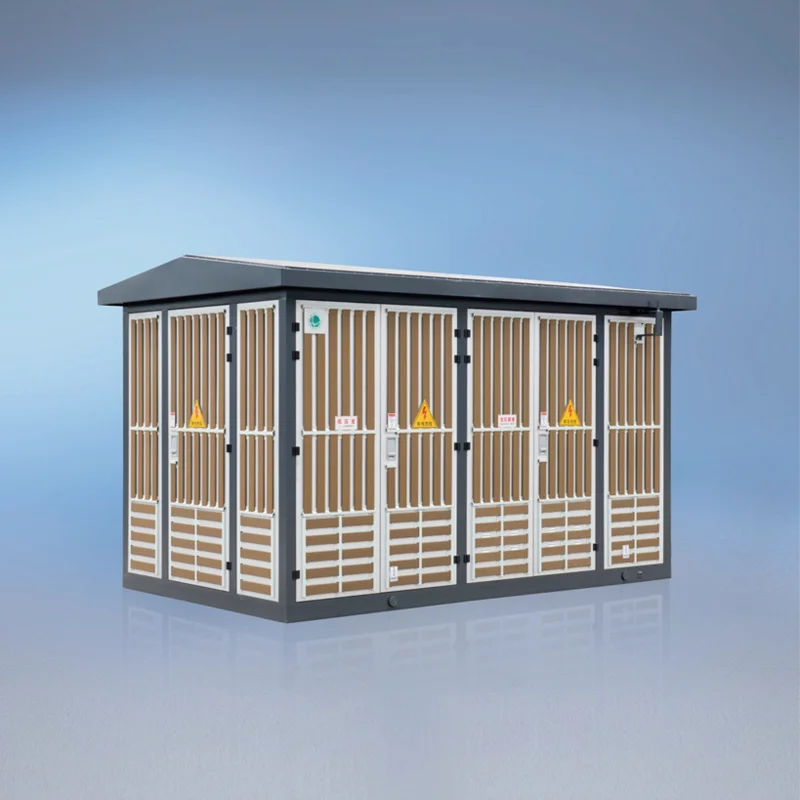
Understanding Prefabricated Substations: A Modern Power Solution
In the digitized world of modern electrical energy infrastructure, the Prefabricated Substation represents a major shift toward a more flexible electricity solution that can adapt to the growing need for efficient, safe, and reliable electricity distribution. But what is a prefabricated substation? A prefabricated substation is a modular electrical system manufactured in the factory and comprising various equipment (including switchgear, transformers, and control devices). Unlike traditional substations, prefabricated substations are not built on the spot, instead the parts are assembled and tested in the factory.
Due to their modular structure, the time needed for installation is minimized, there is greater quality assurance and the risks involved in assembling in the field are lowered. Flexibility and scalability are the main characteristics of the substations which makes them effective when it comes to projects such as city constructions as well as projects in locations that are hard to reach.
Main Application of High-Low Voltage Prefabricated Substation
The high-low voltage prefabricated substation serves an important purpose because it is able to help between transmission level as well as distribution level in power networks. These substations are very crucial in changing high-voltage electrical energy to low-voltage energy for using by different appliances and businesses as well as for residential areas. Most often, they are installed at certain places on grid where stepping down voltage happens without any problems.
The use of prefabricated substations in both urban and rural settings is a common practice. The increasing population of metropolitan managers makes them realize the importance of prefabricated substations since they have limited spaces and the urgent need for installation. The use of prefabricated substations is a great solution to difficulties in terms of logistics in many areas including inaccessible places, oil and gas sites, construction sites, and other places. Furthermore, prefabricated substations prove to be very efficient in case of the necessity of temporary power supply solutions.
What Does a High Voltage Substation Do?
High voltage substations function in an important role in controlling and handling the transmission of electrical power at several thousand volts to hundreds of thousands of volts. They can be considered as nodes within the power grid and are responsible for the transfer of energy from the generators to networks. In practice, a high voltage substation receives the power through overhead wires or underground cabling, handles it through switchgear and transformer installations, then delivers it either to another transmission line or for distribution.
Prefabricated Substation As a result of their quality flexibility in using reliable solutions for any high voltage application, enabling rapid deployment. High voltage substations, mainly the prefabricated type, contribute immensely to the stability of the grid. They provide important functions like fault isolation, overload, and voltage management. In addition, modern monitoring and control systems play a significant role in reliable power supply since they allow to react in a timely manner to any electrical issues or disturbances.
The Primary Purpose of a Substation
Essentially, the key role of a substation is that of a significant node in the process of delivering electricity, responsible for the necessary voltage adjustment and switching of circuits depending on the needs of the grid. The tasks performed by substations are various, regardless of whether the voltages are high, medium, or low: transforming the voltage levels, distributing power, protecting circuits, and synchronizing systems. Substations act as points of communication for monitoring systems and supervisory control equipment and make remote operation and maintenance possible.
Prefabricated Substation These core functions are provided in a compact, pre-built form. Therefore, it is advantageous for industries that cannot afford downtime or need urgent expansion or upgrade activities. The versatility of ready-made substations allows them to be utilized in a variety of types of work, including utility networks, commercial facilities, renewable energy projects, and transport infrastructure.
Advantages of Prefabricated Substations in Modern Electrical Infrastructure
The prefabricated substations provide many benefits in comparison to such buildings constructed on site. The primary benefit is that its pre-engineered character allows for faster lead times and reduced labor costs; thus helping to enable energy operators and developers meet their tight deadlines. The factory allows for effective quality control and consequent reduction of risks of defects.
The level of safety is also notably improved since factory testing and assembly minimize the exposure of workers to dangerous high-voltage situations during installation. Modular construction facilitates growth and relocation as it adapts to changes in needs. Concerning maintenance, prefabricated substations make the process of upgrading or replacing components much simpler due to their homogenous design and easy access.
Prefabricated substations create less environmental impact because of reduced onsite activities, minimal construction debris, and effective utilization of space. This is very important for implementation of a project in an ecologically-sensitive area or at places where strict guidelines are in effect.
Key Applications Beyond Power Transmission
Prefabricated substation units have utility in various industries and situations beyond their primary function of power transmission and distribution. Prefabricated substations make possible the incorporation of power produced at renewable energy facilities such as wind and solar plants into the power grid, providing a means of step-up or step-down voltage adjustment. They are used as efficient solutions in some major infrastructure projects including railways, airports, and urban public transport systems where reliable and widely distributed power supply must be ensured.
The industrial fields, such as the manufacturing industry, mining, oil, and gas, greatly benefit from prefabricated substations, which are able to provide stable electric power even in harsh working conditions. Construction sites and rescue missions, among other temporary operations, require the benefits of prefabricated substations’ nature, which includes mobility and speed in installation of the substations.
Design Features and Technological Innovations
Modern prefabricated substations are characterized by advanced designs and innovations. Strong and weather-resistant containers provide protection from environmental threats, vandalism, and accidental damage. Cooling and ventilating equipment is included to provide temperature control for temperature-sensitive electronics. The substation includes measures for fire safety, such as humidity control and a fire extinguishing system.
The control systems of prefabricated substations are also equipped with sophisticated monitoring and automation capabilities. The use of real-time data collection technology, remote diagnostics technology, and technology allowing operators to use predictive maintenance techniques ensures maximum efficiency at all times. The use of modern technology increases the compatibility of prefabricated substations with smart grid programs, energy management programs, and digital substations.
The concept of sustainability plays an important role in the creation of energy networks that incorporate renewable sources and allow for greater efficiency. Therefore, prefabricated substationstake into account recyclability, minimal use of materials, and adaptability. Due to their modular design, these substations can easily be improved in order to meet any changing standards, including those related to cybersecurity and electromagnetic compatibility.
Choosing the Right Prefabricated Substation: Considerations for Buyers
Choosing a prefabricated substation is a very serious matter for both potential clients and infrastructure designers. There are several factors that should be taken into account. Firstly, it is important that the voltage rating and capacity comply with the requirements of the network, so that both the characteristics and transformer functions remain secure and effective. Secondly, the sites and the conditions for installation (concerning space, ease of access, the climate, requirements of the environment) will play their role in choosing the type of enclosure, cooling, and safety systems.
Integrating with existing infrastructure is a must. Buyers must ensure compliance with local grid standards, protection relay system designs, and monitoring systems. It might also become necessary to tailor additional equipment such as switchgear, devices for power quality improvement, and devices for communication, considering the requirements of a project.
Reliability and aftersales support are factors that are very vital. Big manufacturers of prefabricated substations guarantee developers with long-term warranties, certificates and technical support. Considering the reputation of suppliers, portfolio and installed references can help a buyer get the right choice and take the right decision for the longer period.
Frequently Asked Questions about Prefabricated Substations
Q: What a prefab substation can be defined as?
A prefab substation refers to a factory-fabricated electrical unit which consists of transformer, switchgear, protective devices, and control systems. Such installations are usually aimed at facilitating the power distribution service provision since they are pre-assembled equipment which requires quick installation.
Prefabricated substations gain an advantage over conventional designs due to the ability to reduce costs through speedy installation, improved safety measures, and other benefits obtained when using prefabricated equipment.
What Function does a High Voltage Substation Serve?
High voltage substations are responsible for managing electricity on the transmission level by stepping voltage up or down, switching circuits, protecting the network, and stabilizing the grid. Pre-manufactured versions perform similar functions with the additional advantages of modularity and speed.
A: Prefabricated substations are commonly found in urban areas, distant locations, renewable energy facilities, manufacturing plants, transportation centers, and temporary power installations.
Q: What is the main function of a substation?
The main function of a substation is to convert voltages, distribute energy, safeguard circuits, and coordinate a power system for effective and safe distribution of electricity.
Future Trends in Prefabricated Substation Technology
Digitalization and smart grid information have been quickly receiving acceptance from energy sector, and prefabricated substations are leading this trend. Innovations such as the integration of IoT sensors for monitoring, predictive analytics to ensure maintenance of electrical equipment, and automatic response to irregular grids activities are coming soon. New cybersecurity methods and compatibility with renewable energy storage solutions will allow prefabricated substations to enhance the resilient and sustainable power grid.
Hybrid systems that combine solar power, wind energy, and battery storage depend on modular substations to make the power generation, storage, and delivery processes more efficient. As urban centers plan and build electric vehicle (EV) charging facilities, modular substations help with making the task much quicker and allowing for multidimensional scaling. Besides, their flexibility guarantees an opportunity to remain relevant throughout the evolution of the electrical grid topology and power requirements.
Regulatory Compliance and Quality Assurance
There are strict regulations in place regarding how substations are designed, constructed, and operated, both nationally and internationally. Prefabricated substations are designed in accordance with – or with reference to – these regulations, thus guaranteeing the safety of the substation structure. Extensive tests carried out in the factory ensure that various parameters (including mechanical, thermal, environmental, and electrical characteristics) of the facility are within the limits permitted before it is dispatched.
Adherence is crucial for gaining project permits, acquiring insurance, and ensuring durability of the solution over time. Buyers must check to see that they obtain all necessary documentation to verify compliance with requirements. Manufacturers provide ongoing training and technical assistance that enables clients to obtain knowledge and confidence and secure their investment in the latest state-of-the-art electrical technologies.
Enabling Smart Cities and Renewable Energy Integration
The trend towards smart infrastructure gains a critical boost from prefabricated substations in the concrete context of urbanization and industrial development initiatives aimed at sustainability and innovation in the digital arena. Featuring solutions for real-time monitoring, automated control, and adaptable installations, prefabricated substations follow closely the speed of urbanization and energy evolution. The bridges that prefabricated substations create between variable electricity generation and stable electricity demand are essential in renewable energy generation projects, ensuring grid reliability and conformity to regulations.
The communities are increasingly benefitting from greater reliability, improved power delivery, and lower chance of outages. Urban planners, developers, and power companies are making use of prefabricated substations for achieving sustainability objectives, accommodating distributed generation, and facilitating transportation electrification, while ensuring low costs and scalability.
In conclusion, the industry of prefabricated substations offers a promising future when it comes to improving electrical systems with high levels of speed, reliability, flexibility, and safety in projects of different types and magnitudes. From ensuring high- and low-voltage conversions to integrating with the green technologies and smart grids, the influence of prefabricated substations is undeniable and obvious. In times when several industries and cities grow and progress, prefabs will likely help in facilitating energy delivery all over the world.