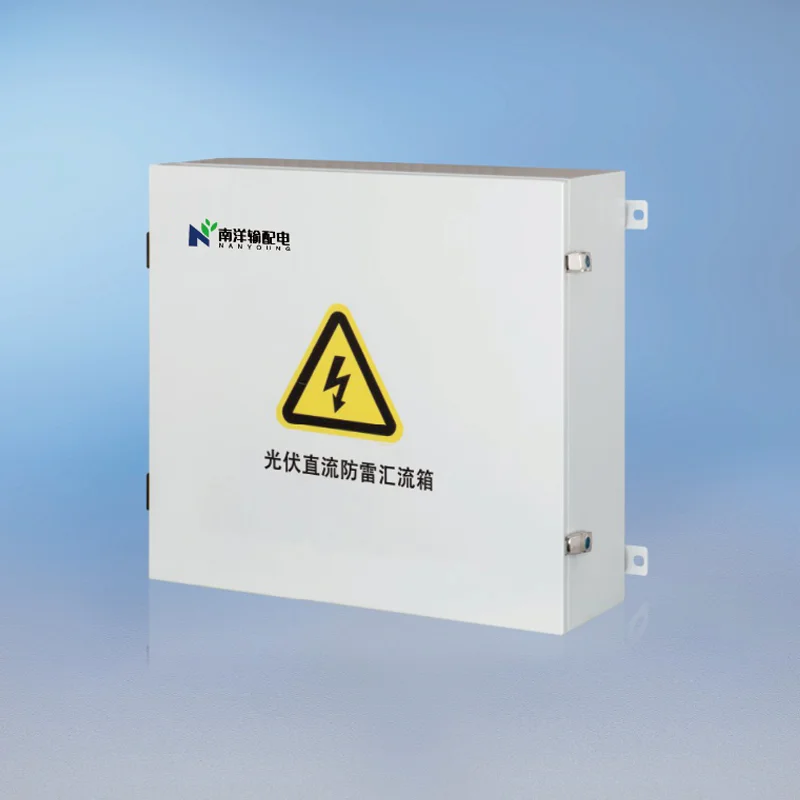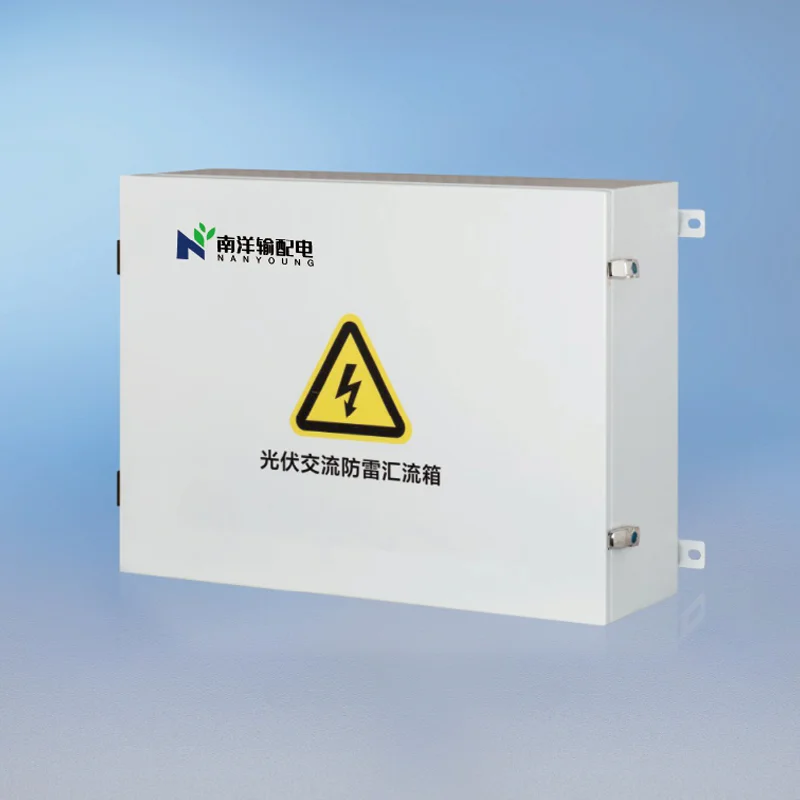
The world’s movement toward renewable energy is gaining speed, with solar photovoltaic (PV) technology becoming one of the frontrunners in sustainable energy production. A key to achieving such effectiveness is the proper functioning of the systems, especially during rapid growth of installations. The performance of such systems lies, to a degree, in use of two unique devices—dc combiner box and ac combiner box—realized in a single device, charged with functionality of lightning protection and surge protection. Our detailed guide allows to learn more about the application, differences, and innovative features of such protection devices for technical users and decision-makers of the project.
Understanding the Role of the Combiner Box in Photovoltaic Systems
From an essential standpoint, a combiner box (dc or ac) combines the connections coming from multiple PV strings and inverter outputs, allowing circuitry to be centralized, monitoring improved and protection measures simplified. It is critical to be used in both grid-connected and off-grid PV systems for practical usage with wiring and gaining electrical safety.
DC combiner boxes Combiner Boxes collect currents from various photovoltaic strings before leading them to the main DC circuit breaker and inverter in addition to this inverter outputs are combined together before going to the distribution board or grid connection. However apart from this, lightning protection is of the utmost importance as solar panels on a rooftop or in open space can be affected by lightning strikes and surges because of their big area and exposure.
How Photovoltaic DC/AC Lightning Protection Combiner Boxes Work
Both DC and ACLightning Protection combiner boxes contain certain surge protection devices (SPDs), circuit breaker or fuse devices, monitoring modules, and wiring terminals. Their main purpose is not limited to just gathering different signals as they also provide protection against dangerous overvoltage that might be caused by lightning strikes, either directly or from nearby. Without this protection, various devices (inverters, module electronics, etc.) can be got damaged or even destroyed, which is related to losses in energy production and expensive repair costs.
In respect to the DC side protection, the combiner box is equipped with the appropriate SPDs, which effectively divert the excess voltage to the ground after the detection of a transient voltage, guaranteeing the system’s insulation and continuity. Correspondingly, on the AC side, the AC panel of the combiner box is provided with the necessary equipment to protect and ensure the confinement of the transient voltage after the inversion.
Main Components of PV Combiner Boxes
Today’s photovoltaic combiner boxes, regardless ofAC or DC types, typically consist of some main components that enhance reliability, safety, and monitoring capabilities.
1. Devices for Surge Protection (SPDs): Determined for the corresponding DC or AC voltage levels, SPDs play the role of discharging high voltages to earth in times of surging.
2. Isolation Switches or Breakers: Each photovoltaic string or inverter line is protected by its own isolation switch, which provides protection against short circuits and excess current.
3. Busbar and Terminal Blocks: These components provide a system of connections that generates low resistance and helps to consolidate the electric current from different sources in a successful manner.
4. Monitoring Modules: Several modern models come equipped with current and voltage monitors, communication facilities for remote monitoring and diagnostic notifications for enabling predictive maintenance and quick identification of faults.
5. Grounding System: An effective earthing system is essential for lightning diversion and safety of people.
When brought together, these components of pv combiner boxes are created through precise engineering to withstand extreme weather. The enclosures are designed to be strong enough to protect the components from weather-related damage, and their IP rating could be either IP65 or IP67.
DC vs AC Lightning Protection Combiner Box: Key Differences Explained
Specifiers and designers often ask the question: “What is the difference between Photovoltaic DC and AC Lightning Protection Combiner Box?” The difference in these two is not obvious, but it is very important for the safety of the entire system.
Voltage and Current Ratings: Designed for high voltage and low current, DC combiner boxes can operate at voltages around 1500V DC while sustaining low currents from each PV unit. In contrast, AC combiner boxes must deal with low voltage (230/400V AC) but require high current on the output.
SPD Technology: The role of DC-side SPDs is to handle the specific features of direct current. Long-lasting arcs, unidirectional flow, and large fault currents are some characteristics needing specialized handling. AC SPDs must deal with periodic sine waves, bidirectional voltage surges, and zero-crossing points that happen quickly in alternating voltage systems.
Application Point: The DC combiner box is placed at the upper end, integrating the outputs of several PV arrays prior to the inverter, and the AC box is at the lower end, normally at the output side of one or more inverters.
Wires and Insulation: DC boxes have a specific application, thus they use double-insulated wires and often use high-grade insulation, while AC boxes utilize conventional phase-neutral-ground wires which are compatible with existing electricity grid system.
Size and Outing: In a typical setting, DC combiner boxes are usually more modular elements. In contrast, AC typically comes in a size similar to the number of output circuits or the inverters in place.
Grasping these subtle distinctions leads to improved system design, adherence to electrical regulations, and maximum defense against electrical accidents and environmental dangers.
Applications Across Different Scales of Solar Installations
The importance of a combination of dc combiner box and ac combiner box solutions spreads from small off-grid installations to large-scale utility solar farms. In each particular situation, specific requirements must be satisfied.
For installations on roofs up to around 10 kW, it is mostly equipped with a conventional direct current combiner box providing string-level protection, as well as a more compact alternate current box ensuring connection to the home distribution board.
Commercial and Industrial Solar: In the case of system sizes reaching hundreds of kilowatts, multiple combiner boxes may be applied. These can incorporate advanced functions such as monitoring, fault reporting, and remote tripping. The provision of adequate lightning protection is especially important in the commercial area where equipment and loads can be sensitive to power disturbances.
Utility-scale projects consist of solar farms that have a capacity of a gigawatt or more and rely on many large combiner boxes with DC protection at both the string and block level, multiple AC aggregation points, and complex analytics for each string that connects smoothly to the SCADA system in terms of real-time operation.
No matter what level the project is being done at, finding the right combiner box model means not only having peace of mind but also ensuring maximum system uptime and avoiding the risk of fire while complying with the requirements of the regional grid and insurance.
Best Practices for Selection and Installation
The proper choice and installation of lightning protection systems in PV combiner boxes can lead to maximizing the efficiency of their work:
Site Analysis: By determining the local lightning risk profiles, grounding conditions, and exposure levels, it can be ensured that a suitable SPD type (Type 1, 2 or combined) and surge current rating for the combiner box can be selected.
2. Certification and Compliance: Only install combiners that meet the valid IEC/UL standards (for example, IEC 61439-2 with regards to panel board or UL1741 regarding PV equipment). Make sure you have all arc flash ratings on file, check how easy it is to replace SPDs, and think about modular fuses/circuit breakers.
3. Professional Foundation: Each of the combiner boxes, must be connected to an earth point with a low impedance using appropriate copper conductors in conformity with the bonding system of the whole site. Adhering to this principle is indispensable for efficient discharge of lightning.
4. Weather Resistance: Since combiner boxes are typically placed outdoors, it is important to ensure that the material of the enclosure (polycarbonate, stainless steel or powder-coated aluminum) is resistant to corrosion and UV damage.
5. Accessibility for Maintenance: Facilities should be designed for access from the front, with clearly marked terminals and options that allow for easy modular upgrades, thus minimizing service downtime.
Taking care of these details is beneficial to not only the protection system but also streamlines the way operations are conducted afterward making troubleshooting and expanding much easier too.
Integration with Monitoring and Data Systems
Modern-day PV combiner box components hardly work in isolation. They are part of an integrated monitoring systems. With advanced voltage/current sensors, RTUs, and communication buses, information is sent to the main controllers. Alerts related to faults, imbalances in current, or failure of SPD help maintenance personnel act promptly and reduce their energy losses.
Acquisition of data enables programs on maintenance prediction so that asset owners can make predictions about the degree of wear of parts based on the cumulative number of surge events, string output consistency, and thermal load. Enhanced digital integration has become one of the main criteria for big and sophisticated installations as it distinguishes advanced combiner solutions from simpler ones.
FAQ: Key Questions About Photovoltaic DC/AC Lightning Protection Combiner Boxes
What distinguishes Photovoltaic DC and AC Lightning Protection Combiner Box?
As mentioned earlier, the key difference lies in the application point (DC before inverter, AC after inverter), voltage/current ratings, and type of surge protection equipment. The purpose of a DC box is to protect against surges from the output of photovoltaic modules, while the AC box is intended to protect the grid connection of the system.
What steps must I follow in selecting an appropriate combiner box for my photovoltaic (PV) system?
Determine the total number of input ways of connections (be it strings or inverters), maximum current per string, surge protection rating, and durability rating of enclosure material. Always bear in mind regulatory compliance with existing local regulations and aim for add-on features such as integrated monitoring or remote status indication.
Is it feasible to install lightning protection to a preexisting system?
Yes, however this is only feasible after consultation with a technician to be certain that the SPDs have the right size, are safe to integrate into the current network and that the existing equipment warranty stays intact. In some cases, retrofits may necessitate additional space and changes to electrical wiring.
Regular maintenance of combiner boxes is indeed needed. Regular inspection of SPDs, testing of connections for tightness, thermal imaging for hot spots, and cleaning of enclosure surfaces are required for continuous operation in remedies against damage occurring in rough environments.
What standards are imposed for combiner boxes in PV systems? Search for IEC 61439-2, IEC 61643 (SPD), UL 1741 and local electrical codes related to Electrical Distribution in PV systems, surge protection, and grounding.
Future Trends and Innovations in Combiner Box Technologies
The growth of dc combiner box and ac combiner box technology reflects broader shifts in the solar industry: greater use of elevated string voltages (sometimes reaching 1500V DC), a trend towards modular growth, sophisticated digital monitoring, and the use of sustainable materials. Innovative developments that we have seen are:
Smart Combiner Boxes: Integrated sensors and internet-of-things gateways enable performance, SPD life cycle, and internal temperature updates instantly, aiding in remote diagnosis and lifecycle management.
Managing Heat: Advanced techniques for heat dissipation, phase-changing materials or forced ventilation are being incorporated to manage the higher current levels and longer exposure to sunlight.
Simple Installation: The units come with pre-wiring and undergo factory testing, thus, contributing to reduced labor as there are no tools needed for installation.
Eco-friendly enclosure materials, recyclable parts, and smaller carbon footprints over their life cycles share solar PV’s broader objectives of environmental sustainability.
Compatibility of Hybrid Systems: The development of hybrid PV-storage systems has made combiner boxes customizable for both DC and AC protection for battery-connected, grid-connected, and off-grid systems.
Being at the forefront of these advancements guarantees that your investment is up-to-date, effective, and responsive to the changing needs of the renewable energy sector.
Common Challenges and Solutions in Combiner Box Applications
The installation of PV combiner box components, particularly with the inclusion of lightning protection features, does come with some difficulties. The installers and the owners must pay attention to several practical challenges:
1. Improper Sizing: Mismatching the box to actual string or inverter numbers leads to overcrowded wiring or unused capacity, both of which diminish protection efficacy and future scalability. Accurate system surveys avoid these headaches.
2. Inadequate Grounding: Even the best SPDs are ineffective without low-resistance paths to earth. Ongoing bonding checks and high-visibility documentation ensure compliance.
3. SPD Degradation: SPDs are sacrificial devices that wear out over time—installing boxes with monitoring LEDs or replaceable modules is critical for reliable lifetime protection.
4. Environmental Exposure: Not all enclosures withstand salt spray, sand, or ice. Selecting boxes with suitable IP ratings, gasket materials, and anti-corrosion treatments extends system longevity in harsh climates.
5. Up-to-date Documentation: Panel schedules, wiring diagrams, and SPD status records must be kept current for troubleshooting, expansion, or compliance audits.
Though these challenges are common, diligent specification and management of dc combiner box and ac combiner box installations mitigate risks, promote long-term reliability, and safeguard investments in solar technology.
Conclusion
Choosing and correctly implementing Photovoltaic DC/AC Lightning Protection Combiner Boxes is indispensable for both energy yield and system longevity in solar plants of any scale. By understanding the unique functions and technical distinctions between dc combiner box and ac combiner box solutions, as well as selecting boxes that integrate surge protection, monitoring, and future-proofed components, installers and asset owners can minimize downtime, optimize O&M efforts, and meet increasingly stringent regulatory demands. As technology evolves, embracing intelligent, robustly engineered combiner boxes directly translates to improved safety, resiliency, and return on investment in renewable energy assets.